





Why Musical Theatre Can Make You Feel Seen, Even as an Adult

mubariz-mehdizadeh-2awzIErSaG0-unsplash.jpg

As many of you know, I spent a couple years working at a big corporation. When I first started there, I had a classic “new MBA”-type job – lots of spreadsheets, lots of research, and lots of time in a cubicle with my headphones on. I loved the job, especially coming off the crush of doing my law degree and MBA concurrently. I adored those long hours drinking office coffee, trying to not be terrible at Excel, and generally enjoying the fact that I didn’t have 400 pages of cases to brief at a time.

But what I really, truly loved about that time was the musical Hamilton.

Did I mention the headphones? Oh yes. Like many big companies, mine had chic, modern offices with – oh you know it – open-concept floor plans. We had ergonomic, super-functional cubicles with… glass half walls. One of my favourite things about law school was the fact that the second floor of the law library was STRICTLY silent study only. AKA, heaven on earth. And now, I was surrounded by people on bluetooth headsets taking phone calls and standing up to talk to colleagues two rows over. It was an adjustment.

Cue the headphones. As I said, even with my new noisy neighbours, I really enjoyed that job. I loved doing what I still affectionately call “tucking in” – settling in for several hours on a big project. Is there anything better than knowing you get to really dig into something, even if (okay, sometimes especially if) it’s something monotonous? I find it so satisfying, especially when you’re joined by…

ALEXANDER HAMILTON!

You see, the musical Hamilton had just come out, and I listened to the soundtrack Every. Damn. Day. I would start at the beginning and let that bad boy roll through all the triumphs and drama. I would occasionally catch myself mouthing the rapid-fire rap from “Guns and Ships” while I colour-coded and key-commanded. I would have to duck down under my monitors to dab at my mascara during “It’s Quiet Uptown.” It was a marvellous time.

But the thing that meant the most to me about Hamilton was how incredibly seen I felt when I listened to it. From the first time I listened through, I was stunned… and also, really self-conscious. I almost felt like Lin Manuel Miranda must have been following me around my whole life, reading my mind. Either that, or I was the reincarnation of a flawed founding father. One of the lines that is repeated throughout the show is, “why do you write like you’re running out of time?” I still sing that line to myself all the time…

Why? Because I’ve always felt like people around me don’t understand that there isn’t enough time every day. Time is the resource I’m greediest about – I always want more of it, I’m so offended when people don’t respect it, and I value it above everything. And the biggest reason I see the world this way is because I feel like I have so much to do and never enough time to get all my ideas out, to make everything I want to make, to do everything I want to do. 

Here I was, in a job that, while I enjoyed it, was clearly not right for me in the long run, in my suit and pantyhose and perfect hair and pumps, really feeling seen every day from something I was just listening to. Something that felt like it reached into my heart like songs used to do in high school and absolutely devastated me in the absolute best way possible. That made me feel not so weird for the feelings I had deep inside. That made me feel human.

If you were a musical theatre nerd in high school or maybe early college, these are probably familiar feelings that you might have tucked away somewhere while you’re busy being an “adult.” I used to belt Les Misérables in the car so loud people would hear me in the other cars at red lights (remember: I did go on to become an opera singer). I would cry every time I sang “On My Own,” because – hello! – I was a teenager who belted Les Misérables in the car, and I kind of understood where Éponine was coming from with the whole unrequited love thing. I knew every single word to Rent, and Mark, the filmmaker, was my favourite character: detached, observing, more comfortable giving relationship advice than having a relationship himself. Sixteen-year-old me understood him the most, so I sang his clever narrations and tender asides with the most care. One summer in undergrad, I saw Lin Manuel Miranda’s first big musical In The Heights in New York a couple days after it won the Tony, then proceeded to listen to the soundtrack every day while I studied in Italy for the summer. “It Won’t Be Long Now” is my forever go-to shower jam, but it was the character Nina I most related to, dealing with the enormous pressure of her family’s hopes for her.

Musical theatre is not just about big emotions, show-stopping numbers, and snappy comebacks… it’s about feeling understood. That’s why it’s so beloved by teens: not because it’s written for young adults, but because young adults need it the most. 

So forget the stereotype of the “theatre nerd” high school kid and embrace listening to musical soundtracks as an adult. You never know when a character might shock you into feeling really, really seen. To get you started (especially if you’re a musical theatre newbie), here’s my list of my ten favourite musicals of all time, in no particular order. Start anywhere, listen to the first couple of songs, and see if you get hooked. If you’re feeling it, take my approach to listening to musical theatre: quickly skim the plot on Wikipedia (so you know what’s going on), then just keep listening to the soundtrack in order (remember – it’s a play! There’s a story!). Musicals are great for commutes, routine office work, or doing stuff around the house. Extra bonus points for car singalongs.

My Top 10 Favourite Musicals (to Get You Started Toward Being a Musical Theatre Fan)

  1. Rent

  2. Les Misérables

  3. Avenue Q

  4. Dear Evan Hansen

  5. You’re a Good Man, Charlie Brown

  6. In The Heights

  7. Hamilton

  8. Company

  9. Wicked

  10. Jesus Christ Superstar

Honourable mention to Urinetown, Little Shop of Horrors, Phantom of the Opera, West Side Story, The Music Man, and A Chorus Line.

My favourite way to listen to a musical (or any album, come to think of it) is to beat it to death until I know every word, so next up on my own “go deep” listening list are Waitress and The Book of Mormon. I know, I know – how have I not devoted myself to them already?! Not enough hours in the day…
Modern Dance Might Crack Your Heart Open

lucas-law-HjzWk35yVLo-unsplash.jpg

The last year I was training to be an opera singer (when I was just making the transition to *real* professional, whatever that means, and realized “oh god, this is NOT for me”), I spent part of a summer in Salzburg, Austria. When I first arrived home from my time there, I had incredibly mixed feelings about the trip. On the one hand, it had turned out to be the end of my opera career. On the other hand, it’s where I had my heart broken open by modern dance.

First the story about the opera training. I was always that person with a big natural voice (as in, loud enough to sing over an orchestra), technical ability, drive, and musicality… but absolutely zero self-confidence in what I was doing and how I believed I should be doing it. When you have what people call a “promising” voice, everyone has an opinion about it. And the opinions are so difficult to field when you can’t actually tell if what you’re doing is right, when your whole self-worth is wrapped up in whether people think your singing is good, and when you so desperately want to be successful.

By the time I got to Salzburg on a training scholarship that summer, I was having a technical problem in my singing, completely psychological in nature (brought on by trying to please all these people with oppositional opinions on how I should be singing), which had built itself up over the course of several crippling months. Enter a ruthlessly cruel and embittered teacher in Salzburg, who I most certainly will not name, who made realize, after only two sessions with her, that I was, in fact, an autonomous adult, and didn’t have to constantly feel demoralized.

As you can imagine, it was a difficult time for me, not because she was particularly awful or because I felt like a failure, but because I felt conflicted. As is often the case with the “promising” artist, at the same time someone was cutting me down, another person was always dangling the career I wanted in front of me – being nurturing and reassuring and extremely encouraging. My coach in Salzburg (thats a person who plays the piano for a singer and coaches them on how to pronounce everything correctly, how to be more musical in the phrases, and how to convey the characters and text most effectively) was adamant that I should stay in Europe and start auditioning in Germany with a certain slice of my repertoire which is classic fodder for German opera houses. I had extra coaching sessions, ripping through all the Mozart heroines I dreamt of singing on big stages just because my coach wanted to hear them. It felt great. But then I’d go to a studio class with my teacher and be told I should quit. 

To deal with the absolutely infuriatingly waffly feelings I was having, I did what anyone would do on my day off: I went to a museum (oh you had to have seen that coming from me). Specifically, I went to the Museum der Moderne – a stunning modern art museum that is literally perched high above Salzburg on a cliff overlooking the city. If ever there was a place to get perspective, that’d be it.

To get to the museum, I recall having to do a very long trek of stairs and walkways along the side of the hill/cliff that borders one side of the city. It was hot. VERY hot. I remember having an enormous book-bag full of scores from practicing at the university in the morning. I believe I chugged my “singer-sized” water bottle on the perilous journey upward. Then, mercifully, there it was: the giant, flat, concrete rectangle which promised both spiritual refreshment and air conditioning. 

I don’t remember everything I saw there that day, but I do remember one exhibition: a wonderful presentation of videos of choreography by one of the fathers of modern dance, Merce Cunningham. Cunningham’s dances were unlike anything that came before them, and they made for wonderful video installations alongside audio recordings and physical art objects created by his partner and collaborator, composer and artist John Cage, whom I adore.

Going in, I knew nothing about Cunningham aside from what I had learned during undergrad musicology studies about Cage.  Honestly, I’d never given any thought to modern dance other than the number in White Christmas where Danny Kaye sings bitingly about “Choreography” (the song is meant to be a send-up of modern dance, which had just emerged into popular culture at the time of the film). To me, modern dance all seemed a bit much. Wild, ungainly movements. Angular poses. Too much self-seriousness. And was there even any technique involved? At that point, I thought it was all pretty eyeroll-worthy.

But here’s the thing about art: you never know when something is going to pierce you through the heart and crack you wide open. Sometimes, mysterious forces bring us together with a work of art at the exact right time, like a prescription from the heavens. It can be downright spooky, and it can be amazing.

So here I was, watching videos of Cunningham’s choreography on little televisions in the installation, holding my giant bag, sweating like I had just climbed Kilimanjaro, and I couldn’t look away. I was so moved. I intellectually couldn’t tell why I was so enthralled, and I certainly couldn’t have articulated any of my feelings in that moment, but I was absolutely enraptured. It’s like I knew something was going on inside me, so I dared not move from that spot until it was over. I can still transport myself back to exactly where I was standing in that moment. I can see everything in the exhibition around me. I remember the temperature and smell of the room – kind of wet and mineral, like you could tell the whole building was concrete on stone. And I just stared and stared at these people in colourful whole body unitards moving in seemingly unrelated patterns over and over again and I knew I was done singing. 

I tried several times to write this section, explaining exactly how I felt as I watched. But as all lovers of any modern art form will attest, it’s incredibly difficult to put some viewing experiences into words. I had a profound moment of self-knowledge, and I also felt like I had been hit with a sledgehammer of confusion, relief, exhaustion, and surrender. All from people hopping around in coloured unitards on a tiny TV screen. 

That is what modern dance is “about.” It’s about opening yourself to the possibility of having a profound, and sometimes profoundly confusing, experience. It’s about being moved. It’s about being challenged. And it’s about that moment of unexpectedly connecting with something abstract in such a deep and powerful way that you start silently weeping in an empty gallery and wildly looking around you because you want to yell “HAS EVERYONE SEEN THIS?! HAVE YOU REALLY SEEN IT?!”

 Modern art of all kinds – from theatre, to visual art, to music, to dance – is about expression through different means. So you never know when one particular artistic expression is going to break your heart and mind right open in the most glorious way. So forget the cliches, forget the jokes, forget the bad send-ups and dive into the best of the best of modern dance. You might be totally shocked one day when it breaks your heart open, too.

WHAT IS MODERN DANCE?

Modern dance emerged at the turn of the 20th century as a revolt against classical ballet. It was intended to allow freer, more organic expression through the human body, which could better articulate and convey the complex emotions of the time. As world trudged through the first world war, the stock market crash, the great depression, and the second world war, a lot of really gritty, emotion-filled art was developed – including through the new medium of modern dance.

When people see modern dance for the first time (a term which, you should keep in mind, is enormous in scope), they often laugh, especially if they aren’t in a reverent or open headspace. The movements, especially from works of the 1940s through, say, 1960s, are often quirky or exaggerated, and either highly emotionally charged or completely devoid of visible emotion. But like modern visual art, modern theatre, and modern classical music, modern dance is meant to be two things: fodder for thought, and an opportunity to feel. Let’s have a look at a few of the most important modern dance choreographers (including the aforementioned Merce Cunningham) and talk about how to take in their work (from me, a non-dancer, non-choreographer):

MARTHA GRAHAM

Martha Graham (1894-1991), despite having enjoyed her heyday in the 1940s and ‘50s, is having a HUGE moment right now. Why? Primarily because her choreography so intensely centres around femininity, women’s agency and free will, and the many expectations placed upon women in society. I think of Martha Graham as the Beyonce of the 1940s: she was a badass bitch who didn’t want your opinion and was busy telling the world how strong women are, even when they didn’t want to hear it. The other reason for Graham’s continued strength is that hers is the oldest continuing dance company in the United States (The Martha Graham Dance Company, who continue to perform her works), and she developed an entire style of training and technique that continues to be taught in her name (“Graham technique”). 

The technical side of Martha Graham’s works is that they’re all about contraction and release (which is also the basis of Graham technique). The Martha Graham School has a wonderful Instagram account where you can watch company class on different aspects of Graham technique where this is very apparent (to see how difficult it is, YOU try to very, VERY slowly go from kneeling, to laying flat on your back over your bent shins and feet, to lifting yourself back up with only your ab strength). Lots of Graham’s pieces are stories, many of which are set to famous pieces of classical music. Here is an excerpt from one of her biggest and most beloved works, her Rite of Spring (to the orchestral work of the same title by 20th century composer Igor Stravinsky). Watch how the movements tell a story, but also capture the feeling of each moment of music:


MERCE CUNNINGHAM

My man Merce! Merce Cunningham (1919-2009) is who you should think of when you think of people making fun of modern dance. There are full body single colour unitards! There’s androgyny! There are people lifting each other up and setting each other back down! There’s hopping! There are random angular toe taps and pointing arms! He called many of his works “events”, and they would happen in random public spaces! Basically, everything you expect out of modern dance.

But what is it all “about”? Well, as Jack Anderson summarizes in his wonderful book Ballet and Modern Dance, Cunningham had three particularly controversial theories about choreography. First, he created many of his works using chance (like, rolling a die to determine which movement of a predetermined set will go next – a very 20th-century arts thing to do). Second, Cunningham treated the stage as an “open field”, meaning all parts of the stage are equally important to one another (as opposed to classical ballet, which usually has a focal point, which is often in the middle at the front where the star is). Finally, and most controversially, Cunningham didn’t think about the components of a dance production (like music, costume, and lighting) as inextricably intertwined with the choreography; instead, he thought of everything as separate, but coexisting at once. Thus, the steps he created for the dancers don’t “go” with the beats of the music; instead, the music happens, and the choreography happens, and they happen to happen at the same time.

All of this can drive people used to classical ballet stories, sets, and choreography really crazy. But the result is mesmerizing works of art created almost out of nothingness. The feeling is a strange organicness, grown out of peculiarity, resulting in something completely original every time. Take a look at this short video, which is an example of a classic Cunningham dance “event”:

ALVIN AILEY

If Cunningham and Graham weren’t your thing, you might find your modern dance soulmate in Alvin Ailey (1931-1989). Ailey’s mission was to honour Black culture through dance – a mission continually fulfilled today by the Alvin Ailey American Dance Theatre and Ailey’s training school. Ailey’s style merges Graham’s storytelling through the body and intense athletic requirements with elements of jazz, Black social dance of the 1950s and ‘60s, and African dance elements. Ailey sought to engage his audience, which is probably why his company is still so incredibly popular – both Ailey’s choreography, and the many works he commissioned from other choreographers, connect with the audience in a way that is easily understood, but not soon forgotten. 

Ailey was also a master of the quotation, and here’s one of his greats: “I believe that dance came from the people, and that it should be delivered back to the people.” In that vein, here’s “Wade in the Water” from Ailey’s masterwork, Revelations. Not the best quality (as can be the case with archival dance videos on YouTube), but oh such marvellous content:

PINA BAUSCH

You might already know Pina Bausch (1940-2009) from the Oscar-nominated film Pina, which is a beautiful collection of Bausch’s works performed in “real-life” settings, including places Bausch spent a great deal of time. During filming, Bausch died rather unexpectedly, making the work an even more poignant capsule of her choreography.

Bausch’s style is a type of something called Tanztheater, which means “dance theatre.” The choreography is actually a mixture of dance and acting, which makes it very thrilling for the viewer (particularly, today’s modern dance neophyte who may be more familiar with the highly emotive So You Think You Can Dance than with classical ballet). But Bausch’s works are not pop: they’re high art. Many of her most famous works also include stages covered in natural material, like sand or water, to change the effect of the dancers’ interactions with the ground. When I think Pina, I think splashing and kicking up sand, which is probably a good reference point for you as well. To get a feel, check out this clip from her Vollmond, which means “full moon”:

TWYLA THARP

Twyla Tharp (b. 1941) might be the most approachable of these modern dance choreographers (okay, she definitely is). Tharp is known for creating “crossover ballet” – a mixture of classical ballet and modern dance. Her works are often set to popular music (like one of her biggest hits, Deuce Coupe, to the music of the Beach Boys), and she’s also known for her extensive work as a Broadway choreographer (her Billy Joel show Movin’ Out is one of my personal all-time favourite musicals).

Many of her works are ecstatic, giving dancers ample opportunity to dance with joy and excitement. Which you need sometimes! For a taste, here are some selections from Tharp’s The Golden Section, performed by… who else!… the Alvin Ailey American Dance Theatre, with music by David Byrne:


HOPE THAT SPARKS YOUR INTEREST!

I hope that gives you an idea of what modern dance is all about, who the biggest names are, and where you might get started as a newbie fan. And hey, who knows, maybe you, too, can openly weep about your changing life trajectory one day!

How to Unlock (and Actually Feel) the Profound in Classical Music

jonathan-j-castellon-khu7J_G_U-U-unsplash.jpg

As many of you know, I trained for many years to become a professional opera singer, including both bachelor’s and master’s degrees in music. In my undergrad music studies, I took one particular class which has stuck with me for years, and which totally transformed how I think about classical music. In fact – and this is just coming to me as I write this – I think that course might be the basis for everything I do now.

That class was called (and get psyched for this): Structural Analysis.

Now if that doesn’t make classical music sound sexy and dangerous I don’t know what will. But, just in case the words “structural” and “analysis” don’t make you as giddy with anticipation as they make me, let me take a moment to rename my favourite class:

How to be Profoundly Moved by the Great Works of Classical Music.

Why could that be the alternative title? We’ll get there. First, what the heck does structural analysis even mean? Well, works of classical music adhere to certain conventions. One of the biggest of these is musical form – i.e., what order the composer put things in. For example, the vast majority of pop songs follow the same musical form: alternating verses and choruses, plus an intro and outro on either end of the whole tune. If we were to summarize that musical form, it would look like this:

intro - verse 1 - chorus - verse 2 - chorus - verse 3 - chorus - outro 

Or, if we didn’t think about the lyrics and only about the music, the form could be summarized as:

(intro) - A - B - A - B - A - B - (outro)

And just like that, you’ve learned your first musical form!

But why the heck does this matter? Well, it matters for one big reason: standard or conventional musical forms create rules for the composer. How the composer follows or breaks those rules is what we hear and process as emotionally moving. 

A classic example of this in pop music is what we call “the beat dropping”. In really great EDM, this is done through much more nuanced compositional mechanisms, but in Top 40s pop music you hear on the radio, that feeling of waiting for the beat to drop is basically a glorious manipulation of your senses based on the fact that you know the chorus is supposed to happen at any moment, but it’s being postponed for maximum effect. Your brain is like, “verse, chorus, verse, chorus, verse… wait… they’ve added a little extra bit making me wait for the chorus!… Come on!… wait wait waaaaaaaait forrr itttttt……. *EXTREMELY SATISFYING BEAT DROP* aaand CHORUS!”. 

The music producer creates the effect of euphoria by delaying part of the musical form. This tension between expectation and reality is one of the biggest tools composers use to imbue their music with emotions. It’s one of the primary ways we feel music, even when we don’t realize it.

Which brings me to musical forms and my beloved Structural Analysis class. Just as pop songs are written in predictable patterns, so too are just about all great works of classical music – the only difference is the number of possible forms, and the size/length of the pieces of music. Music students learn this from a really young age (I’m talking the age where your feet are still swinging beneath the piano bench), then grow and refine their understanding and insight into composers’ uses of different musical forms as their training progresses. By the time you’re in a class like Structural Analysis, you’re basically dissecting every moment of hour-long symphonies and finding Easter eggs of clever gems the world’s greatest composers hid in their pieces. But you don’t have to start there. You have to start where musical kids start: with the basic musical forms. Once you know them, you completely unlock classical music for your ears, your mind, and your heart.

Classical Music Forms

There are lots of different forms that classical composers employ to order and structure their compositions, but for today, let’s learn five big ones:

STROPHIC

You actually already know this one. Think of church hymns and Christmas carols… you know how there’s just one tune you need to know, but there are three or four verses of lyrics? Perfect strophic form. Think of this as “verse form.” In classical music, you’ll find it in opera arias (the songs singers sing in operas), art songs (classical songs written for a classical singer, but not from operas),  and pieces written for choir. Basically, the strophic form is ideal for composers to do what is called “text setting”: taking a text (like a poem) and writing music for it. Since loads of poems are in strophic form (maybe you’ve recognized the term from English class long ago?), it makes sense to set them to strophic music. Listen to the following song by Schubert, which opens the song-cycle (that’s like a mini solo opera made up of songs that tell a story) Die schöne Müllerin (performed by opera dreamboat/megastar Jonas Kaufmann):

THROUGH-COMPOSED

Sometimes you don’t want the same thing over and over… in fact, you never want the same thing. You just want to go on a bit of a musical wander. That’s through-composed form. The composer starts somewhere, and everything written from that point on is new to the listener. There are some wonderful debates online about identifying pop songs that are or aren’t through-composed, but you’ll get the basic idea if you think of Queen’s “Bohemian Rhapsody” or The Beatles’ “Happiness is a Warm Gun.” Or one of Schubert’s other most famous songs “Erlkönig”, here turned into a spectacular solo piano piece by Liszt (played by worldwide piano celebrity Yuja Wang):

RONDO

Heyo – guess what? You basically already know this one too, because it’s just A - B - A - B - A (rondo means “round” – as in, go round and round in the same pattern), and it’s super common in instrumental classical music. Think of it as verse - chorus with no lyrics. Check out a classic Mozart Rondo played and conducted by violin legend Itzhak Perlman (it’s so charming):

THEME AND VARIATIONS

This is a variation (pardon the pun) on rondo form, and ohhh boy was it ever popular for a couple centuries of classical music. Remember how our pop song example at the beginning was broken down A - B - A - B - A - B, with A being the verses (which were all the same, musically speaking) and B was the chorus (same in both text and music)? Well, Theme and Variations is exactly what it sounds like: a theme (A) and then variations on it. Which means it ends up looking like this:

A - A’ - A’’ - A’’’ 

Or:

A - B - A’ - B - A’’ - B - A’’’ - B

(if the composer felt like throwing what is basically a chorus in between the variations)

Each “A” is some sort of riff on the basic version of A you got to hear first (which is sometimes a familiar or religious tune you might even recognize). To create variations, maybe the composer adds a bunch of frilly notes all around the main melody notes (that’s called “ornamentation”, and I’m sure you can understand why). Or maybe the composer takes the original melody and makes it half as fast and changes the key to minor, so all of a sudden a fun, cheerful melody sounds more like a funeral dirge. Or perhaps the composer feels like making the original melody into a type of dance. The possibilities are endless, and hoo boy do certain composers let you know that. Like Rachmaninov, in the following “Variations on a Theme of Corelli” (Corelli was a famous composer from the 17th century), played beautifully here by one of my favourite pianists, Vladimir Ashkenazy:


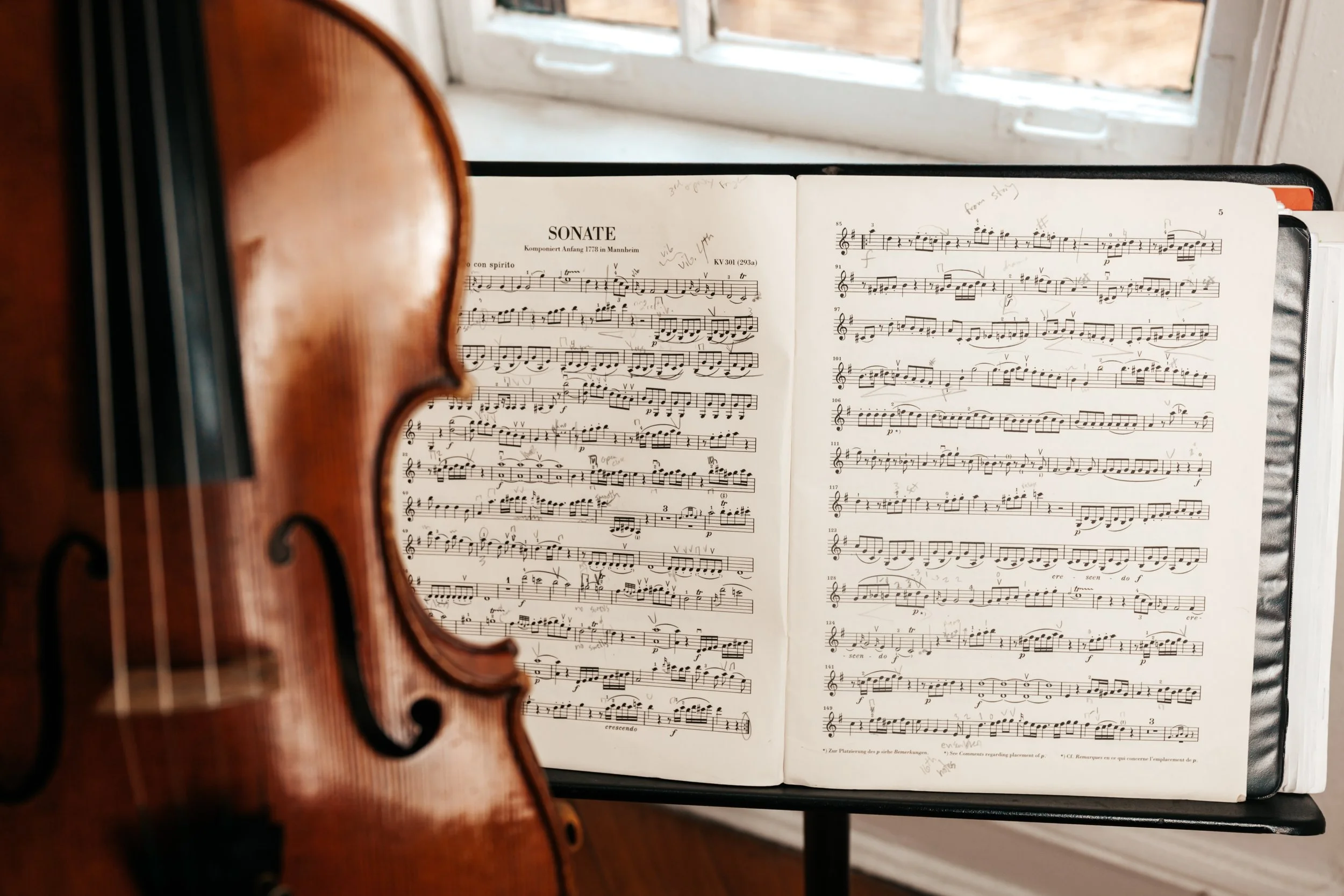
SONATA

Sonata form is one of the most important forms, if not THE most important, to know. If you had any musical training as a kid, you probably relate this word to difficult pieces you had to tackle (like piano sonatas, or violin sonatas). Well, the name actually refers to the form, and here’s how a sonata form plays out (and buckle up, because this one is SO critical to knowing and loving classical music, especially all the “greatest hits” of music written for symphony orchestra).

Sonata form is basically a prolonged manipulation of your emotions (see a theme?). First you get the A section. We’re used to that by now. It’s the main melody. The central thought. The “theme.” It’s the main statement of what the piece is all about and the main melodies and harmonies that the composer is going to use. If you were asked to whistle a famous piece of classical music, you’d very likely have the theme from the A section of a symphony pop into your head from hearing it in movies, commercials, or cartoons. 

But then, the big bad B section comes along (keep in mind that the sections are much longer in sonata form than in strophic or theme and variations). Think of the A section as everything going great – all the melodies are working together (even if you’re in a stormy or sad minor key), and all the parts just seem right. Then B comes in and everything starts to shift. You might feel a little tension building. The melodies might start getting cut off, or overlapping, or sounding blurred or mixed up. You might not know it, but the composer is probably shifting the key the piece is in right under your feet… things are getting tense. Through the B section you start to think, I can’t take it much longer! I just want to go back to that very saftisfying A section! And thennnn…. (And you should see this coming)….

BEAT DROP! A SECTION RETURNS. 

The composer takes us back to a shorter sampling of A just long enough to wrap things up. And oh it is such a relief. The drama!

To get marvellously technical, the sections in sonata form aren’t called A - B - A’ like you might expect; instead, they’re called the exposition - development - recapitulation. Get it? The exposition is where the composer says all of their main ideas, the development is where they develop them in all sorts of tension-building ways, and the recapitulation is where the composer recaps the exposition. Common sense! Not so scary!

Here’s an example you might already know the tune for (since it’s in movies all the time and was an early cellphone ringtone): the first movement of Mozart’s Symphony No. 40. Just listen to the first movement (which is only about nine minutes long) and see if you can hear the exposition, development, and recapitulation:

How Understanding Musical Forms Unlocks Classical Music

One of the reasons pop music is so easy to enjoy is that we understand the form. Whether we’ve ever actually thought about it is beside the point – our ears and, most importantly, our emotions know what to expect out of that familiar verse - chorus agreement we have with the songwriter. Then, as I’ve said, when it gets messed with, so do our hearts (in a good way!).

The reason a lot of people get bored when they go to a classical music concert is that their ears aren’t trained to listen to the musical form in the same way they are basically pre-programmed to enjoy popular music. And the more classical music you listen to, the less you have to say to yourself “okay, we’re in the B section now.” No. You do what you do when you listen to a really good pop song and just enjoy it. But your subconscious knows, “the A section is coming… but how?”

Understanding the constraints a composer was working with helps you understand their genius. It helps you notice when something really unusual happens (“wait… is he not going back to A?”), and most importantly, it primes your brain and your emotions to have an elevated experience. 

Which brings me back to my amazing Structural Analysis class. The more you understand what a composer is doing, the more you get out of the listening experience. Some people would vehemently disagree with me (including some of the dead composers themselves), but I very firmly believe this. Our enjoyment of anything comes from knowing the ropes, understanding conventions, and seeing what the creative person was working with. It also comes from deeply ingrained and hard-won knowledge that lives deeper than our conscious brains, and that can only be acquired through mindfully taking in what we’re trying to learn about. So imagine my delight, as a 21-year-old music student, unlocking the theoretical secrets hidden deep in the forms of some of the greatest works of music ever written. Imagine what the listening experience is like for those works after learning everything about them. It’s shattering. It’s devastating in the best possible way. It is sensing God on earth through the unimaginable creativity of other people. 

That’s why I do what I do here: because the vast majority of people don’t even know that the experience of taking in art and feeling its profundity even exists. It will change your life, and it starts with learning something as simple as verse-chorus.