







Five Ways to Add Creative Inspiration to Your Workday

bethany-legg-75nbwHfDsnY-unsplash.jpg

Look, I’ve been there. You’re a super creative kid/teen/college student, then – somehow, someway – over time, the creative kind of gets… wrung out of you. Even if you technically work in a creative field, or in a job you absolutely LOVE, that little inspired genius kid in you can get awfully quiet over time.  

Maybe you’re like me, and you started out as a tiny human believing it was cool to be smart and to make up crazy craft projects and to perform the entirety of The Lion King as a one woman show in your living room. Maybe, like me, you also spent middle school wondering why people made fun of you for being kind of extra – going over the top on projects and being really keen and sparkly about everything. And maybe, just maybe, you relate to teenage Kayleigh, who made fancy, crafty dividers for her colour-coded binders at the start of every semester (they were laminated), sang along to musical theatre soundtracks in her Honda Civic so loudly people would later comment they heard her in traffic, and made secret contraband posters (which were offensive but very clever) for her and her friends for football games.

And maybe you’re also like me in that, as you went along through high school and then university and then early career and family life, everything got a whole lot more obligation-y and a lot less inspiration-y. Maybe you, like me, found yourself analyzing how to be as successful as possible in your chosen field – even if that meant tamping down some creative aspects of yourself (I actually felt this way in both opera and law, so it’s definitely not just a “professional” professions issue).

Perhaps along that journey into early adulthood (for real adulthood – like, post-college adulthood) you also noticed something I started to notice: without enough creativity, every day starts to look and feel the same. Do you ever feel this way? All your clothes start to look and feel the same. Every day is just another series of the same tasks and obligations. Same drive, same coffee, same emails.

But it doesn’t have to be that way! And you don’t have to blow up your life to cultivate a little more creativity, personality, and inspiration in your standard day. That’s why I’ve put together this super easy list of five ways to add a little more oomph to your day. If you’re a few years into adulting and you’re feeling a little blah in your day-to-day, give one or all of these a try. You might be surprised at what a huge impact a seemingly silly little change makes in your level of joy, creativity, and confidence.

So with ALLL that being said, let’s get creative!  

(And, a wee caveat – as someone who is also getting close to a season of full-time parenting, you’re DAMN RIGHT “workday” includes the following: seasons spent caring for a child/children/loved one; in-between-y seasons, like between jobs, careers, or degrees; seasons of creativity or rest, like retirement; and, seasons spent healing/recovering. Or, honestly, anything YOU define it as. Workday away!)

Five Ways to Add Creative Inspiration to your Workday

rakhmat-suwandi-GHo98eUct6I-unsplash.jpg

1.     LISTEN TO BETTER MUSIC

I mean, c’mon. First of all, if you’re just listening to Top 40 radio/playlists, you’re missing a HUGE opportunity for customization in your day. Curating a personal soundtrack – whether it’s classical or classic rock – allows you to secretly infuse self-expression into your day (especially if you’re in a headphones-only situation like I used to be in the open-concept office I worked in).

Of COURSE I’m going to advocate for you to inspire-up your day with some classical or jazz, but this is definitely a “you do you, boo” situation. Myself, I like to listen to mostly instrumental jazz for writing and reading, classical for any high-focus non-writing tasks, and me-made playlists of a mixture of indie and pop (current and old favourites) for low-intensity tasks like bookkeeping, filing, etc. Absolutely NO SHADE to popular music (Apple A-List Pop is a favourite for me if I’m low on energy or feeling kind of mindless), but why pass up an opportunity to feel more like you, more in the zone, and a little more joyful? Take yourself back to the joy of making the perfect mix tape or burned CD and listen to music that either inspires you because it’s new and exciting (ahem! Let’s hear it for classical and jazz!), or takes you back to feeling like the you-est you possible (hellooo early-2000s indie pop!).

nathan-riley-9q3I8XhesQI-unsplash.jpg

2.    CURATE YOUR SPACE

Whether you’re rocking a corner office, a desk in your living room, or a windowless grey cubicle, you deserve to feel like your desk is YOUR workspace. One of my favourite things about taking time to thoughtfully decorate your workspace is that desks come with build-in constraints that actually encourage creativity. Think your space is too small to do anything with? Customize your desktop wallpaper, frame a little photo, and gather your favourite pens. Have one of those unfathomably giant wooden lawyer desks? Get a really great plant, add a nice writing mat, and put out a mug from the sports team you’re obsessed with (a great ice breaker for when clients walk into your otherwise imposing office that also reminds you that you are a human being and not a drafting machine).

For example, the last office desk I had was very small, modern cubicle-style (aka, shoulder-to-shoulder with the colleague beside you), with a light wood top and a charcoal metal half wall behind my monitors. So I picked photos of Ryan and Molly hiking (a nice way to bring the outside in), as well as a beautiful handmade pencil cup and Rifle Paper Co. folders and notebooks and sticky notes and ALL THE THINGS that all looked great (to me!) with the given colours and materials around me (there was a lot of blush pink… #trendy). And I organized them in the way that would give me the most workspace, since I was often dealing with large printouts of project maps etc. Throw in a colour-coordinated wallpaper photo and you’ve got a chic little cubicle! Plus, you can constantly tweak your space, which means tiny bursts of creativity whenever you feel like it. Move things around. Change up that wallpaper. Make it actually yours.

austin-distel-Imc-IoZDMXc-unsplash.jpg

 3.     GET CREATIVE IN YOUR EMAILS

So… this is one of those “with great power comes great responsibility” situations. I love email. I’m passionate about great email. And I positively detest bad email (especially hyper-corporate CYA email, which has its place, but is basically the definition of “joyless”). If you’re new to business email, or if you feel intimidated by it – skip ahead. Or, better yet, take a business writing workshop. Warm, professional, actionable workplace emails are something you develop over time, but they pay huge dividends. Even working on your inter-office communications can be a huge source of inspiration if you approach it like the craft it is.

But, let’s say you’re a super confident office emailer. Or, even easier, let’s say you work in a pretty relaxed workplace. Or, even if you’re in a really formal work setting, say your team exchanges more casual emails about less serious matters like where to have lunch. The workplace email can actually be a really fun place to zhuzh up your daily creativity. I’m not talking about insufferable quotations in your signature, or – GOD FORBID – changing the font or colour. I’m talking about talking like you in your emails. Try to write like you talk. Use expressions. Use punctuation! (Even the exclamation mark!) Curse if that’s on-brand for you and acceptable in your workplace! Try to cultivate the feeling of you-ness in your written communication as much as possible (where appropriate!). Email is a huge source of stress and frustration, so infusing your communication with a little more personality is a great way to regain your creative power and sanity.

javier-reyes-qi2cD5oR_fE-unsplash.jpg

 4.     CULTIVATE A PERSONAL WORK WARDROBE STYLE (even if you work from home)

If you follow me on Instagram, you’ll know I’m ridiculously obsessed with capsule wardrobes. While my obsession started in law school (for which the dress code is closer to “slovenly” than it is to “Elle Woods”), it really took hold in the corporate job I had straight out of school. The organization I went to work for was technically business casual, but I was in the client-facing consulting group, which was much more business formal. As a young woman working there, I wanted to be taken seriously, but I also wanted to express myself (at least a little). Thus, my work capsule was born – a set of clothes I had “pre-approved” for myself that all mixed and matched, all looked good and met the right level of formality, and that still had a little personality (florals and polkadots and dainty gold jewelry abounded).

Over the next few years, my work style evolved, but some aspects remained pretty much the same. Lots of classic pieces in black, cream, and navy – mostly blazers, pullover sweaters, and pencil skirts. Seasonal mix-ins in goldenrod, mossy green, and blush pink. Quirky jewelry (like my “fingers crossed” earrings I wore for presentations), floral scarves, and statement shoes. Plus, my signature glasses. Cultivating a personal work style is part armour, part rebellion – it helps you feel ready to take on your days, but it also makes you feel delightfully individual. Best of all, it can evolve over time, and be something you dabble in every day. And a boss outfit makes you feel creative and uplifted all damn day (even if you work from home – trust me!)

you-x-ventures-Oalh2MojUuk-unsplash.jpg

5.     DELIGHT IN BRAINSTORMING

This is my personal favourite, because I love a good visual representation of ideas, I love running meetings, and I obviously enjoy any chance to use as much stationery as possible. If you work in a collaborative workplace, this might already be second nature to you. Standing at a whiteboard together with colleagues and making a big mind map for a tricky problem or roughing out the project plan for a new endeavour is a WILDLY creative activity. The trick is to allow yourself to be free and as creative as possible while in a workplace setting (where you’re probably trying to advance your career, or, at the very least, not look stupid). This is where it’s key to remember that being creative is something you practice and get better at, and you only get better by trying. Throw things out there. Question assumptions. Be courteous and respectful of others’ ideas, and only defend your own based on logic or for the sake of argument, not to protect your ego. Use lots of coloured dry erase markers. Draw things! Even if they’re terrible! Laugh! Encourage your colleagues’ ideas! Then, sit back together and synthesize as a team to figure out what the heck you’ve just discovered.

If you work in a more formal/siloed/individual group or organization (I’m looking at you, lawyer friends), or if you work freelance/from home, take advantage of the ol’ “can I talk something through with you?” office drive-by (which I do to Ryan now that I work for myself… godbless him). The key to this working well, in my opinion, is to take a pad of paper with you. Draw/map out the problem. Put the paper in between you so your friend can also write on it. We used to do this at the firm I was at (which practiced primarily wills, estates, trusts, and family corporate, so the lawyers out there will know there were a LOT of family and corporate trees drawn out), and it’s such a useful way to open your brain up and actually figure a problem out. Plus, burst of collaborative creativity mid-day? Yes please!

marvin-meyer-SYTO3xs06fU-unsplash.jpg

Go forth and infuse your workday with creativity!

And let me know if you have other ideas for adding a little more creative inspiration to your standard workday! You can email me here, or DM me on Instagram. And stay tuned for more posts like this because – hot damn – I am so passionate about making everyone’s days a little less blah and a little more creative. Until next time!


Curating an Authentic, Inspiring Personal Brand

ella-jardim-M0zs81FNm6s-unsplash.jpg

If you just read the words “personal brand” and wanted to throw up a little, STAY WITH ME! Personal brands aren’t inherently icky; they’re actually amazing tools for knowing yourself better, feeling more confident, and serving up the most creative, authentic, inspired version of yourself. It’s not about selling yourself, it’s about being yourself. I’ve honed my own process for building a personal brand over several years – a process that is fun, artsy, and really, really satisfying – and now I’d love to share it with you. It’s been a game-changer in my own life, offering me a ton of insight and confidence, and I’m so excited to see other people implement it as well.

Sound good? Let’s dive in.

What IS a personal brand?

Before we dive into actually BUILDING your amazingly authentic, beautiful, so-true-to-you personal brand, let’s talk about what a personal brand is. I think this will clear up some of your original icky feelings, if you had them.

The problem with the terms “personal brand”/“personal branding” is that, with the rise of influencers, they’ve taken on multiple, very different meanings. AND, to add to the confusion, the two main meanings of the term “personal brand” are closely interwoven in the influencer business. But don’t be deterred. I promise to end up at a definition for OUR exercise in personal branding that is (1) not smarmy, (2) for everyone – i.e., not just internet celebrities, and (3) is really creative and authentic and awesome. But first, let’s clear up this whole definition confusion.

“Personal Brand” Meaning #1: A business that revolves around an individual

The first meaning of “personal brand” refers to a business that revolves around a person, and where all of that person’s sub-businesses and revenue streams are based off their persona/celebrity. Paris Hilton. Kylie Jenner. Multimillionaire YouTubers this 30-something has never heard of. These people ARE “personal brands.” Kylie Jenner is a brand, just like Coca Cola is a brand. These people’s core business offering is them, and they make money by putting their name on things, showing up places so people can see them, and endorsing products. 

We. Are. Not. Talking. About. This. Definition. We are actually going to talk about the way more interesting meaning of personal brand, which is…

“Personal Brand” Meaning #2: All the things we associate with a certain person

Here’s where it gets really creative and exciting and actually applicable to my life and yours!

We know that companies are brands, right? Well, the term “brand” refers to not only a company’s name, logo, and colours, but also all the things we associate with them. Take, say, McDonalds. Their brand includes not only the logo and the specific yellow and red they use in all their signage and advertising, but also things like: Ronald McDonald, the golden arches, specific menu items like the Big Mac and the Happy Meal, and also more nebulous things like clean bathrooms, a good first job, consistent product, and fast service. In marketing, we call all of those things “brand markers” – things people associate with the company that, all together, make the nuanced, complex, often warm-fuzzy-inducing thing we call a brand.

The whole “what does personal brand even mean” thing is confusing because people also have brand markers, especially people whose businesses include “selling themselves” in some way, or being “the face of their brand.” For example, I bet you could rattle off some brand markers for Ellen DeGeneres – dancing, sneakers, non-gender-binary clothing, generosity, her show’s bright blue and white colour scheme, a dry sense of humour, playing pranks. All those things come together to represent Ellen’s “personal brand”, and they’re things her personal PR team and the show’s production staff will work to curate and enhance. Why? Because they help us, as viewers, consumers, and fans, feel closer to her and more warmly toward her. In short, because it makes us feel like we know her and what she’s all about.

So… why does a normal person who isn’t Instagram famous (or famous famous) need a personal brand?

maddi-bazzocco-Vbt1zTCsSNA-unsplash.jpg
“Your personal brand is all the things that come together to symbolize the realest, most unique, you-est you. It’s the best version of yourself, captured in words and images, that you can leverage and lean on.”

The concept of personal branding has gotten really polluted over the last couple of years with the rise of influencers, but it didn’t always have a smarmy veneer to it. In fact, my first introduction to personal brands was back during my MBA, when we talked about the term as basically equated with social capital: what comes to people’s minds when they think of you? What are you known for? (And I don’t mean on the internet – I mean by real people, like your friends, family, and coworkers.) That’s how I think of personal branding, but with added artsy touches, like the colours, images, items, and even materials, typefaces, and other beautiful and symbolic elements that represent you. Your personal brand is all the things that come together to symbolize the realest, most unique, you-est you. It’s the best version of yourself, captured in words and images, that you can leverage and lean on.

I actually spend a lot of time curating my personal brand, and not just because I actually do work on the internet. Nope, I spend time mulling it over and collecting images and inspiration points to clarify my personal brand for myself. I do it because it makes me feel more confident. I look through my notes or my mood board and feel more grounded. If I need to make a decision – from what colour to paint a room in my house to whether or not to agree to a contract – I think through my personal brand. Does this feel like me? A personal brand is like a sounding board, a reference point, and a huge confidence booster. It can help you focus your resume, put together better outfits, and feel more confident about all the quirky wonderful stuff you love.

Sound decidedly un-smarmy and definitely useful and fun? Let’s find your personal brand.

But first, two notes

Note number one: here is where the zen amongst you argue that we should be letting our personas fall away, not building them up. Absolutely. On a deep, deep level, so much of life is about letting the surface “you” fade and becoming more the inner, silent, eternal “you.” But, day-to-day, wholly integrated “you” also likes to feel well-dressed, creative, and confident, so let’s aim for joyful integration for the moment, shall we?

The second note before we dive in and start curating: I believe in being aspirational. When I was in grade eight, we did a project where we drew self-portraits. Our teacher was pretty clear that you could be realistic, aspirational, or even symbolic (I remember this because part of my personal brand has always been excelling at academic pursuits and meticulously executing on projects). At the time, I was really into medieval history and fantasy novels about knights, so of course I chose the aspirational/symbolic path, and drew myself as a (pretty damn hot) lady knight, with a very trendy Meg Ryan shag haircut. I assure you, it did not look like grade eight me (who had the braces with the coloured elastics, blue glasses, spiky hair dyed a terrible copper red, wore the same Paul Frank t-shirt and baggy sk8r girl cargo pants constantly, and was several years away from learning anything about skincare, let alone makeup). But it felt like me (and now I find it pretty funny, because other than the short hair, it actually did end up looking how I look as an adult). But boy did my classmates make fun of it, despite the fact that it was one of the best art projects I’ve ever made in literally my entire life. Middle schoolers are the worst.

So don’t be like those jerks and feel free to dream and envision yourself in the best possible light. Sure, infuse some realism where appropriate, but in a way that feels kind to yourself and really uplifting. Think of this as an exercise in curation – you’re basically pulling together all the things that make you feel the most like you. Not the “you” that you worry some A-holes in your life might think you are. The “you” you know you are. The “you” your dog thinks you are. The you-est you.

Let’s get started.

How to Curate an Authentic Personal Brand 

andy-art-t-WkBEOQngs-unsplash.jpg

Because personal brands are just that – personal – there are no set rules about what’s included in them or how to put yours together. It’s YOUR process! But, I’ve tried out lots of personal branding techniques and approaches over the past several years, and what I figured out is that the process and the end result are a lot more satisfying (to me at least, and I hope, to you as well) when I focus on artsier inputs, like colours, images, and words than when I write down lists of my accomplishments and interview my colleagues about what makes me “a great team asset” or “a hot commodity in the workplace.” Man, I find that stuff boring, and it really doesn’t uplift me in my everyday.

My version of a personal brand is highly visual, highly amorphous, and, well, highly personal. And I literally refer to my reference points for mine every day, purely for inspiration and a boost of self-confidence. So if that kind of result sounds good to you, here’s my own process for curating an authentic personal brand, organized by input type.

IMAGERY

Some people would start a personal branding exercise by having you cooly and objectively looking at your accomplishments and behaviour. Screw that. The symbolic, mythical knight version of you would not start there. She would start with stuff that’s awesome and magical. So let’s start where a lot of artists start: with images that represent, in an abstract way, who you are.

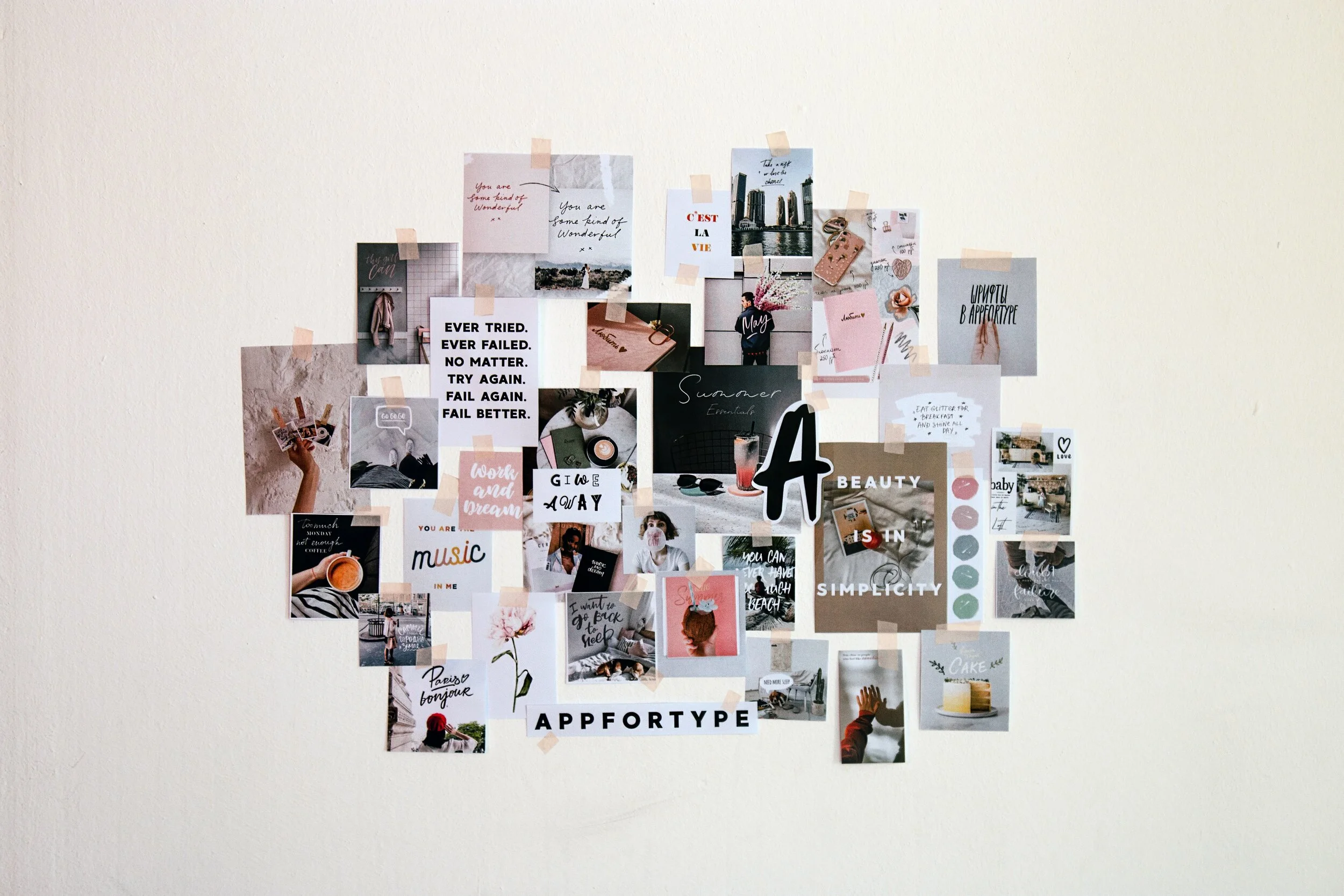
Now, you can do this by flipping through magazines or perusing the internet and building a tangible scrapbook or moodboard. If that’s your jam, godspeed – I love all things analog. But, if I may suggest a very speedy, immediate, and instantly gratifying method, head over to Pinterest (even if you’ve never used it because you’re pretty sure it’s the evil creation of Stepford wives). Pinterest is an awesome way to make mood boards, so make yourself an account if you don’t have one, and create a board with your name in all caps, or something like *  P E R S O N A L  *  B R A N D  * with some of your signature emojis thrown in for good measure (not that that’s what mine is called or anything…).

When an artist is starting a work, there are lots of jumping off points to clarify their perspective, ignite their creativity, and sharpen their references. One is to gather examples of imagery. These can be literal (“the play should be set in the Scottish highlands”) or figurative (“I want this dancer to move like a babbling brook”). These are the types of images you’re looking for: both literal and figurative. Here are some examples of what I have on my board and why:

  • Wilderness from the Pacific Northwest (it’s where I live, and I feel deeply connected to the scenery)

  • California beaches (Malibu is one of my favourite places on earth)

  • Cozy lake houses and cabins (I love going to cabins, and it’s my dream to own one)

  • Lots of pictures of lattes and books in cute coffee shops (speaks to my “cute nerd” vibe, plus I love both coffee and books)

  • Dogs, especially boxers (like my Molly!) and golden retrievers (which is what I would be if I were an animal)

  • A lot of organized but creative-looking desks (which is how I aspire to feel when I’m working)

  • Cute. Ass. Comfy. Outfits. (I like to include references for my personal style)

  • Beautiful living spaces (I also like to include references to my decorating style)

  • Houseplants, gardens, bouquets of flowers (As a Taurus, this is basically mandatory)

  • Lots of artsy stuff, like photos of artists’ studios, paintings, etc. (Obviously)

You can get as specific or as symbolic as you choose. On the literal side, I have pictures of my favourite things (like La Croix, cheap takeout sushi, embroidery, and the Penguin Classics books I collect). On the abstract side, I have a lot of pictures of blue sky (I’m an eternal optimist), blooming flowers (my word of the year this year was “bloom” – as in, allow for organic expansion and beauty in my life), and vast open fields (I see life as full of wandering adventure and possibility). 

My one cardinal rule is this: you cannot pin (or cut out and paste) anything unless it 100% – nay, 1000% – feels like you. This may take you a little bit of time to figure out, so don’t be afraid to delete some of the first images you select later on. But you will eventually find your groove where, as you’re scrolling, images start to jump off the feed and scream at you THIS ONE! When you really get in tune with that inner voice during this process, the images you select will be much, MUCH more cohesive as a group. In fact, you might be amazed (as I was) to scroll through the images once you’ve got a whole schwack of them to discover that…………

COLOUR

……… You’ve inadvertently chosen photos from a beautifully cohesive colour scheme. Don’t – DO NOT – try to do this up front. It is such a beautiful gift to have your unique style emerge from your choices, including your signature colours. When I first did this exercise, I was positively flabbergasted to see how cohesive my photos ended up being. I was just searching for keywords and selecting what jumped out at me, and lo and behold, a gorgeous palette of colours I never would have guessed to be my “signature colours” emerged. For me, these were black, white, rich leathery brown, and navy (all of which I would have suspected, as they make up 95% of my wardrobe), but also forest green, burnt orange (a HUGE surprise), hits of pale pink, and a soft ocean blue. 

If you’re drawn to colour like I am, this was such a revelation. I started seeing these colours everywhere, and using them wherever I could. I began selecting them for my clothing and accessories (even ones like the rich green, which I rarely wore before). I integrated them into things like my website and my Instagram photos (and not just for the purpose of marketing cohesion, but because they felt so much like me). I began bringing them out in our home decor. It might seem silly or shallow, but knowing your colours (and I don’t just mean colours that look good on you, but colours that feel like you) is a really uplifting thing to add to your life. It adds a level of cohesion to everything you do that is so intensely satisfying. Give it a try, even if you don’t consider yourself artistically-minded, or if home decor or fashion aren’t your thing. I think the hits of joy from seeing your colours might really surprise you.

TEXT

As a writer, I’m obviously word-obsessed. Many of you will also know one of my favourite hobbies is making all kinds of hand-lettered art (my graphic designer mom always thought I would grow up to be a typeface designer). I adore quotations, turns of phrase, inspirational snippets of text, single words that really speak to me… it’s all so me. So my Personal Brand board includes a ton of text (and, if you’re an old hat at Pinterest, you’ll know there’s oodles to choose from). If you like quotations, search for individuals you find inspiring, or just search for “inspirational quotes” or the like. If you, like me, love hand lettering, search for that (and you’ll find lots of great text along the way). Add verses from religious texts if that speaks to you. Toss in some poetry. Got a single word theme for your year, or a personal mantra? Search it and see what comes up. And same rules apply as above: only keep something that feels so much like you you can’t bear to leave it off your board. That’s the level of you-ness you’re looking for. 

More of a written word person than visual? Try this exercise instead

jeshoots-com-LtNvQHdKkmw-unsplash.jpg

I’m an EXTREMELY visual person – I learn better when I use visual methods, I like to use visual metaphors when explaining things (both professionally and in random personal conversations), and visual inputs and outputs (like my clothing and my decor) are important to me. BUT, I 100% know this isn’t the case for everyone. So, because self-expression comes in all shapes and sizes, I would like to give you a second way to curate your personal brand that is alllll about the written word.

Similar to my physical scrapbook vs. Pinterest methods above, you can either do this step in a physical journal or an electronic document – choose your own adventure. Personally, I find I get better personal insight when I handwrite (there’s something about having to write more slowly and with more physicality that lights up the more intuitive side of my brain), but I can type much, much faster, so it’s a real trade-off when I’m trying to do some creative written work focused on myself. Pick whatever feels best for you and run with it.

As above, I’ll give you three types of artsy/creative inputs that you might want to use for constructing a text-based reference/collection/jumping-off-point for your personal brand:

FACTS, FAVOURITES, AND MEMORIES

I’m quite obsessed with the practice of constructing characters, whether it’s in drama, film and television, or literature. I’ve always been fascinated by the idea of creative writers hashing out all the little things and reference points that make a character who they are. I used to think about this when I watched The Simpsons, since I’m so similar to Lisa. Does a writer somewhere have a big cork board (visual self assumes this is the only way to do it) full of sticky notes that say things like “saxophone”, “jazz”, and “academics”? Does it have repeated phrases she might be heard saying? Or her favourite things, like vegetarian food and feminist literature? 

Short answer: yes. This type of mapping – whether visual or written – is a classic way to construct a character. Now, without getting too ego-centric on you, it’s also a great way to hone in on your personal brand. Just remember: it’s not about artifice, it’s about reference points about what makes you feel like you. So just like you would write out facts about a character (places they’ve lived, what they do for a living, where they are in the birth order of their siblings if they have them), their favourites (foods, colours, animals, books, etc.), and their most cherished memories (times they felt a lot like themselves, which provide a ton of reference points about who they are and what they love), so too can we curate a beautiful list like that for ourselves. In fact, make a ton of those kinds of lists. Favourites of all kinds. Places you love and places you want to go. The people who are most important to you. Just toss anything that feels so you it needs to be in there in a big ol’ word pile, organized however inspires you. Have. Fun. Be. Curious.

POETRY, QUOTATIONS, AND BITS OF PROSE

As you might have caught when I was writing the section on creating a visual mood board, I love quotations. In fact, I was so obsessed with incredible quotations from historical figures when I was in high school that I made dividers for my binders with famous quotes paired with corresponding famous paintings AND I LAMINATED THEM. (Oh, you KNOW I was the coolest kid in grade 12 with those bad boys. Teenagers are really into people who are exceptionally nerdy AND crafty.) I love really juicy quotations from important people. The great speeches of world leaders are a favourite source, as are autobiographies of people I find inspiring. Of course, finding great quotes is a helluva lot easier with the advent of the internet, so get searching for (a) people you find inspiring, or (b) topics or ideas that are important and uplifting to you. I still keep copious notes of favourite quotes I stumble upon, and I think a person’s collection of quotations is a great reflection of their personal brand.

Of course, if you’re into poetry, this is a wonderful place to collect poems that really speak to you as well. My personal brand here would include a lot of Romantic poets like Keats, Whitman, and Dickinson (as you know, I love the classics of all art forms), as well as some choice 20th century poets whose conversational but striking work really speaks to me (my list would include my favourite poet, Frank O’Hara, and my beloved Langston Hughes). 

I would also pull bits of prose in here. Perhaps a marvellous turn of phrase from a novel I love, or even a paragraph from a non-fiction book or article I’ve returned to many times. 

ABSTRACT PERSONAL WRITING

For those of you who enjoy less concrete and more abstract self-expression, this is a great place for free writing of all kinds. Perhaps you’d like to riff on a subject about yourself, perhaps you’d just like to let the words meander and tell you about yourself – it is all fantastic. Me, I’m a super concrete person, so that kind of creativity is like amazing witchcraft to me, so if it resonates for you – do it!

How to use your “personal brand” now that you’ve got one

avel-chuklanov-DUmFLtMeAbQ-unsplash.jpg

So you’ve got a visual or written (or combo!) reference point/collection of all the things that really feel like you. What now?

When I was first learning about personal branding, I was told it was all about leveraging what you know about yourself to basically promote yourself – give better answers in interviews, make your LinkedIn snappier, etc.. But that just doesn’t make me feel inspired. What does make me feel inspired every day, in ways that are both concrete and amorphous, is knowing who I am on a deeper and deeper level. 

Here’s how I use my personal brand collection. First, I have a quick glance at it almost every day. As I said, mine is a Pinterest board, and I’ll just pop it open mid-day and have a wee scroll (I also keep a series of notes and collections of text in my bullet journal, so I’ll often have a flip there as well). I’ll also sometimes click on the “More Ideas for this Board” tab at the top in Pinterest and see if I come across more images to add (my board is absolutely ginormous after doing this for quite a while). Second, if I’m feeling down or out of sorts, I get in there ASAP. I feel so much better if I come back to me, and I find this to be such an inspiring, positive, and centering way to do that. Finally, as I alluded to earlier, if I’m trying to make a decision about something – whether it’s something silly like what colour to order a piece of clothing in to a big life decision that has absolutely nothing to do with the images I’ve selected – I go in for a scroll. 

To me, this is what personal branding is all about: returning to you, over and over again. Curating something beautiful and poetic and affirming about who you are is a gift you can give yourself that you can lean on every day. It doesn’t have anything to do with directly marketing yourself or getting better gigs or building your resume (even though, I think, those things can all come from a seed as simple as visualizing all the things that make you you). Instead, it’s about picturing all the wonderful things that make up who you are, and by knowing them, embodying them and projecting them out into the world. 

So I hope you’ve enjoyed this deep dive into what I think of as artistic, inspired, curated personal branding, and I really hope you try it for yourself. For something as seemingly silly as a bunch of journal pages or a flippin’ Pinterest board, it can literally change how you feel about yourself every day. And when that shifts for the better, everything can change. 

The Art of Reading Plays and Training Your Brain

ben-white-1MHU3zpTvro-unsplash.jpg

Did you have to read Romeo and Juliet in high school? Of course you did. We all did. Maybe you also read Macbeth or Hamlet. Perhaps if you had a really great high school English teacher, you might even have taken on one of Shakespeare’s comedies, like Twelfth Night, or A Midsummer Night’s Dream. Do you remember studying that play as a positive or a negative experience? Do you remember it at all?

I was one of the rare souls blessed to have an incredible high school English teacher (well, I had him twice and he was phenomenal… the other years were… unfortunate). In his class, I delighted in reading plays. He was so methodical in teaching them – making sure we actually understood every innuendo, every double entendre, every instance of foreshadowing, metaphor, and symbolism. Those classes were very formative for me, not only because I developed a love of literature through his teaching, but because I came to understand how learning slower and more deeply results in a way different type of knowledge than quick memorization. 

Reading plays, like reading great works of literature, is tricky business, which is why most people think they don’t like it. It’s a skill that requires focus, curiosity, humility, creativity, and openness. As you read a truly great play or novel, you need to be open enough to allow the characters and settings and events to build themselves up in your mind’s eye. This requires suspension of disbelief, a cache of reference points, attention to the details the author or playwright gives you, and a willingness to not have all the pieces perfectly together right away. You also need to be humble enough to stop when you don’t understand something and go look it up (made infinitely easier by Mr. Google), or shelve it in your mind until you start to understand it better through context. You also need to read deeply – no distractions for at least a few minutes at a time (something we’re not all great at now that our phones poke and prod us every few moments).

Reading a play is a particularly fascinating exercise in training different parts of your brain, with the added benefits of (a) actually enjoying what you’re reading while you do so, and (b) the deep sense of satisfaction and accomplishment one gets at the end of tackling a challenge you don’t take on every day. 

So, here’s how I read a play. It’s not fast, it’s not easy, and it’s definitely not sexy (well, it depends what your definition of sexy is… I actually think a highlighter and voluntary research are VERY sexy). What it is, though, is deeply rewarding. It’s a marvellous thing to do on a weekend morning, or stretched out over several evenings. And it’s particularly wonderful if you can follow it up by seeing the play in person (it is so delightful to sit down for a play with the excitement of knowing all your favourite parts, and wondering how the actors and director will have infused their own interpretations into the words you already love – trust me). 

HOW TO READ A PLAY

1. Pick what to read

Obviously this is a tricky part, so I’ve created a system for you. First, pick an era you love. What the hell do I mean by that? I mean, do you love movies set in the Renaissance? Do you love British novels from the 1800s, like those of Jane Austen and the Brontë sisters? Do you hate that stuff, and only like books, TV shows, and movies from about 1950 on? There is literally no wrong answer. Pick your era, then go to this list from The Guardian (arranged in chronological order by playwright) and just pick one from the years you tend to like. I particularly love novels, music, and art from the first half of the 20th century (for example, John Steinbeck is my favourite author), so I would look at all the plays from around that time. Two of my favourite plays are in that block – A Raisin in the Sun and The Crucible – so I know I’m in the right place to find a new read. Grab the title of a couple and hit up Google. All you need is a one sentence summary to know if something is up your alley. Or, alternatively, just pick a famous play you know the title of (like Who’s Afraid of Virginia Woolf, or The Importance of Being Earnest) and go for it (you could start with this post of 10 uber-famous plays). (Or, check out this post I wrote on famous plays that were made into great movies. Or, if you like contemporary films/music/art/politics/activism, check out this post on amazing living playwrights.)

2. Buy a hard copy

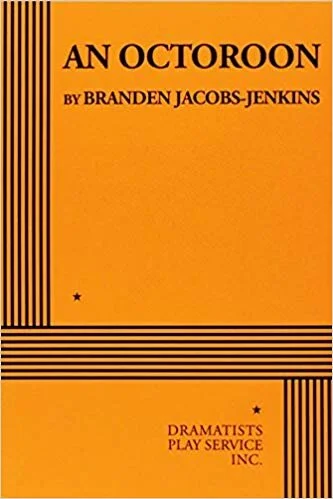
If you follow me on Instagram, you know I’m a library fanatic. And the library can be a great place to get dramatic works in print, especially university libraries (hot tip: university libraries tend to be better for everything other than current titles and fun, casual stuff like cookbooks, so it’s always nice to have two library cards – one for the public libraries of your city, and an alumni or community card for your local university. Nerdy sidebar over.) But, my love of the library aside, a play is a wonderful thing to get in hard copy. They’re often very short in print, making them a lovely size to hold. And, I have this crazy affinity for the look of the plays published by Dramatists Play Service Inc… they’re so charming. Plus, plays tend to run you only about $10.

41EHy8KlaNL._SX331_BO1,204,203,200_.jpg

3. Get your stationery ready

If you’re as gleefully nerdy as I am, you’re probably already pumped about this one. That’s right, friend – grab your implements of choice (in just about everything involving quotations and marginalia, I use my law school go-tos: a mechanical pencil, a Sharpie pen, and a yellow Staedtler highlighter, plus cute Post-it flags), and tentatively decide how you would like to mark up your play as you read. I use highlighter for lovely turns of phrase, good jokes, the really devastating lines… basically anything quotable. Plus, having a highlighter reminds me of highlighting my own lines, first in high school theatre and then throughout my opera training, which gives me the warm fuzzies. The mechanical pencil is for random thoughts, boxing around chunks of interesting text, and making little diagrams and doodles (sketches of parts of the set, for example, or a drawing of a costume described in the script). The Sharpie pen I use mostly for notations beside anything I highlight, and the flags are for my favourite parts.

4. Optional: Google the plot of the play before you start reading

Either you’ve just recoiled in horror (as I personally do at this suggestion), or you’re like “yup, definitely doing that.” A friend of mine reads the end of every novel she starts first so that she knows where it’s all going (and, as she once pointed out, if she dies partway through the book, at least she knows what happens). This can be an especially helpful tip if you’re reading Shakespeare or his contemporaries, any of the ancient Greek plays, or any avant garde contemporary works of theatre. In short, anything that might be especially challenging to read. If you know the general arc of the story first, who all the characters are, and what the main settings will be, you can focus on learning the language, looking up specifics, and actually digging into the meat of the play, rather than scrambling to get any sort of foothold you can. And some people like this approach for all plays. As I say, you do you.

5. Tuck in

And now the fun part: the actual reading. Read slowly. Re-read. Read scene by scene, and make sure to read not just the lines, but also the stage directions and other instructions from the playwright (including those at the beginning about character descriptions, set, costumes, etc. – this is part of what makes reading plays so fascinating). Try thinking like the director. Try thinking like an actor. Try to hear each voice and envision the action. And when you don’t understand something, whether it’s actual language or how a character has wound up on the other side of the stage when you were sure they weren’t there a second ago, stop and re-read. Think about getting to know the play, rather than just getting through it. Like I said, plays are actually quite short, so take your time and really enjoy it. And mark it up! I feel so much more connection to something I write in than something I leave pristine, but, as always, you be you.

6. See if there’s a video version or, even better, if you can see it live

Look. There are a lot of plays out there, and the chance of a specific one being produced in your city soon after you read it is… negligible. Of course, you could reverse engineer this whole process to pick something that’s coming up (a totally wonderful option, but which might result in you reading a play not well-aligned with your existing tastes and interests), or you can use the miracle of the internet to see if you can find a recording of the play you’ve just devoured. Copyright and royalties being what they are, it is often slim pickings. But depending which play you’ve chosen, there might be full-length film versions, or there might be filmed stage versions (way better). Often these are at – you guessed it! – the university library! So have a sniff around and see what you can find. It’s SO worth it to watch a play after you’ve done a deep dive, you have no idea.

And that’s how you read a play! I hope you try it out to stretch your creative brain, train your focus muscles, and enjoy the sweet satisfaction that only comes from highlighters.