

Three Reasons the Arts are the Surprising Solution to Adulthood Malaise

cristina-gottardi-05P65mxLuW8-unsplash.jpg

Last week, I wrote about the phenomenon of simultaneous overwhelm/underwhelm, which was something I had experienced myself, and which I was increasingly noticing in my fellow 30-somethings. If you missed it, of course I would encourage you to check out the full post here, but in case you just need a refresher, here’s the gist: being in and around your 30s in today’s hyper-stimulating, hyper-stressful world seems to be bringing on the dual pain of feeling totally overwhelmed (by personal and professional obligations and goals, plus everything happening in the world around us) as well as feeling totally underwhelmed (that sense of daily monotony which usually leads to feelings of “is this all there is?”). 

Of course, I suggested an artsy solution to both problems, which I acknowledged might make my stressed-out peers want to punch me in the face. But the fine arts really are one of the most profound toolkits we have as human beings, and it’s time for our generation to reclaim them, rediscover how they can serve us, and fall back in love with everything they have to offer us.

So today, I want to talk about the three reasons why reconnecting to the fine arts is a huge and transformative way we can all start moving out of this stressful stuckness we’re all feeling. 
element5-digital-uE2T1tCFsn8-unsplash.jpg

The Fine Arts are a Roadmap to Being Human

Part of what is so hard about being in and around your 30s is that you hit a lot of huge life milestones in a short amount of time, and they’re mostly not the fun, carefree milestones of your teens and twenties. I’m talking about marriages starting and marriages ending. I’m talking about having children or wanting to have children or not being able to have children. I’m talking about losing parents and friends and relatives you’re close to. This is why I laugh when I see people in their early 20s talk about “adulting” – girl, you don’t know what it means to “be an adult” just because you did your laundry.

When we get into what I call “real adulthood” – the time after college and after those first few years of entry-level jobs and a lot of career confusion and dating and moving and friendships – shit tends to start hitting the fan in our personal lives just as we’re trying to establish our careers, and both zones of instability leave a lot of us feeling awfully lost. We feel lost in our work because we’re trying to get ahead or build something important, which requires a whole different level of boss-ness than the risks we took in our 20s required. As we’re given more responsibilities, we come to realize that we don’t know what we’re doing a lot of the time, AND our work now has actual, serious consequences and impacts. Plus, now we have to make way more difficult decisions that affect not only our futures, but the people around us. Add to this the fact that, if you’re going to leave a profession, it’s probably going to be around now, when you realize it’s just not for you. Holy work stress, y’all.

Then we come home or read an urgent mid-meeting text, and we’re catapulted into a whole other pile of challenges. As I alluded to, we often feel lost or unsure in our personal lives around this time. Perhaps we’ve become caregivers (to children, parents, or other loved ones) for the first time, or in a different capacity. Maybe we’re experiencing deep loss that we haven’t had to go through before. Or maybe we’re facing stresses related to what we expected our lives to look like by now and what they’re actually shaping up to be. 

The thing that is miraculous about this phase of life (like all phases) is that, no matter how alone you might feel when these things are happening to you or when you’re trying to figure out something really difficult, you are not the first human being to go through this. Not even close. Realizing that you’re actually not that special sounds devastating, but it’s actually profoundly soothing, because you know other people have gotten through this or figured this really thorny problem out, so damn it!, you can too.

That’s where the arts come in. All art is some form of storytelling about being human. Some of it is literal and direct, like a lot of theatre. There are so many incredible works of drama, comedy, and tragedy about all the subjects and themes I’ve just touched on, and seeing a character work through the same problem you’re trying to figure out, or live through the same hardship you're living through, can be so incredibly profound. Just feeling seen can be a soothing balm in a stressful season.

The more abstract arts, like classical music, visual art, dance, and even contemporary theatre, are also filled with stories and lessons about the human experience. This is what a lot of people don’t realize about the arts: a person made each piece of expressive work we look at or listen to because they had something to say about life or death or beauty or struggle or fun or love… usually not just because they felt like making something (although pure creation can also be a beautiful expression of what it means to be human). So when you hear a piece of classical music that a composer wrote after the death of a loved one and you are also going through some kind of profound loss, that can be so powerful. Or when you see a piece of contemporary dance about the struggles and triumphs of women when you feel like you can’t budge that frickin’ glass ceiling in your industry – well damn, you’re going to see yourself in that work of art.

But it’s not just about seeing your struggle or challenge or questions mirrored back to you: it’s about the opportunity to feel your way through what you’re dealing with via the medium of art. So if an artist was feeling stifled by the regimes under which she was working, and that’s incredibly apparent in her paintings, you’re also going to see her ideas and feelings and rebellion against that system – and THAT is where the magic is. Art is not just an expression; it’s a roadmap for being human. And for the big problems we all face around this age, particularly in our current cultural and political climate, we could sure as shit use a roadmap.
mat-reding-IBkcNt29bFg-unsplash.jpg

The Arts Provide the Type and Level of Stimulation We’re Lacking

I touched on this last week, but it is so incredibly critical. A lot of stress we’re experiencing in today’s age that previous generations didn’t experience is brought on by technology. We all know this. But the internet is, of course, an amazing tool, and we can’t abandon it. This is why we need to be far more mindful and intentional about the type and level of stimulation we welcome into our hours and days: we need to balance the time we spend in hyper-stimulation mode.

What we’re often lacking when we spend time watching TV and particularly when we spend time on the internet/social media is deep stimulation. Apps in particular are designed to light up the shallow, quick-reward areas of our brain to keep us logged in as long as possible. We see this in likes, in perpetual scroll, and in the 24-hour news cycle full of clickbait headlines. It’s like being on a candy diet all day every day. Sure you get your calories, but there’s no nourishment there.

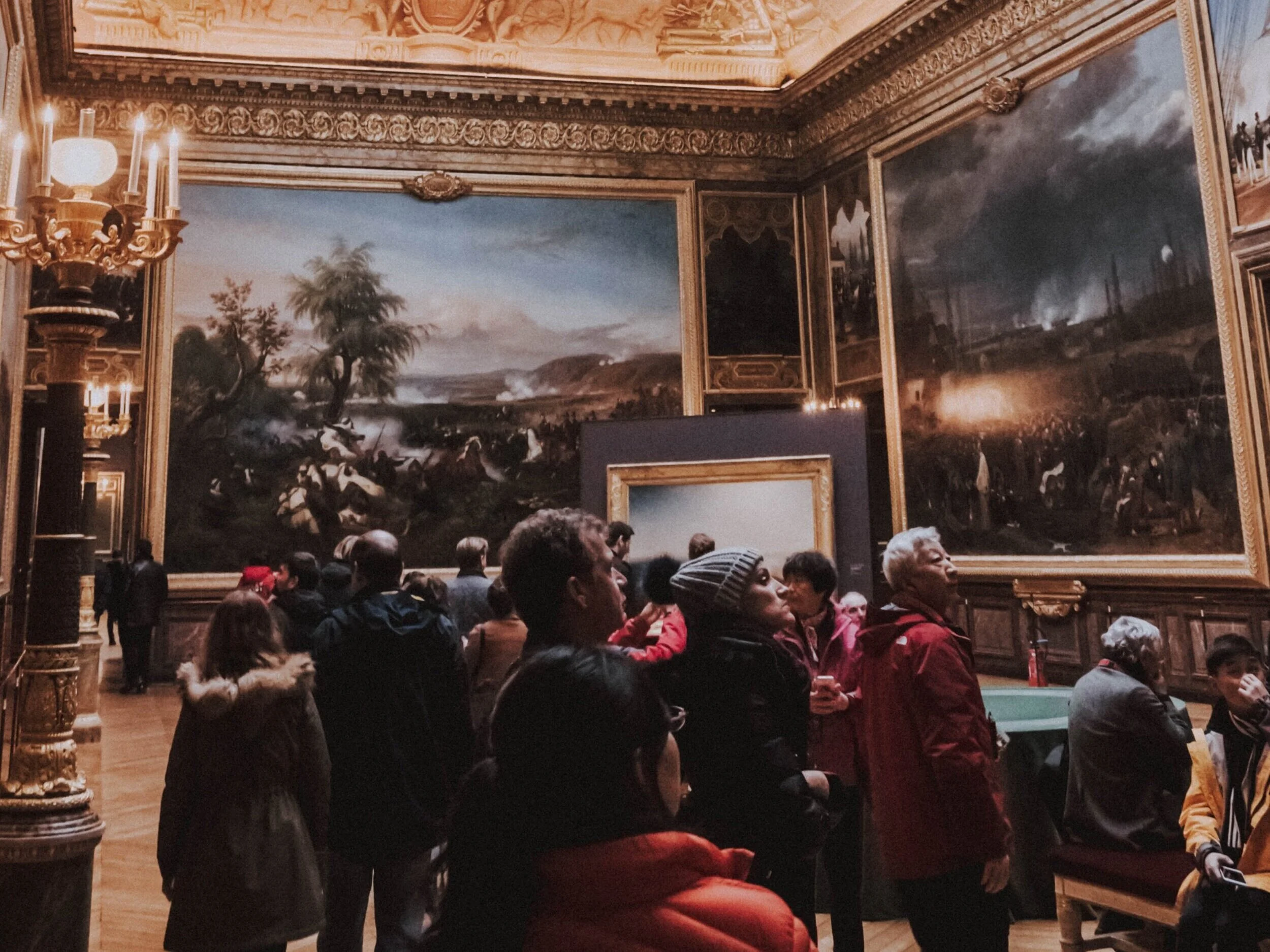
Think, instead, of the type of attention it takes to thoughtfully go through an art museum or gallery. Or to listen to an hour-long symphony. Do you feel almost overwhelmed when you think about something like that? This is similar to how many people today feel a sense of panic about trying to meditate, or experience extreme emotional discomfort at the idea of being without their phone. We are so starved for quiet, drawn-out, slow experiences that, for the first time in history, we’ve actually started recoiling against them.

But just as meditation can be rewarding in a way few other activities can match, so too do the fine arts bring a type and level of stimulation we desperately need but which is hard to find from other mediums. Losing yourself in one piece of art and slowly feeling and thinking your way through it taps into that much deeper part of our brains that we don’t spend much time tending to these days. It’s the same part that we access when we reach a flow state in our work or even in mundane home tasks – that feeling of time being suspended and everything being ripe and juicy and natural and rewarding. I always think about a woodworker when I think of this state, how he moves assuredly but with curiosity and a rich earthiness that brings forth things that didn’t exist moments before. That’s the state we’re looking for when we experience art, and it’s a state we’re all starving for, whether we know it or not.

See if you can conjure that feeling in your own mind and body of being in flow. Perhaps you find it when you garden. Perhaps, like me, you find it when you write (I even used to find it when drafting legal documents – hey, to each their own). Or perhaps you find it when you really mindfully play with your crawling baby or run outside with your kid. It’s the “slow breath, so alive, can’t believe how good and deep and richly rewarding your life is” feeling. 

When we allow ourselves to really listen to a piece of music or really look at a piece of art, we find that feeling, and we also allow our deep brain to take in the intentions of the person who made it. By slowing down and welcoming this other level of stimulation, we also welcome in the profound in a great work of art, even the divine. Just as many people don’t “get” meditation until they get past the hurdle of actually quieting their mind and letting go of the buzzy level they usually operate at, so too do people often move from “not getting art” to oh, REALLY getting it when they find this place in themselves. 

Sounds like an amazing salve to how effing overwhelming and also unrewarding a lot of your life feels right now? Oh don’t I know it.
bench-accounting-unG80SBSfMU-unsplash.jpg

Many of the Skills and Tools We’re Seeking are the Daily Bread of Artists

The third reason art is the surprising solution to a lot of our early-real-adulthood problems is that a lot of the things we need to learn at this stage are actually really commonplace for artists. 

This is a huge “upleveling” time of life – we’re all trying to both literally move up in the world through our careers, as well as move forward in big ways in our personal lives. To do so, we need to “uplevel”, which means taking our skills and mindsets and abilities to a level we don’t yet have mastered. 

Cue learning about the lives and work and practices of both the greatest artists who ever lived, as well as your average working artists today. What I’ve found, through many, many conversations with my peers, is that so many people are craving a maker’s mindset – a craftsperson’s life. They want the feeling that their work is moving them forward. They feel they’re missing rewarding routines, because the routines they’re in are imposed by the needs and schedules of other people. They don’t know how to conquer self-doubt, or take criticism, or discover their authentic voice. 

In short, they don’t know how to live and think like an artist.

Artists know these things by necessity, and have for countless generations. A ballerina knows discipline and routine, because without it, she cannot achieve anything. A visual artist knows how to have a mindset of constant improvement, because without it, he can’t continue to produce works after either a huge success or a huge failure. A classical musician absolutely must master the art of taking, filtering, and integrating feedback, because she does it on a daily basis, and she needs the ears and input of others in order to make her work better. It isn’t that artists are magic or better than non-artists – it’s just that the skills and tools they absolutely need to survive happen to be the exact ones many non-artists are searching for in their own lives right now. 

Feeling art-curious?

Those are just three reasons why the arts are such a surprising, transformative, healing toolkit for moving out of the malaise of being in and around this early-real-adulthood phase of life. Not only do the arts soothe the overwhelmy/underwhelmy feelings I wrote about last week, they also offer us a map out of them. They show us we’re not alone and reward us for spending time pondering and enjoying them. They give us actual tools we can use to take our lives to the next level we’re trying to reach. 

If you’re intrigued, I really hope you’ll start on your own artful journey today. All you have to do is kick it around here, and I’ll give you all the tools you need to reconnect to the arts and reclaim a birthright human beings have benefited from for generations upon generations. It’s time for our generation to step into that world again and reclaim it for ourselves.

Fighting the Feeling of Simultaneous Overwhelm/ Underwhelm

nathan-dumlao-aZ9X3L1Va2Y-unsplash.jpg

As I write this, there is an ominous energy brewing outside my office windows.

I live on Canada’s Vancouver Island, which is west of Vancouver and north of Seattle, so you can probably envision what our winter is like: lots of rain (though far less than either of those neighbour cities) and very little snow (if any). What you might not know is that, like most islands in and around the Pacific, we get the occasional, super-intense wind storm. Well, it’s midday, and after a forebodingly calm morning, a motley crew of different dark clouds are being pushed in by the invisible hand in the sky, and the trees in the neighbourhood are beginning to flail without rhythm or pattern. Loud whooshes come out of nowhere, the occasional garbage can falls over in the distance, and I can hear the two metal patio chairs on our front step begin their awkward dance back and forth between the railings.

In short: batten down the hatches, because here she comes.

The feeling of unease that underlies a coming storm is the perfect background for talking about a malaise I’ve picked up on lately, particularly amongst my fellow early-30-somethings who are settling into their careers and family lives. And, of course, I’ve witnessed it most acutely in myself: the simultaneous feeling of being overwhelmed and totally underwhelmed.

So first let’s talk about overwhelm – a subject we all know too well, I think. The feeling of the never-going-to-be-done To Do List. The feeling of so many emails you’ll literally never get through them all. The desire to keep up with current events, but the front page of the paper alone is so full of absolutely terrible news that you can’t process everything so you process none of it. Having too many commitments and not enough time. Having so many as-of-yet unaccomplished goals that you’re pretty sure you’re going to hit forty having accomplished none of them. Perfect kids’ birthday parties and money stresses and aging parents and student loans. And the planet is literally on fire and we seem to be on the brink of another major war. Not to mention that we’re drowning in stuff, we’re dealing with chronic illness, and half the world tells us to only eat plants and the other tells us to only eat meat.

Overwhelm.

Now, if you aren’t hyperventilating like I was when I wrote that, let’s talk about a far more insidious foe: underwhelm. The feeling that every day is pretty much the same. That you sit in your cubicle or your kid’s nursery or behind your shop counter every day, and each day blends into the next. That you watch six hours of Netflix in a row and you enjoy it but you’re also not sure why you did it. Where you dress a lot like the people around you and on TV because, hey, it’s easy and safe, and you’ll just keep getting the same haircut because… whatever. Where you’re pretty sure you used to have hobbies and interests, and now you kind of golf once a year, but that’s good enough. Where your life is fine and you have nothing to complain about and people are dying in other countries and you’re not homeless so what have you got to grump around about? Where you’re not depressed but you’re just feeling blah about everything but oh well, I guess that’s what people mean by “adulting.”

That’s underwhelm.

joshua-ness-9iqqFZ7OuwY-unsplash.jpg

I have 100% felt so simultaneously overwhelmed and underwhelmed that I wasn’t sure what to do or how to move through it.

I was working at a corporate job, trying to have a baby, trying to figure out how to make enough money to buy a bigger house for said baby in our super expensive city, stressing about how stressed I was because my doctor said my cortisol was probably too high to have a baby, wondering why exactly I went to law school, and hating nothing more than making the same cup of coffee in the breakroom every morning at 7am before reading the same emails and facing the same stresses each and every day.

This is also where I’ll remind you that I didn’t start out as a lawyer/MBA corporate type – I started out as an opera singer. Being a singer until well into my 20s was an entirely different kind of stressful. In fact, in many ways, it was cripplingly stressful in a way most jobs just aren’t, because being an artist means equating your self-worth with your artistry, and hoo boy that can be a hard row to hoe. But, one thing I will say for being an artist is this: it is very rarely underwhelming. And even when you have all those societal and family and cultural forces of overwhelm pushing in on you, you can turn to your art. You can rely on it. You can seek solace in it and use it to process what’s happening to you and dig into it in new and profound ways. Practicing or painting or rehearsing is one hell of a balm for overwhelm, let me tell you.

So what’s a non-artist to do? Say you have a lot of those same overwhelm/underwhelm daily feelings I had while I was living my corporate life, but you actually love being an accountant or a teacher or a lawyer or whatever it is you do for a living, and you have no interest in blowing up your life like I did and becoming some kind of crazy entrepreneur-writer-freelancer. How do you battle underwhelm and overwhelm the same way artists do?

You do it exactly the same way they do: by inviting art into your life. I know this sounds so trite if you’re grinding it out at a consulting firm or trying to get tenure as a starting professor or getting a handful of hours of sleep a week while your baby is teething. I know I know I KNOW that me telling you “hey, you know what would help? Listening to classical music!” makes you want to punch me in my artsy face. But just stay with me to the end of this post and see if you want to give it a try. Because if you’re buried in the simultaneous overwhelm/underwhelm conundrum like I was, I bet you’re just desperate enough to try anything right now.

handy-wicaksono-urTt1eK23d8-unsplash.jpg

Why Does Art Help Soothe the Underwhelm/Overwhelm Feelings?

So, here’s the thing about Underwhelm/Overwhelm: they’re not feelings you can just think through (you can’t be like “oh my parents are aging and I feel overwhelmed about that, I’ll just make a 5-point plan and then it’ll be good”, nor can you solve the existential crisis of feeling that your life might not have meaning by just brainstorming your way out of it). Likewise, I think neither underwhelm nor overwhelm is purely emotional, since both involve feeling stuck, which often needs some level of action-oriented thinking to move out of. AND, if you want to get really deep (and I know you do!), both feelings have to do with who we are at a soul level – what our mission/purpose in life is, what the point of life is in the first place, and what we’re supposed to be here to learn or experience.

The thing about art (and not just visual art, but all of the fine arts – music, dance, and theatre included) is that art is one of the few things we have made as human beings and that we also get to experience as humans that exists on the plane that merges thinking, feeling, and the profound. Art is so incredible because it is stories and impressions and thoughts about being human, made by humans for other humans. But for centuries we’ve all also known that there is something magical or mystical in art that we can’t fully explain in words using rational thought.

Art is an incredible balm for overwhelm for a few reasons. First, a lot of overwhelm comes from overstimulation (both from our phones/the media/the internet, as well as from other people who all seem to want or need things from us). Retreating into a piece of music or a play or a single painting is an incredible respite from this time in our lives that is inherently very stimulating, and from a world that is positively off-the-rails hyperstimulating in ways that are highly unnatural. Second, we often feel overwhelmed because we don’t have enough time or space for processing what’s happening to us, and something as simple as sitting in a dark concert hall for two hours can be incredibly powerful for both our conscious and subconscious minds to work through whatever we’re dealing with. And third, overwhelm (at least for me) often comes from a feeling of no one understanding you, or of standing alone. Art is a roadmap of how to be a human, made by humans, for other humans. It is filled with every story of the human experience one can imagine, often told through metaphor and obfuscation, making it an amazing way to see your own story played back to you. It’s an incredible medium for knowing that you are not alone in what you’re going through.

As for underwhelm, it’s simpler: art is just the right kind of stimulation to reignite parts of your mind and heart that were just temporarily shut down while you figured out how to be an adult. Most people start out being (and believing themselves to be) really creative and curious. Even into college and the few years after, we’re figuring out who we are and experimenting and being adventurous and crying to love songs and watching weird movies and doodling in our notebooks. Then someone gives us a suit or a baby or a 401K and we’re like, “okay, I guess I’m an adult now.” Well, that kind of (totally unnecessary but culturally engrained) resignation is exactly what leads to underwhelm, and it’s exactly what’s cured by infusing your life with art. For countless generations, people have spent their lives learning about and enjoying and finding their passion in the fine arts. And I don’t mean as an artist – I mean as a fan, as an aficionado, as a patron. Let your curious creative self back out, because she’s suffocating! Go to a play. Start listening to jazz. Buy an actual piece of art that you love for your home. Hell, maybe even make something yourself. Tap back into seeing and hearing and watching in ways that light up your emotions. Build a richer, more beautiful life for yourself. As Lizzo says, “boss up and change your life, you can have it all no sacrifice.” I’m pretty sure she was talking about art.

So that’s my pitch on fighting the simultaneous Overwhelm/Underwhelm feeling that seems to accompany early (real) adulthood, especially in the totally effed-up world in which we’re all coming into our own. I know the arts are a huge, overwhelming mountain to approach if you’re new, but they’re actually so easy to get into. All you need is curiosity and openness to new experiences, and if you’re ready to get out of the Overwhelm/Underwhelm feedback loop, I bet you’re feeling pretty open to just about anything right now.

Here’s to a life with more reflection and less stress, more self-knowledge and less self-doubt, more creative ideas and less stuck-ness. Here’s to a more artful life.

Curating an Authentic, Inspiring Personal Brand

ella-jardim-M0zs81FNm6s-unsplash.jpg

If you just read the words “personal brand” and wanted to throw up a little, STAY WITH ME! Personal brands aren’t inherently icky; they’re actually amazing tools for knowing yourself better, feeling more confident, and serving up the most creative, authentic, inspired version of yourself. It’s not about selling yourself, it’s about being yourself. I’ve honed my own process for building a personal brand over several years – a process that is fun, artsy, and really, really satisfying – and now I’d love to share it with you. It’s been a game-changer in my own life, offering me a ton of insight and confidence, and I’m so excited to see other people implement it as well.

Sound good? Let’s dive in.

What IS a personal brand?

Before we dive into actually BUILDING your amazingly authentic, beautiful, so-true-to-you personal brand, let’s talk about what a personal brand is. I think this will clear up some of your original icky feelings, if you had them.

The problem with the terms “personal brand”/“personal branding” is that, with the rise of influencers, they’ve taken on multiple, very different meanings. AND, to add to the confusion, the two main meanings of the term “personal brand” are closely interwoven in the influencer business. But don’t be deterred. I promise to end up at a definition for OUR exercise in personal branding that is (1) not smarmy, (2) for everyone – i.e., not just internet celebrities, and (3) is really creative and authentic and awesome. But first, let’s clear up this whole definition confusion.

“Personal Brand” Meaning #1: A business that revolves around an individual

The first meaning of “personal brand” refers to a business that revolves around a person, and where all of that person’s sub-businesses and revenue streams are based off their persona/celebrity. Paris Hilton. Kylie Jenner. Multimillionaire YouTubers this 30-something has never heard of. These people ARE “personal brands.” Kylie Jenner is a brand, just like Coca Cola is a brand. These people’s core business offering is them, and they make money by putting their name on things, showing up places so people can see them, and endorsing products. 

We. Are. Not. Talking. About. This. Definition. We are actually going to talk about the way more interesting meaning of personal brand, which is…

“Personal Brand” Meaning #2: All the things we associate with a certain person

Here’s where it gets really creative and exciting and actually applicable to my life and yours!

We know that companies are brands, right? Well, the term “brand” refers to not only a company’s name, logo, and colours, but also all the things we associate with them. Take, say, McDonalds. Their brand includes not only the logo and the specific yellow and red they use in all their signage and advertising, but also things like: Ronald McDonald, the golden arches, specific menu items like the Big Mac and the Happy Meal, and also more nebulous things like clean bathrooms, a good first job, consistent product, and fast service. In marketing, we call all of those things “brand markers” – things people associate with the company that, all together, make the nuanced, complex, often warm-fuzzy-inducing thing we call a brand.

The whole “what does personal brand even mean” thing is confusing because people also have brand markers, especially people whose businesses include “selling themselves” in some way, or being “the face of their brand.” For example, I bet you could rattle off some brand markers for Ellen DeGeneres – dancing, sneakers, non-gender-binary clothing, generosity, her show’s bright blue and white colour scheme, a dry sense of humour, playing pranks. All those things come together to represent Ellen’s “personal brand”, and they’re things her personal PR team and the show’s production staff will work to curate and enhance. Why? Because they help us, as viewers, consumers, and fans, feel closer to her and more warmly toward her. In short, because it makes us feel like we know her and what she’s all about.

So… why does a normal person who isn’t Instagram famous (or famous famous) need a personal brand?

maddi-bazzocco-Vbt1zTCsSNA-unsplash.jpg
“Your personal brand is all the things that come together to symbolize the realest, most unique, you-est you. It’s the best version of yourself, captured in words and images, that you can leverage and lean on.”

The concept of personal branding has gotten really polluted over the last couple of years with the rise of influencers, but it didn’t always have a smarmy veneer to it. In fact, my first introduction to personal brands was back during my MBA, when we talked about the term as basically equated with social capital: what comes to people’s minds when they think of you? What are you known for? (And I don’t mean on the internet – I mean by real people, like your friends, family, and coworkers.) That’s how I think of personal branding, but with added artsy touches, like the colours, images, items, and even materials, typefaces, and other beautiful and symbolic elements that represent you. Your personal brand is all the things that come together to symbolize the realest, most unique, you-est you. It’s the best version of yourself, captured in words and images, that you can leverage and lean on.

I actually spend a lot of time curating my personal brand, and not just because I actually do work on the internet. Nope, I spend time mulling it over and collecting images and inspiration points to clarify my personal brand for myself. I do it because it makes me feel more confident. I look through my notes or my mood board and feel more grounded. If I need to make a decision – from what colour to paint a room in my house to whether or not to agree to a contract – I think through my personal brand. Does this feel like me? A personal brand is like a sounding board, a reference point, and a huge confidence booster. It can help you focus your resume, put together better outfits, and feel more confident about all the quirky wonderful stuff you love.

Sound decidedly un-smarmy and definitely useful and fun? Let’s find your personal brand.

But first, two notes

Note number one: here is where the zen amongst you argue that we should be letting our personas fall away, not building them up. Absolutely. On a deep, deep level, so much of life is about letting the surface “you” fade and becoming more the inner, silent, eternal “you.” But, day-to-day, wholly integrated “you” also likes to feel well-dressed, creative, and confident, so let’s aim for joyful integration for the moment, shall we?

The second note before we dive in and start curating: I believe in being aspirational. When I was in grade eight, we did a project where we drew self-portraits. Our teacher was pretty clear that you could be realistic, aspirational, or even symbolic (I remember this because part of my personal brand has always been excelling at academic pursuits and meticulously executing on projects). At the time, I was really into medieval history and fantasy novels about knights, so of course I chose the aspirational/symbolic path, and drew myself as a (pretty damn hot) lady knight, with a very trendy Meg Ryan shag haircut. I assure you, it did not look like grade eight me (who had the braces with the coloured elastics, blue glasses, spiky hair dyed a terrible copper red, wore the same Paul Frank t-shirt and baggy sk8r girl cargo pants constantly, and was several years away from learning anything about skincare, let alone makeup). But it felt like me (and now I find it pretty funny, because other than the short hair, it actually did end up looking how I look as an adult). But boy did my classmates make fun of it, despite the fact that it was one of the best art projects I’ve ever made in literally my entire life. Middle schoolers are the worst.

So don’t be like those jerks and feel free to dream and envision yourself in the best possible light. Sure, infuse some realism where appropriate, but in a way that feels kind to yourself and really uplifting. Think of this as an exercise in curation – you’re basically pulling together all the things that make you feel the most like you. Not the “you” that you worry some A-holes in your life might think you are. The “you” you know you are. The “you” your dog thinks you are. The you-est you.

Let’s get started.

How to Curate an Authentic Personal Brand 

andy-art-t-WkBEOQngs-unsplash.jpg

Because personal brands are just that – personal – there are no set rules about what’s included in them or how to put yours together. It’s YOUR process! But, I’ve tried out lots of personal branding techniques and approaches over the past several years, and what I figured out is that the process and the end result are a lot more satisfying (to me at least, and I hope, to you as well) when I focus on artsier inputs, like colours, images, and words than when I write down lists of my accomplishments and interview my colleagues about what makes me “a great team asset” or “a hot commodity in the workplace.” Man, I find that stuff boring, and it really doesn’t uplift me in my everyday.

My version of a personal brand is highly visual, highly amorphous, and, well, highly personal. And I literally refer to my reference points for mine every day, purely for inspiration and a boost of self-confidence. So if that kind of result sounds good to you, here’s my own process for curating an authentic personal brand, organized by input type.

IMAGERY

Some people would start a personal branding exercise by having you cooly and objectively looking at your accomplishments and behaviour. Screw that. The symbolic, mythical knight version of you would not start there. She would start with stuff that’s awesome and magical. So let’s start where a lot of artists start: with images that represent, in an abstract way, who you are.

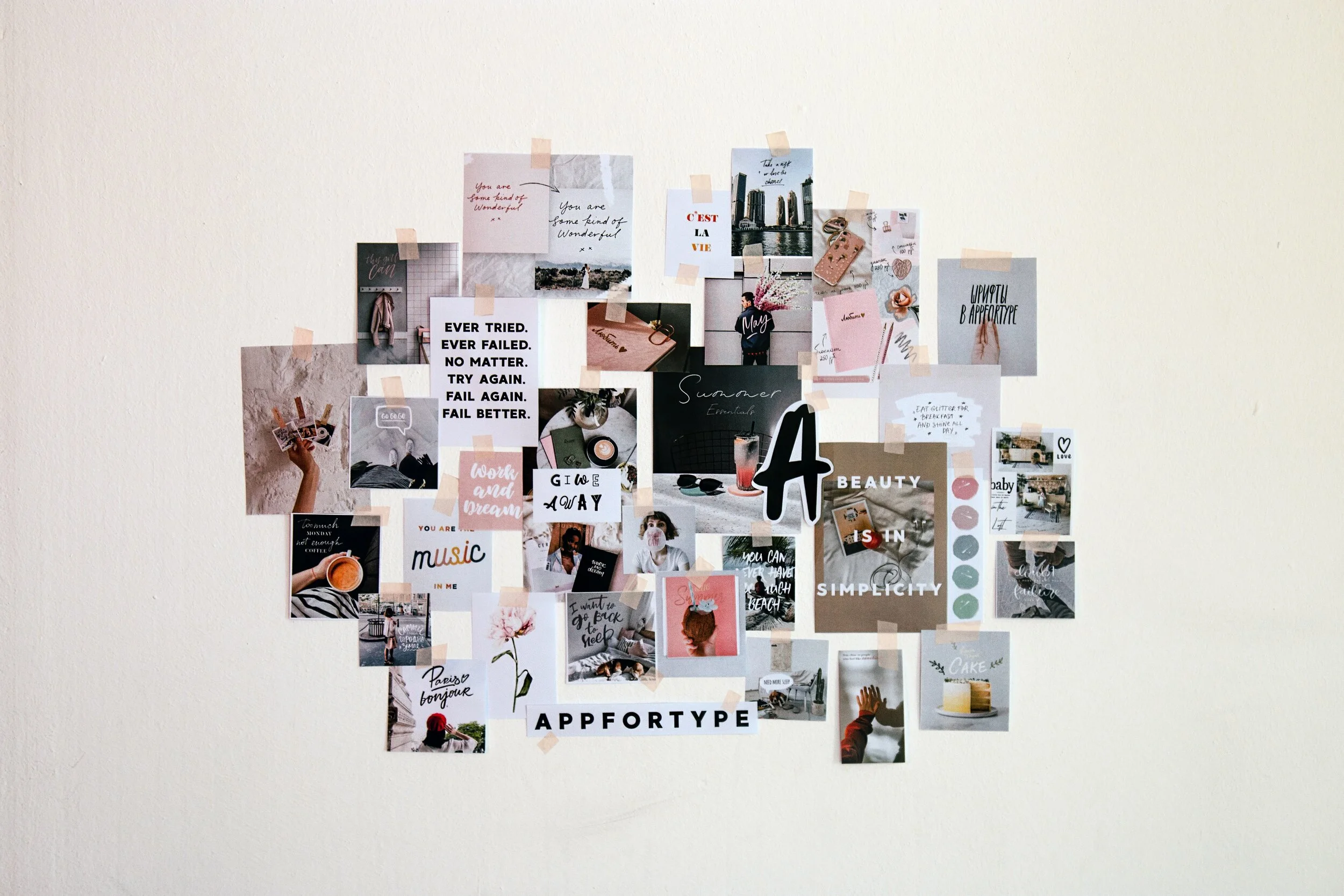
Now, you can do this by flipping through magazines or perusing the internet and building a tangible scrapbook or moodboard. If that’s your jam, godspeed – I love all things analog. But, if I may suggest a very speedy, immediate, and instantly gratifying method, head over to Pinterest (even if you’ve never used it because you’re pretty sure it’s the evil creation of Stepford wives). Pinterest is an awesome way to make mood boards, so make yourself an account if you don’t have one, and create a board with your name in all caps, or something like *  P E R S O N A L  *  B R A N D  * with some of your signature emojis thrown in for good measure (not that that’s what mine is called or anything…).

When an artist is starting a work, there are lots of jumping off points to clarify their perspective, ignite their creativity, and sharpen their references. One is to gather examples of imagery. These can be literal (“the play should be set in the Scottish highlands”) or figurative (“I want this dancer to move like a babbling brook”). These are the types of images you’re looking for: both literal and figurative. Here are some examples of what I have on my board and why:

  • Wilderness from the Pacific Northwest (it’s where I live, and I feel deeply connected to the scenery)

  • California beaches (Malibu is one of my favourite places on earth)

  • Cozy lake houses and cabins (I love going to cabins, and it’s my dream to own one)

  • Lots of pictures of lattes and books in cute coffee shops (speaks to my “cute nerd” vibe, plus I love both coffee and books)

  • Dogs, especially boxers (like my Molly!) and golden retrievers (which is what I would be if I were an animal)

  • A lot of organized but creative-looking desks (which is how I aspire to feel when I’m working)

  • Cute. Ass. Comfy. Outfits. (I like to include references for my personal style)

  • Beautiful living spaces (I also like to include references to my decorating style)

  • Houseplants, gardens, bouquets of flowers (As a Taurus, this is basically mandatory)

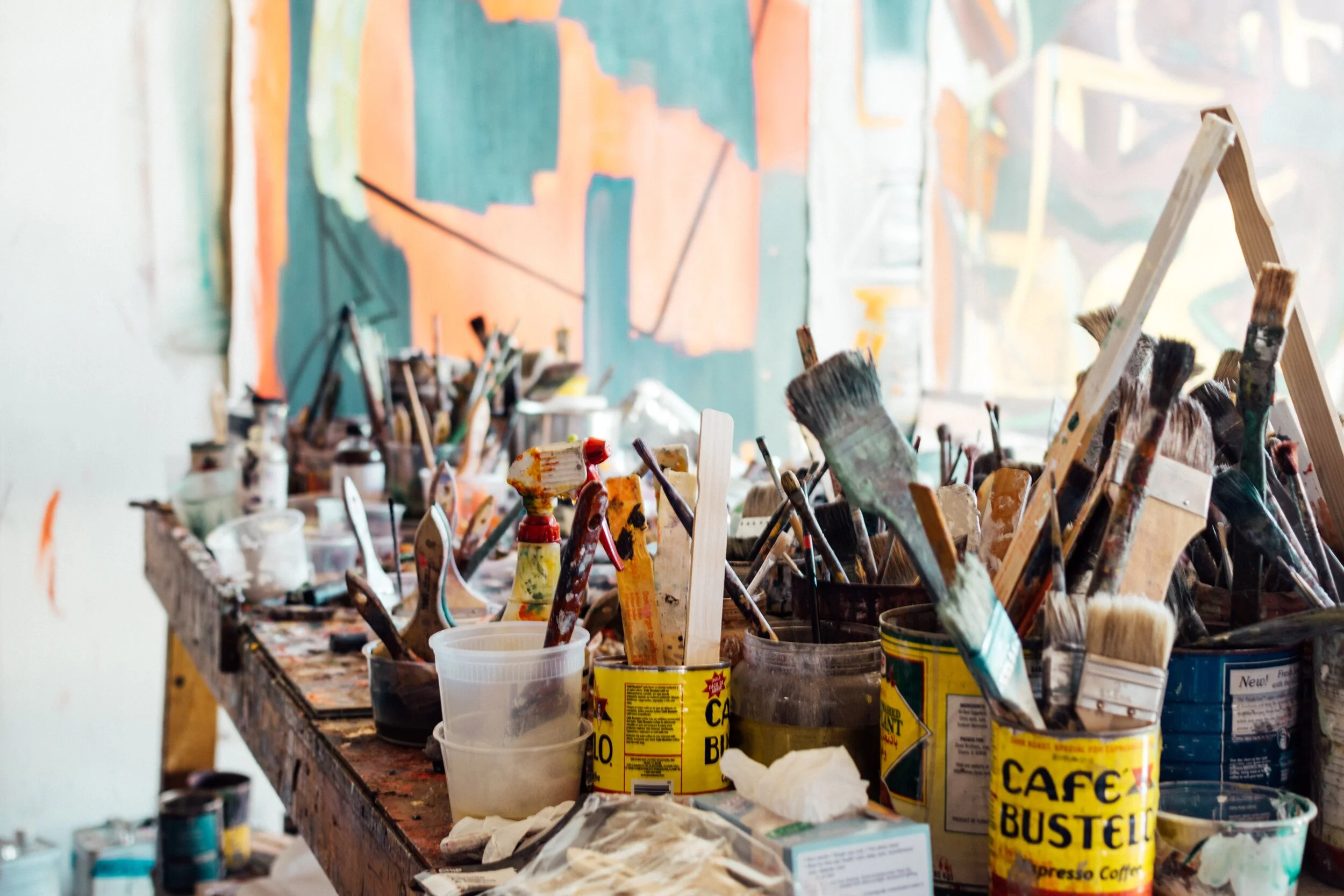
  • Lots of artsy stuff, like photos of artists’ studios, paintings, etc. (Obviously)

You can get as specific or as symbolic as you choose. On the literal side, I have pictures of my favourite things (like La Croix, cheap takeout sushi, embroidery, and the Penguin Classics books I collect). On the abstract side, I have a lot of pictures of blue sky (I’m an eternal optimist), blooming flowers (my word of the year this year was “bloom” – as in, allow for organic expansion and beauty in my life), and vast open fields (I see life as full of wandering adventure and possibility). 

My one cardinal rule is this: you cannot pin (or cut out and paste) anything unless it 100% – nay, 1000% – feels like you. This may take you a little bit of time to figure out, so don’t be afraid to delete some of the first images you select later on. But you will eventually find your groove where, as you’re scrolling, images start to jump off the feed and scream at you THIS ONE! When you really get in tune with that inner voice during this process, the images you select will be much, MUCH more cohesive as a group. In fact, you might be amazed (as I was) to scroll through the images once you’ve got a whole schwack of them to discover that…………

COLOUR

……… You’ve inadvertently chosen photos from a beautifully cohesive colour scheme. Don’t – DO NOT – try to do this up front. It is such a beautiful gift to have your unique style emerge from your choices, including your signature colours. When I first did this exercise, I was positively flabbergasted to see how cohesive my photos ended up being. I was just searching for keywords and selecting what jumped out at me, and lo and behold, a gorgeous palette of colours I never would have guessed to be my “signature colours” emerged. For me, these were black, white, rich leathery brown, and navy (all of which I would have suspected, as they make up 95% of my wardrobe), but also forest green, burnt orange (a HUGE surprise), hits of pale pink, and a soft ocean blue. 

If you’re drawn to colour like I am, this was such a revelation. I started seeing these colours everywhere, and using them wherever I could. I began selecting them for my clothing and accessories (even ones like the rich green, which I rarely wore before). I integrated them into things like my website and my Instagram photos (and not just for the purpose of marketing cohesion, but because they felt so much like me). I began bringing them out in our home decor. It might seem silly or shallow, but knowing your colours (and I don’t just mean colours that look good on you, but colours that feel like you) is a really uplifting thing to add to your life. It adds a level of cohesion to everything you do that is so intensely satisfying. Give it a try, even if you don’t consider yourself artistically-minded, or if home decor or fashion aren’t your thing. I think the hits of joy from seeing your colours might really surprise you.

TEXT

As a writer, I’m obviously word-obsessed. Many of you will also know one of my favourite hobbies is making all kinds of hand-lettered art (my graphic designer mom always thought I would grow up to be a typeface designer). I adore quotations, turns of phrase, inspirational snippets of text, single words that really speak to me… it’s all so me. So my Personal Brand board includes a ton of text (and, if you’re an old hat at Pinterest, you’ll know there’s oodles to choose from). If you like quotations, search for individuals you find inspiring, or just search for “inspirational quotes” or the like. If you, like me, love hand lettering, search for that (and you’ll find lots of great text along the way). Add verses from religious texts if that speaks to you. Toss in some poetry. Got a single word theme for your year, or a personal mantra? Search it and see what comes up. And same rules apply as above: only keep something that feels so much like you you can’t bear to leave it off your board. That’s the level of you-ness you’re looking for. 

More of a written word person than visual? Try this exercise instead

jeshoots-com-LtNvQHdKkmw-unsplash.jpg

I’m an EXTREMELY visual person – I learn better when I use visual methods, I like to use visual metaphors when explaining things (both professionally and in random personal conversations), and visual inputs and outputs (like my clothing and my decor) are important to me. BUT, I 100% know this isn’t the case for everyone. So, because self-expression comes in all shapes and sizes, I would like to give you a second way to curate your personal brand that is alllll about the written word.

Similar to my physical scrapbook vs. Pinterest methods above, you can either do this step in a physical journal or an electronic document – choose your own adventure. Personally, I find I get better personal insight when I handwrite (there’s something about having to write more slowly and with more physicality that lights up the more intuitive side of my brain), but I can type much, much faster, so it’s a real trade-off when I’m trying to do some creative written work focused on myself. Pick whatever feels best for you and run with it.

As above, I’ll give you three types of artsy/creative inputs that you might want to use for constructing a text-based reference/collection/jumping-off-point for your personal brand:

FACTS, FAVOURITES, AND MEMORIES

I’m quite obsessed with the practice of constructing characters, whether it’s in drama, film and television, or literature. I’ve always been fascinated by the idea of creative writers hashing out all the little things and reference points that make a character who they are. I used to think about this when I watched The Simpsons, since I’m so similar to Lisa. Does a writer somewhere have a big cork board (visual self assumes this is the only way to do it) full of sticky notes that say things like “saxophone”, “jazz”, and “academics”? Does it have repeated phrases she might be heard saying? Or her favourite things, like vegetarian food and feminist literature? 

Short answer: yes. This type of mapping – whether visual or written – is a classic way to construct a character. Now, without getting too ego-centric on you, it’s also a great way to hone in on your personal brand. Just remember: it’s not about artifice, it’s about reference points about what makes you feel like you. So just like you would write out facts about a character (places they’ve lived, what they do for a living, where they are in the birth order of their siblings if they have them), their favourites (foods, colours, animals, books, etc.), and their most cherished memories (times they felt a lot like themselves, which provide a ton of reference points about who they are and what they love), so too can we curate a beautiful list like that for ourselves. In fact, make a ton of those kinds of lists. Favourites of all kinds. Places you love and places you want to go. The people who are most important to you. Just toss anything that feels so you it needs to be in there in a big ol’ word pile, organized however inspires you. Have. Fun. Be. Curious.

POETRY, QUOTATIONS, AND BITS OF PROSE

As you might have caught when I was writing the section on creating a visual mood board, I love quotations. In fact, I was so obsessed with incredible quotations from historical figures when I was in high school that I made dividers for my binders with famous quotes paired with corresponding famous paintings AND I LAMINATED THEM. (Oh, you KNOW I was the coolest kid in grade 12 with those bad boys. Teenagers are really into people who are exceptionally nerdy AND crafty.) I love really juicy quotations from important people. The great speeches of world leaders are a favourite source, as are autobiographies of people I find inspiring. Of course, finding great quotes is a helluva lot easier with the advent of the internet, so get searching for (a) people you find inspiring, or (b) topics or ideas that are important and uplifting to you. I still keep copious notes of favourite quotes I stumble upon, and I think a person’s collection of quotations is a great reflection of their personal brand.

Of course, if you’re into poetry, this is a wonderful place to collect poems that really speak to you as well. My personal brand here would include a lot of Romantic poets like Keats, Whitman, and Dickinson (as you know, I love the classics of all art forms), as well as some choice 20th century poets whose conversational but striking work really speaks to me (my list would include my favourite poet, Frank O’Hara, and my beloved Langston Hughes). 

I would also pull bits of prose in here. Perhaps a marvellous turn of phrase from a novel I love, or even a paragraph from a non-fiction book or article I’ve returned to many times. 

ABSTRACT PERSONAL WRITING

For those of you who enjoy less concrete and more abstract self-expression, this is a great place for free writing of all kinds. Perhaps you’d like to riff on a subject about yourself, perhaps you’d just like to let the words meander and tell you about yourself – it is all fantastic. Me, I’m a super concrete person, so that kind of creativity is like amazing witchcraft to me, so if it resonates for you – do it!

How to use your “personal brand” now that you’ve got one

avel-chuklanov-DUmFLtMeAbQ-unsplash.jpg

So you’ve got a visual or written (or combo!) reference point/collection of all the things that really feel like you. What now?

When I was first learning about personal branding, I was told it was all about leveraging what you know about yourself to basically promote yourself – give better answers in interviews, make your LinkedIn snappier, etc.. But that just doesn’t make me feel inspired. What does make me feel inspired every day, in ways that are both concrete and amorphous, is knowing who I am on a deeper and deeper level. 

Here’s how I use my personal brand collection. First, I have a quick glance at it almost every day. As I said, mine is a Pinterest board, and I’ll just pop it open mid-day and have a wee scroll (I also keep a series of notes and collections of text in my bullet journal, so I’ll often have a flip there as well). I’ll also sometimes click on the “More Ideas for this Board” tab at the top in Pinterest and see if I come across more images to add (my board is absolutely ginormous after doing this for quite a while). Second, if I’m feeling down or out of sorts, I get in there ASAP. I feel so much better if I come back to me, and I find this to be such an inspiring, positive, and centering way to do that. Finally, as I alluded to earlier, if I’m trying to make a decision about something – whether it’s something silly like what colour to order a piece of clothing in to a big life decision that has absolutely nothing to do with the images I’ve selected – I go in for a scroll. 

To me, this is what personal branding is all about: returning to you, over and over again. Curating something beautiful and poetic and affirming about who you are is a gift you can give yourself that you can lean on every day. It doesn’t have anything to do with directly marketing yourself or getting better gigs or building your resume (even though, I think, those things can all come from a seed as simple as visualizing all the things that make you you). Instead, it’s about picturing all the wonderful things that make up who you are, and by knowing them, embodying them and projecting them out into the world. 

So I hope you’ve enjoyed this deep dive into what I think of as artistic, inspired, curated personal branding, and I really hope you try it for yourself. For something as seemingly silly as a bunch of journal pages or a flippin’ Pinterest board, it can literally change how you feel about yourself every day. And when that shifts for the better, everything can change.