


Month One Begins! Studying Art History
/
My year-long challenge (okay, 10-month-long, because it’s already March) is officially underway! In case you missed it, I’m spending 2021 on a voyage back to my artistic self. Having turned away from everything artsy that I consider foundational to who I am at my core, I am positively thrilled to be turning the hard lessons of 2020 into some positive action in 2021.
The project I chose to start with was intended to be an easy, comfortable way to get this endeavour underway. I thought I picked something that would be casual, light, and familiar – something that I enjoy, but that I don’t have a lot of baggage around. Well, it already turns out I was a little bit wrong, and on a journey to shake things up in my life and (hopefully!) find my way back to my truest self, I think being wrong might be good.
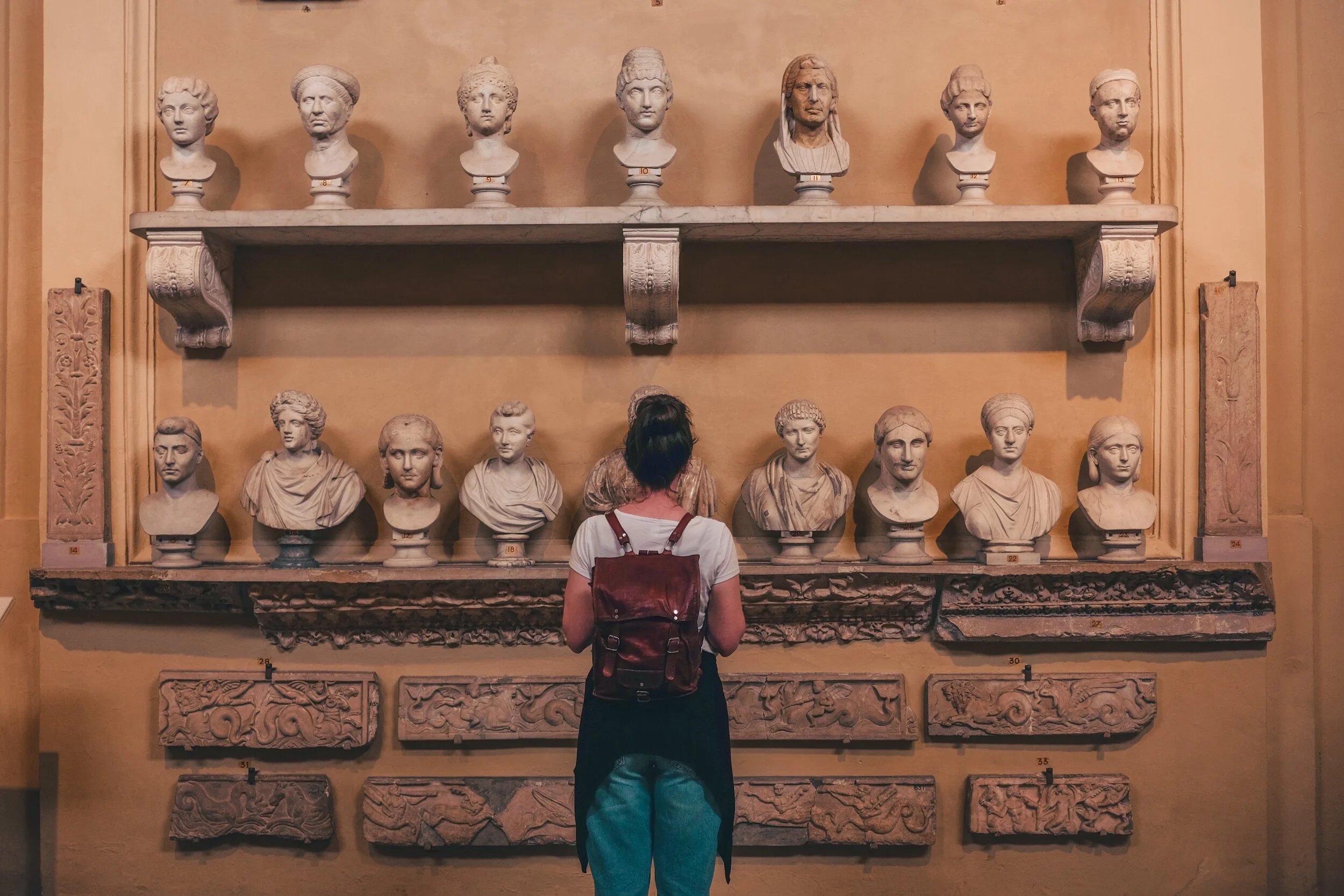
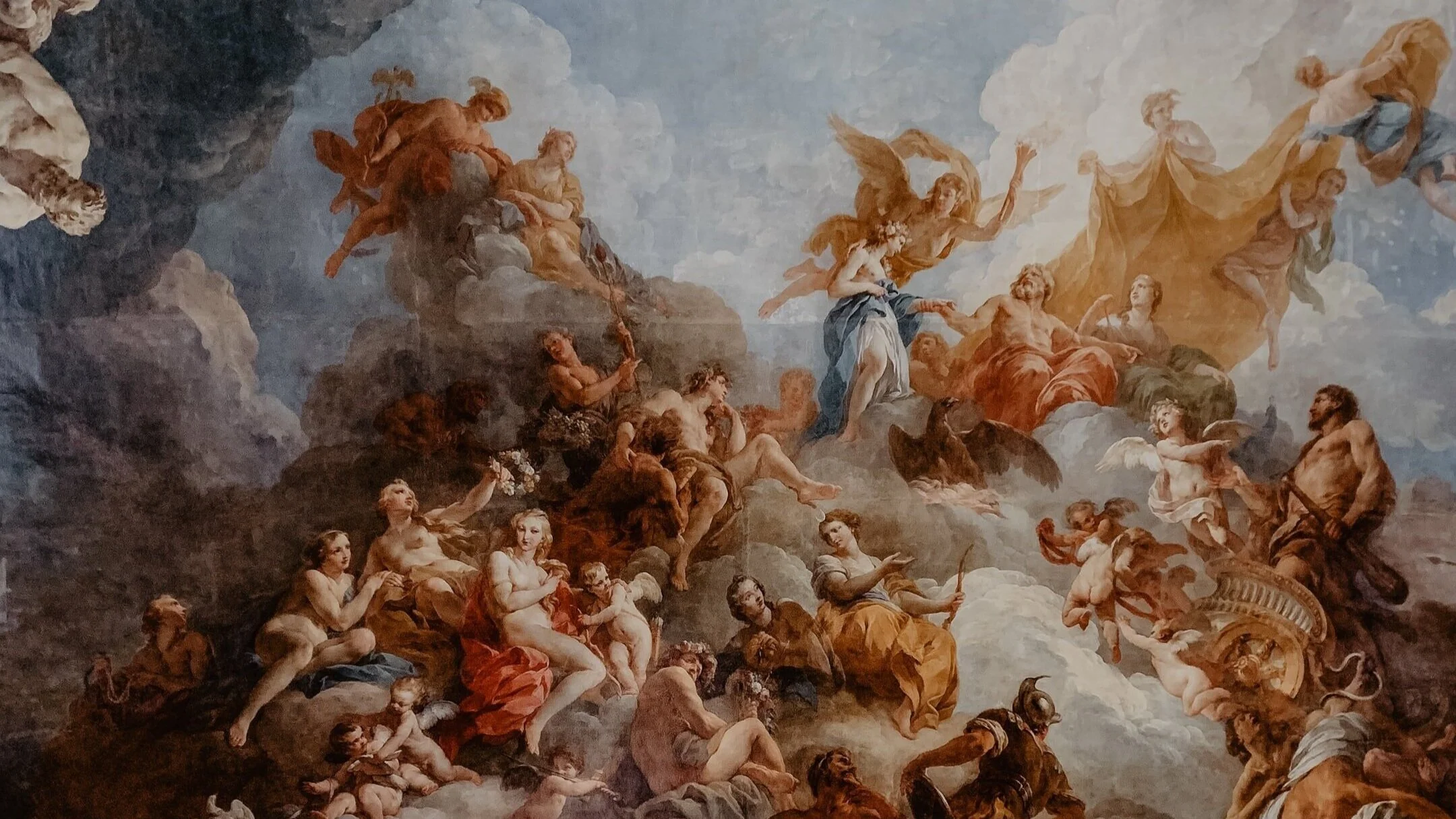
So, first the logistics, then some early lessons. The first project in my 10-month Arts Odyssey (as I’ve chosen to call this little wandering) is to Study Art History. I love visual art, I’ve always loved art history, but I’ve never had any formal education in it. Despite knowing lots of bits and pieces about the great artists of the Western world, I don’t really know a lot about the arcs and movements of art history (except where it overlaps most neatly with music history, which I studied extensively in my schooling to become an opera singer). Add to this curiosity the fact that I (pardon my French, but also – get used to it, I tend to curse a lot) fucking love studying. I love learning new things. I LOVE organizing information. I absolutely adore the feeling of being a little bit lost in a vast amount of material and figuring out how to move that information around, synthesize it, make connections, and emerge with my arms around what I’m trying to learn. Oh holy shit do I love it.
Which is pretty much why I went to law school in the first place. You see, in music school (especially opera programs), you take music history and theory and analysis and all those really wonderfully nerdy classes, but (by and large) you’re expected to put most of your focus on rehearsing and performing. By the time I was in my master’s of music program to try to become a professional opera singer, very little of my time was devoted to studying, and the courses I found myself in were… how should I say this… not exactly rigorous. When I hung up my ballgowns and decided to go back to school a couple years later, law school sounded incredibly appealing. Super nerd me wanted to be free to highlight, tab, and study to her heart’s content.
2020: “Here are some life lessons!”
2021: “What are you gonna do about it?”
Which brings me to some early takeaways I’m already seeing about myself as I pour over art history textbooks. This tension between my performer side and my academic side, I am coming to realize, has been within me for many, many years, and I’ve never really figured out how to merge the two. In fact, in a wonderful act of foreshadowing at my kindergarten assembly, I told the school that I wanted to be a “singing palaeontologist” when I grew up. When I was in middle school, I couldn’t choose which career I wanted more, so I told people I was going to be a political speech writer (because: The West Wing), but maybe also host “Weekend Update” on Saturday Night Live. This duality followed me through high school, where I identified closely with two identities: the performer girl, who starred in the musicals and played in all the bands and sang at assemblies and won debate competitions and gave speeches and all that shiny stuff; and, super academic girl who was the top of every class and won all the subject awards at graduation and made her own laminated, themed dividers for her binders every year (ironically, they were printouts of famous paintings with corresponding quotations from literature that I collaged… man I was cool.)
This duality in my personality and interests ran parallel pretty comfortably until it was time to commit to a course of study for university. High-achieving, people-pleaser that I am, I quietly wrote the SATs (I’m from a small Canadian city – there were only four of us writing them that year), applied to Harvard to study English literature, and got in. I hadn’t told any of my friends that I was applying.
In fact, most people in my life then or now don’t know that any of this happened, because – spoiler alert – I didn’t go.
I applied because it seemed like the logical thing to do. I was the best, so I would go study at the best. I wanted my parents and my grandparents and all of my teachers to keep seeing me as the best, so I needed to keep one-upping myself. I remember getting 105% on a paper in Grade 9, and that pretty much ruined me – there was no limit to how well I could do, so I would keep chasing “better”. If I didn’t, surely I would be letting everyone down.
So I got into Harvard. I remember feeling pride when the letter came, but also like the weight I carried around all day on my shoulders had turned into an enormous boulder, threatening to crush me at any moment. What would happen when I got there? Could I still be the best? I had gotten some funding, but it would still be enormously expensive to my parents, who had offered to pay the rest. How could I possibly do well enough to pay off that emotional debt to them? How would I ever justify their investment?
Rather than process any of these emotions, I became fixated on one aspect of Harvard that I knew I was excited about: the choir. Like all Ivy League schools, Harvard has a wonderful tradition of choral music, and being a choir nerd myself, I was sure I could get into the top-tier choir, and surely it would be wonderful. It’s the only aspect of Harvard I thought about. I would sing in the choir.
Then, one day, I was at a singing lesson, and my teacher said something along the lines of “if you had wanted to, you could have made it as a singer instead.” She may not have even been this explicit. She may have said “you could have been good enough to be a professional” or “maybe you might have enjoyed being a music major, instead” or “hey, could you hand me a pencil?” – whatever it was, I latched onto it like a life raft. I withdrew my conditional acceptance to Harvard and never sent my final Grade 12 transcript to finish my admissions process. I auditioned to my local university’s small music department, stayed in my childhood bedroom, and went on with my life in my hometown. As I watched the sparkle of pride dim in each family member’s eyes, then each teacher’s eyes, as I explained my decision, I felt like I learned what it means to let people down. I felt like my fears had been confirmed: I was my accomplishments.
“I felt like my fears had been confirmed: I was my accomplishments.”
Fast forward to when I decided to stop singing, and went back to school to do my law degree and MBA. I was so starved for academics. I longed to learn, to study, to delve in, to expand my brain, to debate, to feel challenged. And I also longed to stop performing. I was tired of being on display, and of being picked apart constantly. I wanted to take my makeup off and sit in a corner of a library by myself. Since there was no big moment of decision, my singing teachers and coaches and friends all just faded away as I stopped taking lessons, taking auditions, and performing anywhere. Then, as I told the non-singing people in my life that I was going to be an entertainment lawyer or an agent or an arts executive, I saw that spark of pride come back that I put out years ago. I was understood again. I was admired.
Until, of course, I quit my fancy, high-profile job to write and make things instead. This whiplash of what I perceived to be acceptance and even love when I achieved traditional academic or professional milestones, versus confusion or insecurity when I chose the arts and creativity, has been such a powerful pattern in my life, yet I am only seeing it clearly right now as I look down at my highlighted, dog-eared, sticky-tabbed version of E.H. Gombrich’s landmark tome The Story of Art. As I begin this project of studying art history, reading texts and making notes and drawing timelines and deciphering works I thought I knew, I am feeling that half of my heart light up that did when I was in law school, learning new things and making connections. But I also feel that other half warmly glow as well – the part that felt like I was touching heaven when I sang with an orchestra, the part that would swell like it would burst as I practiced a particularly beautiful melody, that part that recognizes a piece of music as so special that some part of it must belong to my soul and not just to the universe at large.
I think this merging of the two tracks I’ve found myself on to date might be the big reason for my Odyssey this year, but of course it’s too early to call it. After the profound separateness I felt in 2020 – a separateness from that glowing nugget we call “who I am” that I know so many of us felt in different ways – it feels amazing, even miraculous, to feel this integration occurring. It makes me so excited for the month and year to continue.
On that heavy note, I will delve back into my current study of late eighteenth century English art. Next post, I’ll give some tips on resources and techniques for study that I’m employing and enjoying. Until then: happy studying, if you’re studying along!
Integration, ho!