







From the archives: How to make the world's greatest Christmas playlist

tyler-delgado-497539-unsplash.jpg

Few things are as satisfying as a well-curated playlist. A playlist can set the mood (or ruin it), and can also become your personal soundtrack for a while. And, best of all, you can return to it later and be transported back to the time when you made it. Dreamy!

But, let’s be honest – a lot of playlists suuuuck. Especially Christmas playlists. But, you are looking at (reading at?) the CHRISTMAS PLAYLIST CHAMP. When I was a teenager, I used Napster and a first-gen CD burner to make my friends a truly kick-ass, totally curated Christmas CD every year. And those bad boys LIVE ON because they were actually great playlists. How can you make an equally legendary Christmas playlist? Read on my friends.

Why do some playlists suck?

Why do they suck so hard? What makes them so sucktastic? A few things, usually. First, songs you hate that interrupt your flow. You know how it goes… you’re really feelin’ a playlist (obviously not made by you), then one of your most-hated songs of all time comes on. It… kind of throws things off. For me at Christmas, that song is “Last Christmas” by Wham. UGH! Get that garbage outta here. (Everyone’s got “that song” at Christmas, and when you use pre-made playlists, it sneaks in there!) To avoid this, make your own damn playlists that you truly love.

Another thing that ruins otherwise good playlists are song transitions that are too jarring. This one’s easy to fix in your own playlists by listening to the starts and ends of each piece back to back (no need to test the whole playlist at once – just test the transitions). Reshuffle the order of tracks where it feels yucky (it’s probably because the tempi – speeds – of the pieces are too dissimilar, and not in a pleasing way; or, because the keys of the pieces don’t jive well, and your ears will tell you that – no need to over-analyze). And don’t play your own playlists on Shuffle until you’re a little sick of them. You’re better than that.

Finally, and most importantly, the thing that makes a lot of pre-made Christmas playlists so bad is that there isn’t enough variety. You know what you like, and that’s great… but that can also mean playlists that are a real snooze. If you like the singer-songwriter/indie/alternative genre most of the time, super. But a whole Christmas playlist in that style can be… really boring. As well, even if you DO have variety, you’ve gotta put it all together and mix it up in terms of order, otherwise you’ll have unequal distribution of different genres. No sense in having two sappy ballads back to back when you’ve got a whole playlist to work with.

Great, so how do I make a better playlist?

Ok, so obviously you know I’m gonna tell you to put some classical and jazz on there. But don’t worry, I’ll show you how to do it in a decidedly non-sucky way so that you don’t hit a random, kind of crap classical piece and skip it every time.

So, my friends, FIRST I’m going to tell you how to build your base playlist.

THEN, I’ve put together a list of 10 classical pieces and 10 jazz tracks for you to slot in there to spruce it up and take it to the next level.

Are you ready?! Let’s do it!

rodion-kutsaev-55088-unsplash.jpg

How to make a LEGENDARY Christmas playlist

Oh, it’s about to get REAL up in here

Let’s make the best Christmas playlist of your whole damn life

1.     Obviously, create a blank playlist (in Apple Music or Spotify or on YouTube – you do you.) Give it a cute or hilarious name. Don’t you dare just call it “Christmas.” Have fun for once in your life, Gary.

2.     Pull up the pre-made Christmas playlist on that platform that MOST appeals to you. Maybe it’s “Christmas Pop” or “Traditional Christmas” – doesn’t matter. Just pick one where, when you open it, you generally like the vibe and know lots of songs.

3.     Go through and add songs from that playlist into your awesomely-named personal Christmas playlist. The trick here is to only add songs you already know you LOVE. No “well, that song is okay…” or “well, I think other people like that song.” It’s YOUR damn playlist, Linda.

4.     You get to make one more pass through the same playlist to see if there are any songs you DON’T know but that are by artists you already love. Have a quick listen to the beginning of the song. Are you instantly drawn to it? I usually know if I’ll love a song in about 15 seconds. Feeling wishy-washy? THANK U, NEXT.

5.     Do that same routine with no more than three pre-made playlists. Myself, I usually start with a pop Christmas playlist, an alternative or singer-songwriter Christmas playlist, and finally, a “100 best Christmas Songs of All-Time” or similar playlist. (And obviously this is BEFORE I launch into classical and jazz.)

6.     BONUS STEP! If you have a ballin’ playlist from last Christmas already, here’s where you cross-reference and do a quick scan through that one to see if there are any beloved favourites you missed. For example, this year I missed “Text Me Merry Christmas” by Straight No Chaser with Kristen Bell, which I ADORE, so it made this year’s playlist as well. 

7. Have a look through what you’ve got and put it in an order you think works. The trick is to get as much variety as possible from song to song (i.e., a ballad then an up-tempo pop song, and you also want to try to mix genders of singers back-to-back, groups versus solo, old versus new music, etc.)

8.     Okay, y’all. You probably are dreading this next step if you aren’t already into classical and jazz, but OH JUST YOU WAIT FOR HOW AWESOME YOUR PLAYLIST GETS! Now we’re going to find a handful of classical pieces and a handful of jazz tracks to mix in. Like smarties in trail mix, they’re about to make this beast SO MUCH BETTER.

markus-spiske-155949-unsplash.jpg

Classical & Jazz additions to uplevel your Christmas playlist

“Damn, Sandra – you are SO classy!”

CLASSICAL PIECES TO MIX IN TO YOUR ALREADY BALLIN’ PLAYLIST

1. “Hallelujah Chorus” from Handel’s Messiah

Look, I could try to be cool and suggest a different movement from this choral spectacular, but – let’s be real – you want this on your playlist so it will FEEL LIKE CHRISTMAS, MAN! 

2. Tchaikovsky’s The Nutcracker: Waltz of the Flowers (Act II, No. 13)

As with Messiah, you’ve gotta have a couple “greatest hits of classical Christmas music” on your playlist, and what’s more quintessential Christmas than The Nutcracker. Obviously, it’s jam-packed with great music pretty much start to finish, but I love Waltz of the Flowers the best. Can’t beat those french horns.

3. Bach’s Christmas Oratorio, BWV 248: “Jauchzet, frohlocket!” (Part I, No. 1)

Again, this is one of those classical essentials. I like this grand opening by Bach, because it captures that epic-feeling of excellent Christmas church music. Tuck it after a loud-ish, uptempo tune to smooth out your playlist… that intro will sneak up on you otherwise!

4. Anything by the Canadian Brass

Brass = Christmas for me, so you MUST include a brass quintet. I love their Carol of the Bells or God Rest Ye Merry Gentlemen.

5. “Lo How A Rose E’er Blooming”

Gotta pick a choir for this one – the harmonies are just incredible in human voices. This always makes me want to have a pot of tea, cuddle up by the fire, and pretend I’m in a little English cottage like in The Holiday. I found a lovely recording by The Cambridge Singers on Apple Music, if that’s your jam.

6. “Hark the Herald Angels Sing”

I sang in a very good children's choir through high school, and we did an epic, proper Christmas concert at the beginning of every December. For me, it’s not Christmas until the descant kicks in on this bad boy (that’s where the sopranos sing way up high above the melody and it’s WONDERFUL). Also, did you know this is actually by classical giant Felix Mendellsohn? You’ve GOT to pick a real choir for this one (aka, not Mormon Tabernacle, who I think are terrible for a variety of reasons). Choir of King’s College has a few quality recordings, but you know you’ve found a really good one if it starts with the brass fanfare.

7.  “Maria Wiegenlied” by Max Reger

I ADORE the recording from Carnegie Hall with Kathleen Battle & Frederica von Stade (André Previn conducting). It is UNREAL.

8. “Night of Silence”

There are lots of beautiful instrumental versions of Silent Night, but – pro choirnerd tip – there’s nothing like the arrangement for choir called “Night of Silence.” Oh my god. It’s so beautiful. I found a lovely recording by Canadian women’s choir Elektra. (Choir buddies – I bawled when I listened to the Elektra version. So many memories of children almost starting each other’s braids on fire with their candles…)

9. “Panis Angelicus” by César Franck

This is one that’s been recorded by a lot of “popera” or “crossover” singers (like Josh Groban, Sarah Brightman, people you’ve seen on America’s Got Talent etc.), so by all means go for someone you already like if you want. But, if I were you, I would pick the sublime opera legend Jessye Norman with The Royal Philharmonic Orchestra, if you can find it.

10. “O Come All Ye Faithful” (aka, “Adeste Fideles”)

There’s a wonderful version by the Three Tenors, and another with just Pavarotti. Like the descant in Hark the Herald Angels Sing, it’s not Christmas until I hear the chord change in this one at “Word of the Father now in flesh appearing.” SWOON.

JAZZ CHRISTMAS MUSIC TO REALLY LOCK THIS FUCKER DOWN

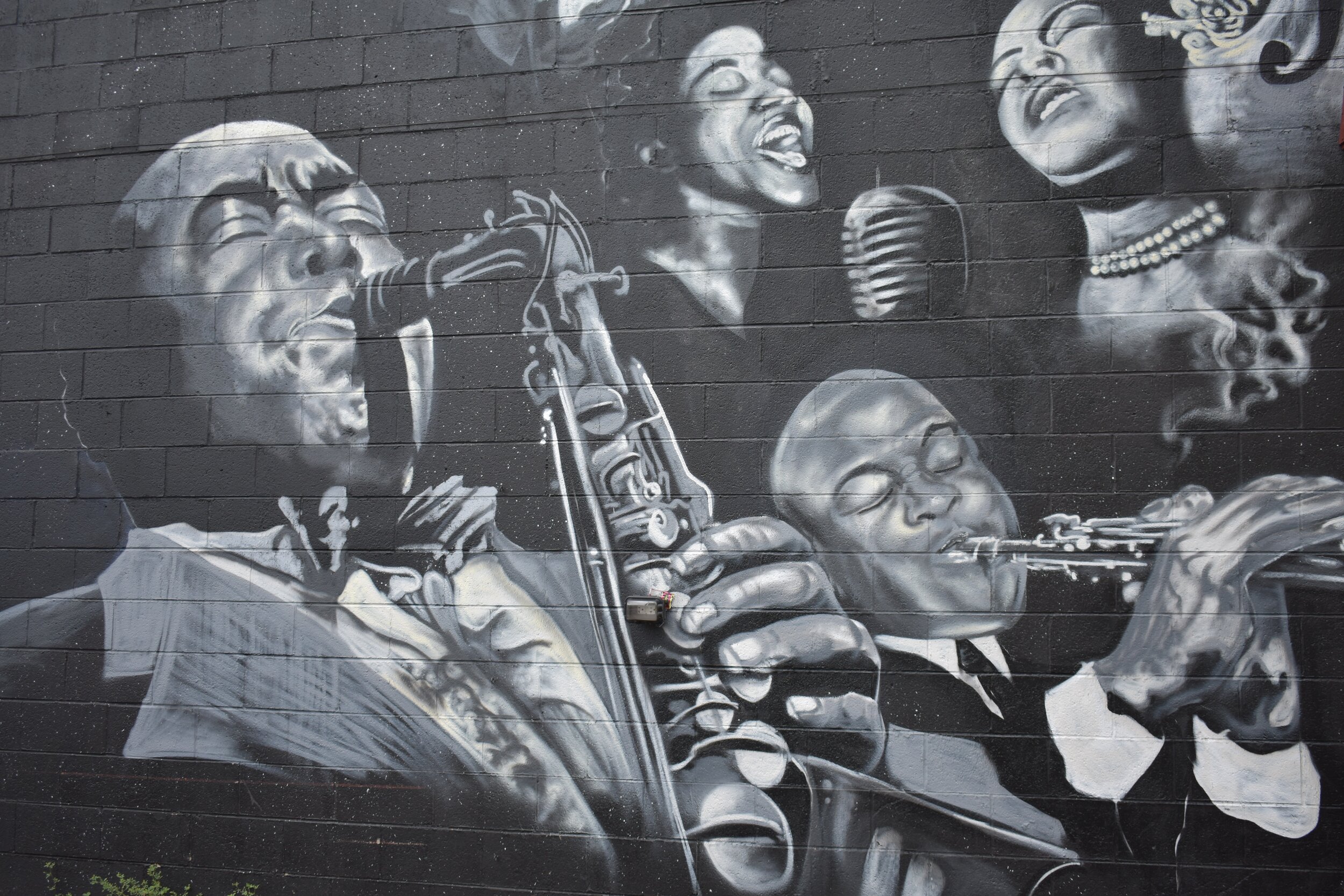
1. Mandatory Vince Guaraldi track(s)

Okay. So. I love Vince Guaraldi so much that the Charlie Brown Christmas album could form the backbone of my Christmas Playlist. I always include the instrumental version of “Christmas Time is Here,” plus “Skating” and “O Tannenbaum.” The other classic choice is “Linus & Lucy.”

2. “Sleigh Ride” – Diana Krall

Can’t go wrong with a Diana Krall piano+vocal version of a Christmas standard (her whole Christmas album from about a decade ago is really great). Personally, I like her “Sleigh Ride” with the Hamilton Jazz Orchestra the best. 

3. “The Christmas Song” – Chris Botti

Botti toured with Sting for a long time, so he’s basically Sting playing a trumpet – like, in a good way. He’s soulful, easy to listen to, and plays so beautifully it will simultaneously make you feel really sexy but also want to kick back with a puzzle. His Christmas album “December” is very good, and I particularly like this casually rhythmic version of the fireside classic.

4. “Sugar Rum Cherry” – Duke Ellington

This track is my secret weapon for making an incredible holiday playlist. Seriously. Game-changer. 

5. “What Are You Doing New Year’s Eve?” – Ella Fitzgerald

Not exactly an obscure choice, but it’s just SO GOOD. The ending – oh man. I love how Ella’s lively, colourful tone can break up an otherwise Pop-y playlist in a way that feels natural.

6. “Cool Yule” – Louis Armstrong

Part of what I love about adding jazz to a Christmas playlist is that warm, nostalgic feeling from old recordings. This Louis Armstrong will make you feel like you’re laying on the shag carpet in your grandma’s livingroom, guaranteed.  

7. “The Hanukkah Waltz” – Bela Fleck & the Flecktones

First of all, you’ll feel like less of a jerk when your Jewish friends are over and you’re only blasting songs about the birth of Christ. Second, the clarinet on this track is just AWESOME.

8. “Frosty the Snowman” – Harry Connick, Jr.

The screaming horns at the beginning of this track always make me think of Christmas. (Can you tell my husband is a trumpet player?) This is a great way to spice up a slower playlist. So good.

9. Any version of “The Christmas Waltz”

For fans of Hamilton, Leslie Odom Jr. has a very good Christmas album with a delightful version of this song. I also really like the Dave Brubeck version, if you’re more into the instrumental vibe.

10. “Jingle Bells” – Frank Sinatra

Just like with the classical picks, I could try and be super obscure and cool, but frankly – what’s the point. Love Frank. Love this tunes. Fuck it.


And, here are a few BONUS TRACKS that are amazing and kind of related but don’t really fit anywhere:

1. “Nutcracker” by Straight No Chaser (it’s hilarious, even if the message is a bit… #offbrand)

2. “Waltz of the Flowers,” from the Nutcracker, as reimagined by Pentatonix

3. “Pennies from Heaven” by Louis Armstrong (because it’s in Elf and I love that part, even though it’s definitely not a Christmas song)

4. “Count Your Blessings” from White Christmas (clearly the best part of that movie, even though it’s not specifically Christmassy)


Hope that spruces up your holiday playlist! I know mine is now in the best shape it’s ever been.

I’ll also be sharing my other Christmas playlist secret weapon songs over on my Instagram, so check it out!

Now, to enjoy. Happy Holidays, everyone!


/k

How to Support an Artistic Child During Recital Season

catalin-balta-Cd2CEOe2Tdc-unsplash.jpg

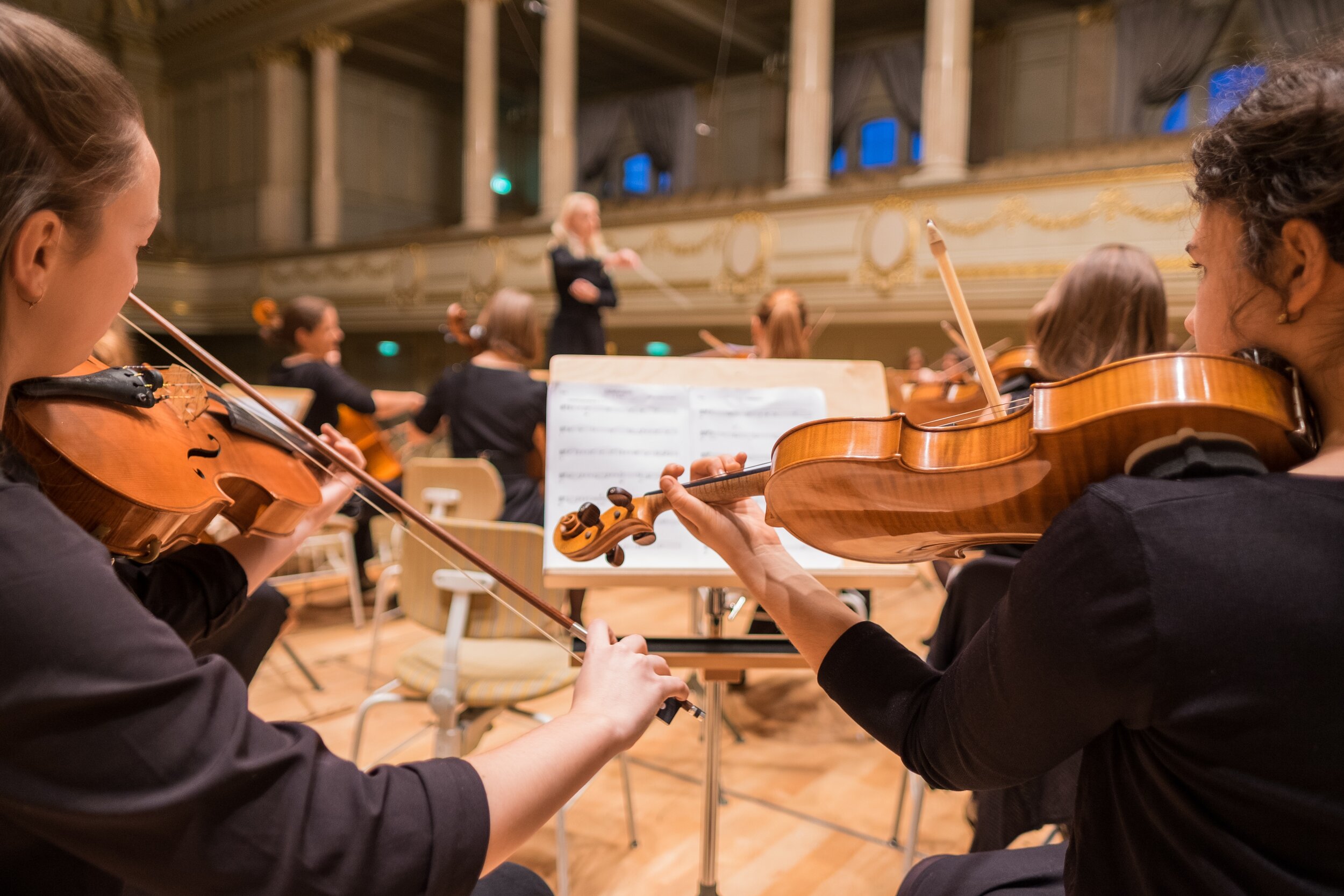
It’s winter recital season for little musicians and dancers, and with our own first baby on the way, I’m thinking about artistic kids (with two musician parents, we might end up with a child resigned to never be a performing artist, but who knows!). Sometimes it can be difficult to know how best to support your budding violinist or ballerina if you were never in the performing arts yourself. So, from the perspective of someone who has been a little musician, taught little musicians, and been around a gazillion little musicians over the years, here are five ways you can support your artistic kid this holiday recital season:

1. SET UP A DRESS REHEARSAL (or a couple)

Whether you have a child in a group artistic activity (like choir or dance) or a solo one (like violin or piano), giving them a chance to do a “run-through” of their upcoming performance can go a long way toward soothing their nerves, and can be a great way to make them feel more confident (plus, it gives kids an earlier date to prepare for than the night before the performance). I remember playing pieces for my grandparents the week before my recitals, and it was a huge help. If you’ve got kids who are pretty new to performing, I would also recommend they try out their concert attire for this “dress rehearsal” for family or friends. It’s never a pleasant experience to find out something doesn’t fit (or pulls funny, or is itchy, or “just is totally wrong, mom!”) five minutes before you need to leave the house.

2. ASK THEM ABOUT THEIR “GAME DAY” PREFERENCES AHEAD OF TIME

It’s good to talk through how performance day will go ahead of time so that you know (a) what the logistics are (ask your kid what their teacher has told them, if there are any handouts or emails about the recital, etc.), and also (b) what your little performer’s own preferences are about the day. For example, when I was a kid (okay, all the way through to when I was a professional performer), I always wanted to be really early for performances because I was nervous about being late. My parents would always want to leave the house at a perfectly reasonable time, but I wanted to be really early. Maybe your kid wants to sit up at the front of the church or recital hall with their friends and not with your family. Maybe parents aren’t allowed backstage, but they’d like you to walk them as far as you can go, then have your cell on hand in case they forget something. Talking through things ahead of time avoids accidentally hurt feelings and extra nerves (for both of you!).

3. TAKE CARE OF LOGISTICS

If you’re looking for a way to support your budding performer, one of the best ways is to let them know that you’ll handle all the logistics. I appreciated people doing this for me all the way up until I was a professional, and I still try to support my performer husband by offering assistance in this area. Way ahead of time, this includes making sure a little solo musician’s accompanist has a copy of their music (ask their teacher), ensuring their costume needs are taken care of (for little dancers and for holiday pageants), and making sure they know what they’re going to wear and having all the pieces of it ready to go. On the day of, let them know what time you need to leave the house and provide some warnings leading up to departure, have an easy-to-digest-but-protein-filled meal before leaving (eggs and toast is great, as is the classic PB&J if your child can have it – both reliable meals even professionals often eat before performing), pack a snack they can have backstage (a banana and crackers is great for a nervous tummy), and fill up a water bottle. Finally, help them do a last minute talk-through of everything they need to take with them when you leave the house (“Music?” “Check!” “Water bottle?” “Check!”). Once you get to the venue, help them find where they need to be, even though they might know better than you. For all logistics, nerves can really get in the way of clear thinking, so allow for extra time and provide a little extra assistance, even if you have a very self-reliant little performer.

4. GO TO THE PERFORMANCE!

Your kid might say they don’t want you to come. Or they might use the classic “you don’t have to come, it’ll be boring.” Obviously it’s going to be boring – it’s a performance entirely made up of children who are just starting to learn to do the thing they’re doing. Insist on coming (unless they really, truly freak out about you being there, in which case maybe offer to be backstage with them), and invite siblings and grandparents as well, if you can. Those early signs of support mean so much to a kid just starting out on a performing arts journey. Find out beforehand if you can take a picture or video, and ask your child if they would like their performance videotaped (some, especially older kids, often would prefer that you just watch, but some really want the video). Get a picture of them in their finery after the performance. Bring flowers! Go for a special meal afterward! Recitals are a big deal for kids – they’ve been working toward them for months, and they can be really nerve-wracking. Make the day feel special. (Critical tip: show respect and support for everyone else’s kids and your kid’s teacher by being a good audience member throughout the show. Stay for the whole performance, applaud, and stay off your phone. I KNOW it’s hard. You can do it.)

5. SHOW THEIR TEACHER(S) YOU APPRECIATE THEIR HARD WORK

Recital season is next-level crazy for music and dance instructors. Like, ca-ray-zee. This goes for private instructors and teachers at school. After the concert or recital or winter pageant, go let your child’s instructor(s) know two things: (1) how great you thought the whole performance was, and (2) how much you appreciated getting to see your child perform so beautifully. Your kid’s accomplishment that day is a reflection not only of your child’s hard work, but also of their teacher’s. And a small gift goes a long way. My personal favourite? A card from your kid with a modest gift card for a coffee chain. Easy to bring in your purse or pocket, easy for the teacher to actually use, much needed, and super appreciated. 

So those are my tips for supporting a tiny performer this holiday recital season. Whether it’s a violin recital or a solo in the choir on Christmas Eve, make your little artist feel special, supported, and celebrated!

Happy Holidays!

What it's Like to be a Professional Classical Musician

patrick-schneider-lBZKn4a8Qmg-unsplash.jpg

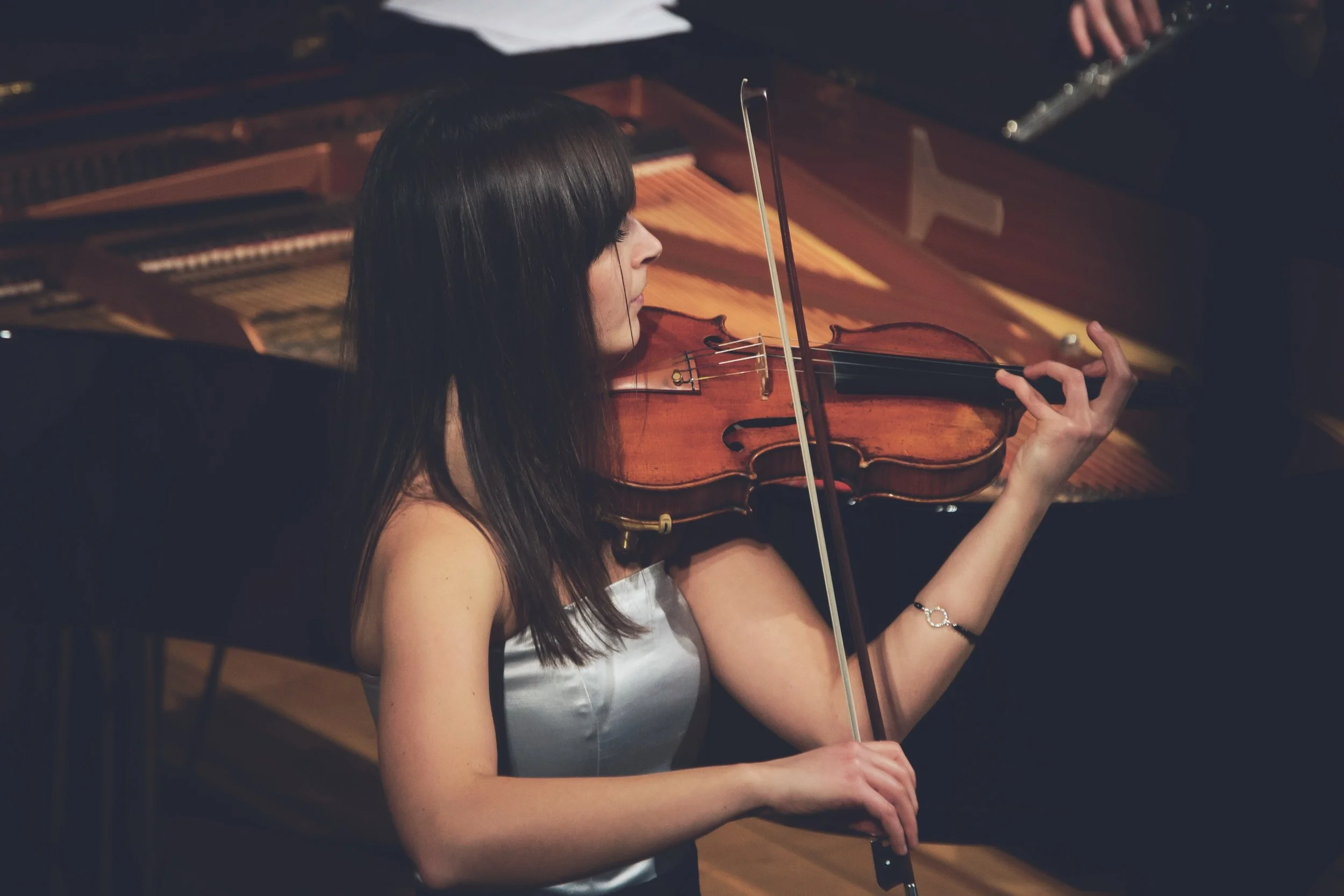
One of the things I find most interesting about the fine arts is that they’re really mysterious to people outside them. When I tell people I used to be an opera singer and my husband is an orchestral trumpet player, they look at me like I just told them I make potions in my gingerbread house for a living. Jobs in the arts are just like other jobs: there are real, actionable, sometimes winding and sometimes straight paths to get them. And treating arts jobs as “out there” is a very North American construct that isn’t helpful to fostering creativity in our communities (let alone in the minds and hearts of individuals who would really like to pursue them).

We just got back from our hometown of Saskatoon, Saskatchewan, where Ryan was playing a concerto (that’s a solo in front of a symphony orchestra if you’re new here). As part of that engagement, he was also giving a series of talks to high school and university students about not just becoming an orchestral musician, but about following your curiosity and enthusiasm toward any career. I love this talk that he gives, because kids (and, let’s be honest, adults) are always amazed that something that sounds kind of pie-in-the-sky like “becoming a professional trumpet player” is actually almost as straight-forward as becoming something like a doctor or engineer.

So today, I’m going to tell you what the path to becoming a professional musician actually looks like. My hope is that (1) you might find out a little more about the world of classical music, and (2) that you might find some inspiration for your own main gig or side hustle path and see that, even when something creative and artsy and inspired sounds kind of crazy, it’s often actually pretty do-able.

To lay the groundwork, why don’t I tell you where Ryan and I got our classical beginnings…

Our very different musical beginnings

ivanna-blinova-UA76cH4JBHM-unsplash.jpg

First, the road to classical musicianship. As I said (and as many of you already know), I trained for many years to become a professional opera singer. I have both a bachelor’s and a master’s degree in opera performance. My husband, Ryan, is a professional orchestral trumpet player – his full-time job is playing in a symphony orchestra. Here’s how we got there.

Ryan’s and my paths to being professional musicians looked, well, a little different… at least at the beginning. I started piano lessons when I was five after falling in love with an old piano at some random relative’s house. I was a super piano keener, and excelled at music from the time I was really little. I sang in school choir from grade one on, joined band in grade six (first on flute, then bassoon, then trumpet, then percussion and french horn in high school, because I got bored each time I got too far ahead of the other kids…). In high school, I was big into musical theatre, kept playing piano at a high level, dabbled in classical guitar, played in jazz band, started taking formal voice lessons, and also joined a super elite girls choir that did long tours abroad and won international competitions. From there, I decided to major in music (after bailing on going to Harvard for an English degree… another story for another day), and settled on being a voice major (rather than major in piano, so that I could keep my non-university piano teacher and possibly capitalize on my super-loud voice/personality). That’s when I met Ryan: on the first day of my undergrad music studies.

Let’s catch up to this point with Ryan, shall we? Ryan was more of a sports kid than a music kid, playing baseball competitively through to high school, then switching to volleyball and badminton. He joined band in elementary school, choosing the trumpet because his mom told him he could only pick something that didn’t have reeds (which, for you non-band kids, are a disposable part of clarinets, saxophones, oboes, and bassoons that needs to be frequently changed and, thus, frequently purchased and picked up from a music store by your parents). He kept playing into high school, where a particularly inspirational and all-around awesome teacher told him that he was actually super talented at music, and that our local university had a great double-degree music/education program where you could get both degrees in almost the same time as just one. Ryan had never even considered that music education was a career, let alone one he might excel at. His band teacher got him into private lessons to prepare for his audition, and thus began his path to professional music (and, as it turns out, to me – thanks, music teacher!).

The basic path to becoming a classical musician

jan-strecha-lp4j3sjaocI-unsplash.jpg

These are two pretty typical beginnings for classical musicians. Lots of us start out as wee children in group piano or violin lessons (like I did), and that begins our journey to being professionals. Others start later – often through school band and choir programs (like Ryan did). Heck, I know a music prof who didn’t really play piano seriously until we were in first year university (he was there studying music history). Other friends of ours, especially American friends, started intense, competitive orchestral training in high school or younger – way earlier than Ryan and I were accustomed to in the Canadian prairies. Like most careers, there are a lot of roads that’ll get you there.

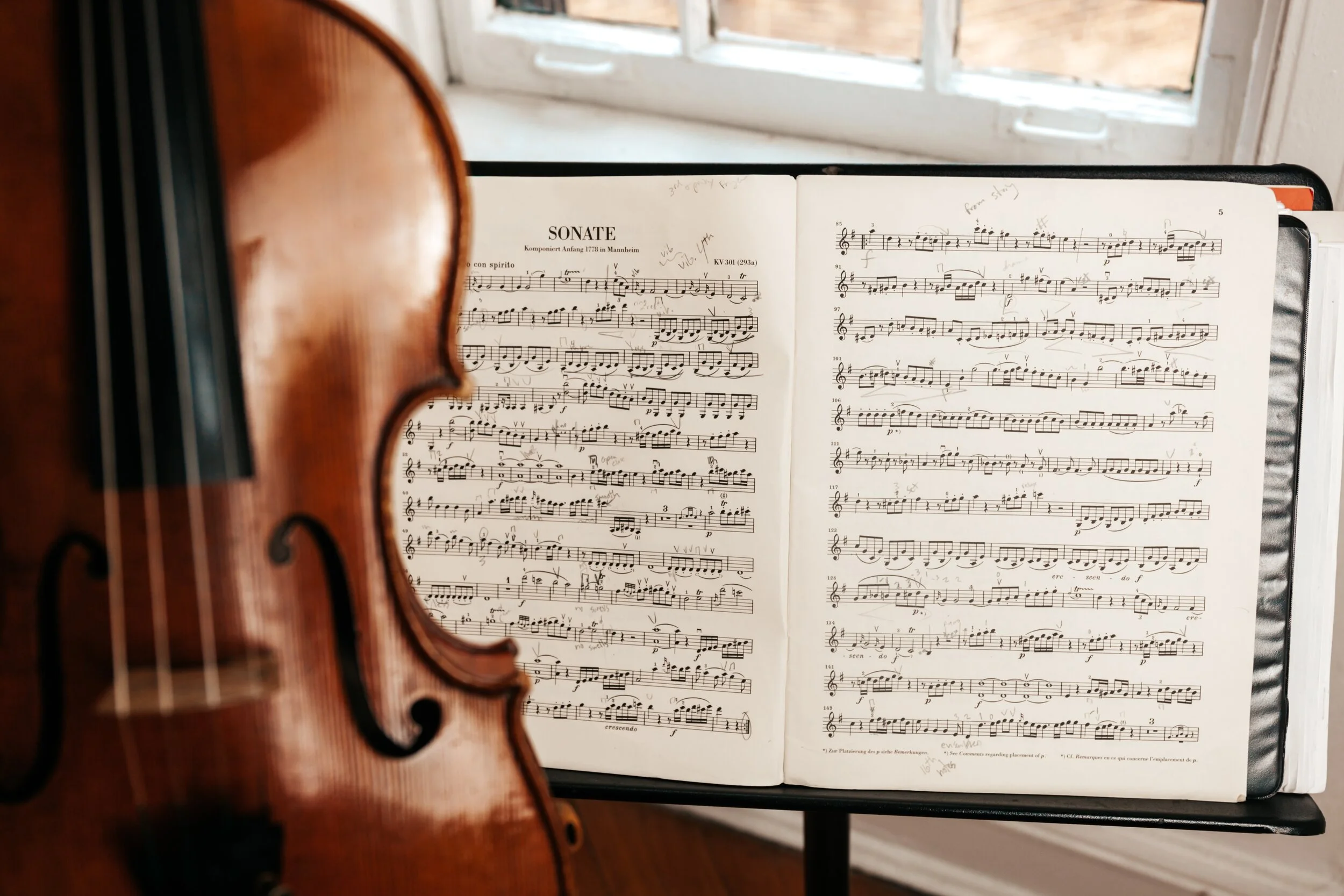
Then, once you’re in undergrad, it all gets a bit more standardized. Most students on a trajectory to becoming professional musicians take a bachelor’s degree in music performance either from a university or a conservatory (which is often an off-shoot of a university, with more focus on music and music-related courses, and fewer liberal arts requirements). During this four-year degree, you take classes in music history, music theory, piano skills, listening skills, and lots of other classes on everything from conducting to acoustics. You also take weekly lessons from a teacher of your instrument, and have “studio classes” with the other students who study with that same teacher, where you play for one another for practice and to learn how to offer and take constructive feedback. Most programs have an “ensemble requirement,” meaning each student has to be in orchestra, band, choir, or another ensemble, and all programs have some sort of performance requirements, including, usually, an hour-long graduation recital in your fourth year.

During the summers of university music studies, students try to get into what are called Summer Programs, or Summer Festivals. These are essentially training institutes, run by other universities or by classical music festivals. Some are the whole summer long, and students either live in dorms or homestays, and others are just a couple weeks. The objective is to get into high-quality, prestigious Summer Programs that have world-class instructors to both improve your playing/singing and bolster your resume. Because then we have…

Grad school auditions. Most professional musicians these days have an MMus (Master’s of Music in performance), and many have a DMA (Doctor of Musical Arts). Auditioning for grad schools is a musician’s opportunity to find an ideal teacher and program that will support their career aspirations. For example, I chose a voice teacher of my own voice type who had sung all the roles I wanted to sing, at a program that offered me the most opportunities to build my list of roles, since my undergrad school didn’t have an opera program. Ryan chose a school that had an orchestral specialization with a teacher whose sound and approach to playing he liked. Plus, to be honest, you’re often looking for a school that will give you some funding (like any university application process).

Getting a professional job

michel-catalisano-OZDmI-vO7Io-unsplash.jpg

Once you’re out of school, you start auditioning in the “real world.” For an opera singer, this means auditioning for opera companies’ Young Artist programs, which are like apprenticeships. For orchestral musicians, you launch headfirst into taking blind auditions for orchestras (called that because the auditioning musicians play behind a screen so the panel can’t be biased). Pianists and other soloists often continue along a circuit of competitions, hoping to win a recital tour or big gigs with orchestras to launch their careers.

Some musicians land a dream job right away, but most spend a couple years “gigging” – subbing with orchestras (playing one-off concerts to fill in for someone who is away), playing “pick-up” gigs (where there’s no set ensemble, like for a special event), playing weddings and funerals, being the paid weekly soloists/choir leaders at big churches, and teaching private lessons. Lots of musicians also spend the first few years of their careers moving up through a couple different “tiers” of ensembles (landing a small, regional orchestra first, for example, then continuing to take auditions until winning a job in a bigger city for more pay). Every road is different, and being a professional musician can look about a million different ways. Some musicians love gig life and decide that it’s better than being tied down. Some singers take a job in a professional choir because they prefer that type of music-making and hate all the travel of being an opera singer. Lots of musicians transition to full-time teaching/part-time performing because it fits their life better. All are great careers, and all are totally legit ways to be a professional musician.

What the day-to-day life of a professional musician looks like

manuel-nageli-7CcPLtywRso-unsplash.jpg

Since musicians’ lives come in so many shapes and sizes, let’s hone in on one pretty standard way to be a professional musician: orchestra life. I know this one the best, of course, since Ryan is a professional orchestral musician (I could also talk about opera, but it’s a way weirder and far more variable day-to-day). First, let’s dispel a myth. A lot of people ask Ryan what his real job is. Like, we’ll be at a party with non-musicians and they’ll ask him what he does, and he’ll say “I play in the symphony”, and they’ll say “yeah, but what’s your real job.” Um, that is his real job. It’s his 9-5. It’s his JOB. When we applied for our mortgage, he wrote “musician,” because… that’s his job. And we don’t live in poverty. Now, truth be told, sometimes it’s hard to make it as a musician, financially speaking. If you’re gigging, or you play in a really small orchestra, absolutely – it’s harder to make ends meet. But most musicians find ways to piece together a pretty decent living from musical means, be it teaching, composing, working in arts administration, or supplementing their playing income with other non-musical side hustles. But – also good to know if you’re new to classical music – in big cities like New York and Los Angeles, orchestral musicians make an ever-loving boatload of money. Like, more than a dentist. So don’t think the arts are pure charity – these are skilled professionals. [Sidebar: I could go on and on about why the vast majority of musicians deserve to be paid WAY more than they currently make… but for now, I digress.]

So: day-to-day life of an orchestral musician. Most orchestras are based around two key pieces of scheduling information: the number of weeks their orchestra runs per year, and the number of services the musicians can be scheduled each week. These are both negotiated (musicians collectively bargain with their own orchestras – bet you didn’t know that!). Big city orchestras have a season length in weeks that is closer to a full year than smaller orchestras do. Small orchestras are “dark” (i.e., they don’t have rehearsals or concerts) more weeks of the year than big orchestras (fewer weeks of performances/operations/pay for musicians = less expensive to run). So, if you play in, say, a mid-range orchestra, you might have part of the summer off with no pay, like a teacher. 

Then you’ve got the number of services per week, which is usually eight (in North America, at least). That means that orchestra management can book the orchestra eight times in a week for, generally, 2.5 hour “services” (musicians are in a professional association, which is like a union, and that is how they wound up with these types of fixed agreements). Musicians will have a mixture of 2.5 hour rehearsals and concerts in a week, often on more than one “program.” For example, an orchestra might have one rehearsal and one performance of a special Pops show (like a Beatles tribute, or “the music of Star Wars”, or something like that), then three rehearsals and a three performances of a classical program (like a Beethoven symphony with a piano concerto). 

If you have a 9-5 office job (or a way-more-than-40-hours-a-week job), you might be thinking, “eight services at 2.5 hours each… what do musicians do the rest of the time?!” Well, they practice. All the time. You see, when a professional musician shows up at rehearsal, it’s a little different than you might remember high school band. Every musician is expected to show up “performance ready“ – well-prepared, confident, ready to go. Then, the rehearsals are about the conductor teaching the ensemble how he or she wants to express a specific interpretation of each piece, rehearsing with a guest soloist, and also allowing the music to gel as an ensemble. So musicians are essentially paid for two things: their preparation, and their time and contributions in rehearsal and performance. 

Each day, an orchestral musician has to get in a certain amount of solo practice time for two purposes: music preparation, and technical maintenance and development. Orchestral musicians are often preparing several programs at once, often far in advance. They know all their concert programs for the season a few months before the first concert, so if a musician knows that a particularly difficult piece is coming up (for example, one that has an exposed, tricky, famous solo for their instrument), they’ll start preparing it farther in advance than a piece they’ve played many times that doesn’t feature their section. Because orchestra programs butt right up against each other (as in the earlier example about 8-service weeks), or even frequently overlap (orchestras can have a rehearsal for one thing and a performance for another in the same day), time management and keeping programs straight for maximizing practice time is essential.

Musicians also need to do technical maintenance practice every day to keep up their level of ability. This varies by instrument, but is usually some combination of scales, etudes (short, super tricky pieces of music written solely for practice of specific skills), and exercises (like playing really long, slow progressions of notes with a metronome to build endurance, or practicing common bowing patterns across all the different keys). Some musicians include this part of practice in their warm-up at the beginning of the day, others break it down by techniques matched to individual pieces that utilize them, and others hive off a technique-only session late at night. Different strokes for different folks.

Finally, musicians also spend a lot of working time “off the instrument” – that is, not playing. Preparing music for a series of rehearsals and performances includes time spent listening to recordings of the piece (which is so easy now that everyone has access to the greatest orchestras in the world on YouTube and streaming services), marking up the score (some musicians like to add lots of pencil markings in their score while they listen to recordings to help them in rehearsals), and doing bowings (the heads of the string sections write in where they want their sections to bow up or down). Time off the instrument also includes maintenance time, especially for the reed players, who spend a huge amount of time making the reeds for their instruments (shout out to Ryan’s mom for making him play trumpet… though I personally find reed-making endlessly fascinating and think I’d really enjoy it). 

As well, many, many professional orchestral musicians also have solo engagements (like performing as the guest soloist for another orchestra), chamber music groups (like a string quartet or brass quintet), and teaching (at a university or in their private studio). Many musicians are big on health and fitness to maintain their physical stamina for playing, so they also spend time working out (running and yoga are both very popular, as is, perhaps surprisingly to non-musicians, CrossFit). And, regardless of where they are in their careers, many musicians continue to take auditions even when they have a great job in a good orchestra – both to keep their playing sharp, and to continue to push themselves toward bigger and better performance opportunities.

And that’s musician life! Not so crazy, right?

jonathan-j-castellon-khu7J_G_U-U-unsplash.jpg

So that’s the life of an orchestral musician! As I write the end of this, Ryan has just gotten home from doing some teaching, and is on his third practice session of the day (two this morning before he left – one to prepare a concerto he’s doing with another orchestra, and one on his repertoire for tomorrow’s opera rehearsal). Now he’s onto a session of technique with a timer (I can hear the beeping signalling him to practice in intervals with short breaks, much like a workout… can you see the CrossFit parallels now?). After this, he’ll probably take most of the evening off, having played a lot already today, but I wouldn’t be surprised if he tucks in one more session on endurance playing after dinner. Hard to say, though – baseball playoffs are on, and musicians are, after all, only human.