




Where to actually start if you want to start listening to classical music

mark-solarski-T3mKJXfdims-unsplash.jpg

One of the most common questions people ask me is this: “I want to get into listening to classical music. Where do I start?”

I’ve covered this topic in a general manner in the past (like here), but sometimes it’s most helpful to get actual, concrete advice for starting a smart hobby. Classical music is incredibly vast – that’s what makes it seem intimidating to people who are new to it. It can seem like there are so many composers, and each composer wrote so many pieces… where would someone even begin listening?

I’m going to let you in on a secret. Yes, there are tons and tons and tons of classical music composers, both living and dead. TONS. And yes, the particularly prolific dead ones wrote hundred and hundreds of pieces of music. But here’s the secret. If you wanted to learn about, say, The Beatles, you wouldn’t start with the deep cuts, right? You’d start with the greatest hits collection. 

To get into listening to classical music, you start with the greatest hits.

This is actually a pretty controversial opinion at the moment. See, lots of music academics and advocates are doing really great work to break down the patriarchal and colonial walls within music history, and make room for more diverse voices – not just now, but from all of history. Amen to that – I am 100% here for it. And a lot of those people think you should start with less appreciated/less well-known composers and works in order to rebuild that system. To that I say, it’s a great idea, but if you would like to start enjoying classical music today, it just makes good sense to start with the most beloved/celebrated/cherished pieces of music. It just does. So let’s do it.

Some notes about my list

I’ve pieced the following list together from several sources, including published lists of the most commonly performed orchestral repertoire (translation: which pieces of music symphony orchestras play the most), arts publications’ lists of “starter” or “essential” classical music, and a list of my own personal favourites. 

I’ve excluded art song (that’s classical music for a singer, usually with piano), opera, and choral music, since the integration of text and music requires a different type of listening (as a singer, trust me, this exclusion pains me!). I’ve also left out Early Music (that’s music written during the Middle Ages and Renaissance) as well as most 20th and 21st century music (much of which is experimental, experiential, or avant garde in nature, which also requires a much different type of listening and definitely a different mindset). Those are the areas one would expand their musical journey into based on their interests, but I don’t think they’re the place to start.

I’ve tried to hit the biggest names, and also not repeat composers. I also tried to stick to a short-ish list, so I’ve gone with 30 works. Unfortunately, this results in a GLARING problem that I would like to acknowledge up front…

There are no women on the list, and no people of colour.

This is clearly, CLEARLY a huge problem – the type of problem musicologists are working to remedy (as I explained above). But I really, sincerely want you to start with the basics – what you’re likely to hear if you go to a concert or turn on classical radio. So I’ve made two lists: 30 essentials, plus 10 “should be essentials” by composers from historically underrepresented groups that are quickly getting much-deserved concert time. 

How to Listen

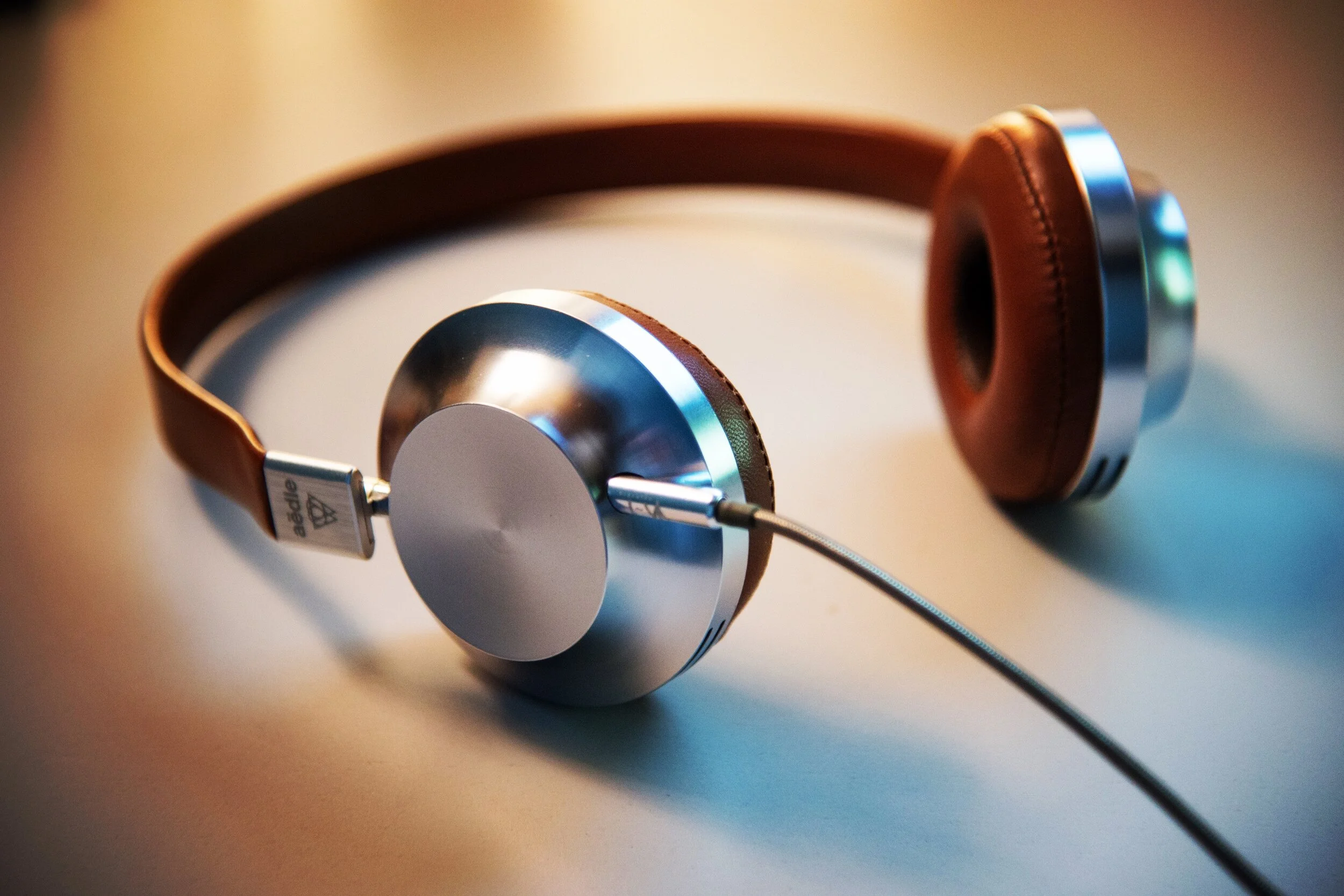
I’ve written before about tips and methods for listening to classical music (here, here, here), but for present purposes, let me say this: there is no wrong way to listen to classical music. Listen however you listen to popular music. Listen in your car. Listen in your headphones on your commute. Listen at work. Put it on in the background at home. Put it on and close your eyes and listen intensely. Watch on YouTube. Literally, whatever. There is no wrong method.
lee-campbell-GI6L2pkiZgQ-unsplash.jpg

My Playlist for Getting into Classical Music

Get hyped!

So without further ado, here are the 30 pieces of music I would tell a friend to start with if they want to start listening to classical music. Every musician or music lover would make a different list, so once you’re through with this, keep exploring. And as soon as you can, go see some classical music live. Nothing – and I mean NOTHING – compares to live music. Each has a YouTube link to a great recording, but since these works are super popular, you can find all of them on your streaming service of choice if you’d like to listen away from YouTube. Onward!

30 Essential Works of Classical Music for a New Listener

  1. Pictures at an Exhibition, by Modest Mussorgsky

  2. The Firebird, by Igor Stravinsky

  3. Bach Cello Suite no. 1 in G Major

  4. Tchaikovsky’s 6th Symphony (“Pathetique”)

  5. Mozart Symphony no. 40 (the “Great G Minor”)

  6. Beethoven Piano Sonata 106 (“Hammerklavier”)

  7. Schubert’s 8th Symphony (“Unfinished”)

  8. La mer, by Claude Debussy

  9. Pines of Rome, by Ottorino Respighi

  10. Rhapsody in Blue, by George Gershwin

  11. Shostakovich String Quartet no. 8

  12. Appalachian Spring, by Aaron Copland

  13. Grieg’s Piano Concerto

  14. Schubert String Quartet no. 14 (“Death and the Maiden”)

  15. Chopin Nocturne op. 9 no. 2

  16. Symphonie Fantastique, by Hector Berlioz

  17. Haydn String Quartet op. 73 no. 3 (“Emperor”)

  18. Also sprach Zarathustra, by Richard Strauss

  19. Beethoven’s 9th Symphony (which you know as “Ode to Joy”)

  20. Adagio for Strings, by Samuel Barber

  21. Mahler’s 2nd Symphony

  22. Mendelssohn’s Violin Concerto

  23. Brahms’ Violin Concerto

  24. Rachmaninoff’s 2nd Piano Concerto

  25. The Four Seasons by Antoni Vivaldi

  26. Elgar’s Cello Concerto

  27. Liszt’ Piano Sonata in B Minor

  28. Concerto for Orchestra, by Bela Bartok

  29. Dvorak String Quartet op. 96 (“American”)

  30. J.S. Bach Goldberg Variations

10 Works that Should Also be Essentials

As a note, since many women and people of colour were denied access to musical training, or to professional work, many of the finest composers from underrepresented groups are from the modern era. This means that many of their works are in the experimental/avant garde category I promised to avoid for now. As well, many of the finest contemporary composers from these groups are composers of vocal music and opera, which I’m also omitting for this post. Nevertheless, here are 10 GREAT works that either are at the fringes of the classical canon, or neglected completely, but all of which should be squarely thought of as classics.

  1. Fanfare for the Uncommon Woman, by Joan Tower

  2. Clara Schumann’s Three Romances for Violin and Piano

  3. Fanny Mendelssohn’s Piano Trio op. 11

  4. Florence Price’s 1st Symphony

  5. Gaelic Symphony, by Amy Beach

  6. Suite de “La Remambaramba”, by Amadeo Roldán

  7. Jennifer Higdon’s Violin Concerto

  8. Samuel Coleridge-Taylor’s Nonet in F Minor

  9. Sinfonia (for Orbiting Spheres), by Missy Mazzoli

  10. Lilacs, by George Walker (ok, I cheated… it’s for singer and orchestra)

The Art of Reading Plays and Training Your Brain

ben-white-1MHU3zpTvro-unsplash.jpg

Did you have to read Romeo and Juliet in high school? Of course you did. We all did. Maybe you also read Macbeth or Hamlet. Perhaps if you had a really great high school English teacher, you might even have taken on one of Shakespeare’s comedies, like Twelfth Night, or A Midsummer Night’s Dream. Do you remember studying that play as a positive or a negative experience? Do you remember it at all?

I was one of the rare souls blessed to have an incredible high school English teacher (well, I had him twice and he was phenomenal… the other years were… unfortunate). In his class, I delighted in reading plays. He was so methodical in teaching them – making sure we actually understood every innuendo, every double entendre, every instance of foreshadowing, metaphor, and symbolism. Those classes were very formative for me, not only because I developed a love of literature through his teaching, but because I came to understand how learning slower and more deeply results in a way different type of knowledge than quick memorization. 

Reading plays, like reading great works of literature, is tricky business, which is why most people think they don’t like it. It’s a skill that requires focus, curiosity, humility, creativity, and openness. As you read a truly great play or novel, you need to be open enough to allow the characters and settings and events to build themselves up in your mind’s eye. This requires suspension of disbelief, a cache of reference points, attention to the details the author or playwright gives you, and a willingness to not have all the pieces perfectly together right away. You also need to be humble enough to stop when you don’t understand something and go look it up (made infinitely easier by Mr. Google), or shelve it in your mind until you start to understand it better through context. You also need to read deeply – no distractions for at least a few minutes at a time (something we’re not all great at now that our phones poke and prod us every few moments).

Reading a play is a particularly fascinating exercise in training different parts of your brain, with the added benefits of (a) actually enjoying what you’re reading while you do so, and (b) the deep sense of satisfaction and accomplishment one gets at the end of tackling a challenge you don’t take on every day. 

So, here’s how I read a play. It’s not fast, it’s not easy, and it’s definitely not sexy (well, it depends what your definition of sexy is… I actually think a highlighter and voluntary research are VERY sexy). What it is, though, is deeply rewarding. It’s a marvellous thing to do on a weekend morning, or stretched out over several evenings. And it’s particularly wonderful if you can follow it up by seeing the play in person (it is so delightful to sit down for a play with the excitement of knowing all your favourite parts, and wondering how the actors and director will have infused their own interpretations into the words you already love – trust me). 

HOW TO READ A PLAY

1. Pick what to read

Obviously this is a tricky part, so I’ve created a system for you. First, pick an era you love. What the hell do I mean by that? I mean, do you love movies set in the Renaissance? Do you love British novels from the 1800s, like those of Jane Austen and the Brontë sisters? Do you hate that stuff, and only like books, TV shows, and movies from about 1950 on? There is literally no wrong answer. Pick your era, then go to this list from The Guardian (arranged in chronological order by playwright) and just pick one from the years you tend to like. I particularly love novels, music, and art from the first half of the 20th century (for example, John Steinbeck is my favourite author), so I would look at all the plays from around that time. Two of my favourite plays are in that block – A Raisin in the Sun and The Crucible – so I know I’m in the right place to find a new read. Grab the title of a couple and hit up Google. All you need is a one sentence summary to know if something is up your alley. Or, alternatively, just pick a famous play you know the title of (like Who’s Afraid of Virginia Woolf, or The Importance of Being Earnest) and go for it (you could start with this post of 10 uber-famous plays). (Or, check out this post I wrote on famous plays that were made into great movies. Or, if you like contemporary films/music/art/politics/activism, check out this post on amazing living playwrights.)

2. Buy a hard copy

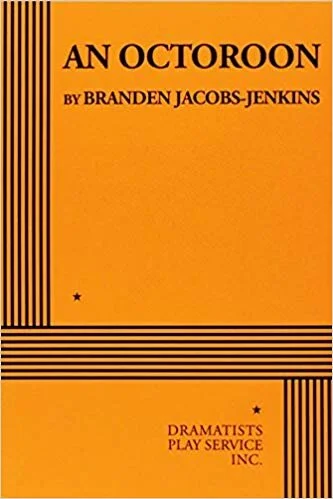
If you follow me on Instagram, you know I’m a library fanatic. And the library can be a great place to get dramatic works in print, especially university libraries (hot tip: university libraries tend to be better for everything other than current titles and fun, casual stuff like cookbooks, so it’s always nice to have two library cards – one for the public libraries of your city, and an alumni or community card for your local university. Nerdy sidebar over.) But, my love of the library aside, a play is a wonderful thing to get in hard copy. They’re often very short in print, making them a lovely size to hold. And, I have this crazy affinity for the look of the plays published by Dramatists Play Service Inc… they’re so charming. Plus, plays tend to run you only about $10.

41EHy8KlaNL._SX331_BO1,204,203,200_.jpg

3. Get your stationery ready

If you’re as gleefully nerdy as I am, you’re probably already pumped about this one. That’s right, friend – grab your implements of choice (in just about everything involving quotations and marginalia, I use my law school go-tos: a mechanical pencil, a Sharpie pen, and a yellow Staedtler highlighter, plus cute Post-it flags), and tentatively decide how you would like to mark up your play as you read. I use highlighter for lovely turns of phrase, good jokes, the really devastating lines… basically anything quotable. Plus, having a highlighter reminds me of highlighting my own lines, first in high school theatre and then throughout my opera training, which gives me the warm fuzzies. The mechanical pencil is for random thoughts, boxing around chunks of interesting text, and making little diagrams and doodles (sketches of parts of the set, for example, or a drawing of a costume described in the script). The Sharpie pen I use mostly for notations beside anything I highlight, and the flags are for my favourite parts.

4. Optional: Google the plot of the play before you start reading

Either you’ve just recoiled in horror (as I personally do at this suggestion), or you’re like “yup, definitely doing that.” A friend of mine reads the end of every novel she starts first so that she knows where it’s all going (and, as she once pointed out, if she dies partway through the book, at least she knows what happens). This can be an especially helpful tip if you’re reading Shakespeare or his contemporaries, any of the ancient Greek plays, or any avant garde contemporary works of theatre. In short, anything that might be especially challenging to read. If you know the general arc of the story first, who all the characters are, and what the main settings will be, you can focus on learning the language, looking up specifics, and actually digging into the meat of the play, rather than scrambling to get any sort of foothold you can. And some people like this approach for all plays. As I say, you do you.

5. Tuck in

And now the fun part: the actual reading. Read slowly. Re-read. Read scene by scene, and make sure to read not just the lines, but also the stage directions and other instructions from the playwright (including those at the beginning about character descriptions, set, costumes, etc. – this is part of what makes reading plays so fascinating). Try thinking like the director. Try thinking like an actor. Try to hear each voice and envision the action. And when you don’t understand something, whether it’s actual language or how a character has wound up on the other side of the stage when you were sure they weren’t there a second ago, stop and re-read. Think about getting to know the play, rather than just getting through it. Like I said, plays are actually quite short, so take your time and really enjoy it. And mark it up! I feel so much more connection to something I write in than something I leave pristine, but, as always, you be you.

6. See if there’s a video version or, even better, if you can see it live

Look. There are a lot of plays out there, and the chance of a specific one being produced in your city soon after you read it is… negligible. Of course, you could reverse engineer this whole process to pick something that’s coming up (a totally wonderful option, but which might result in you reading a play not well-aligned with your existing tastes and interests), or you can use the miracle of the internet to see if you can find a recording of the play you’ve just devoured. Copyright and royalties being what they are, it is often slim pickings. But depending which play you’ve chosen, there might be full-length film versions, or there might be filmed stage versions (way better). Often these are at – you guessed it! – the university library! So have a sniff around and see what you can find. It’s SO worth it to watch a play after you’ve done a deep dive, you have no idea.

And that’s how you read a play! I hope you try it out to stretch your creative brain, train your focus muscles, and enjoy the sweet satisfaction that only comes from highlighters. 

Why Musical Theatre Can Make You Feel Seen, Even as an Adult

mubariz-mehdizadeh-2awzIErSaG0-unsplash.jpg

As many of you know, I spent a couple years working at a big corporation. When I first started there, I had a classic “new MBA”-type job – lots of spreadsheets, lots of research, and lots of time in a cubicle with my headphones on. I loved the job, especially coming off the crush of doing my law degree and MBA concurrently. I adored those long hours drinking office coffee, trying to not be terrible at Excel, and generally enjoying the fact that I didn’t have 400 pages of cases to brief at a time.

But what I really, truly loved about that time was the musical Hamilton.

Did I mention the headphones? Oh yes. Like many big companies, mine had chic, modern offices with – oh you know it – open-concept floor plans. We had ergonomic, super-functional cubicles with… glass half walls. One of my favourite things about law school was the fact that the second floor of the law library was STRICTLY silent study only. AKA, heaven on earth. And now, I was surrounded by people on bluetooth headsets taking phone calls and standing up to talk to colleagues two rows over. It was an adjustment.

Cue the headphones. As I said, even with my new noisy neighbours, I really enjoyed that job. I loved doing what I still affectionately call “tucking in” – settling in for several hours on a big project. Is there anything better than knowing you get to really dig into something, even if (okay, sometimes especially if) it’s something monotonous? I find it so satisfying, especially when you’re joined by…

ALEXANDER HAMILTON!

You see, the musical Hamilton had just come out, and I listened to the soundtrack Every. Damn. Day. I would start at the beginning and let that bad boy roll through all the triumphs and drama. I would occasionally catch myself mouthing the rapid-fire rap from “Guns and Ships” while I colour-coded and key-commanded. I would have to duck down under my monitors to dab at my mascara during “It’s Quiet Uptown.” It was a marvellous time.

But the thing that meant the most to me about Hamilton was how incredibly seen I felt when I listened to it. From the first time I listened through, I was stunned… and also, really self-conscious. I almost felt like Lin Manuel Miranda must have been following me around my whole life, reading my mind. Either that, or I was the reincarnation of a flawed founding father. One of the lines that is repeated throughout the show is, “why do you write like you’re running out of time?” I still sing that line to myself all the time…

Why? Because I’ve always felt like people around me don’t understand that there isn’t enough time every day. Time is the resource I’m greediest about – I always want more of it, I’m so offended when people don’t respect it, and I value it above everything. And the biggest reason I see the world this way is because I feel like I have so much to do and never enough time to get all my ideas out, to make everything I want to make, to do everything I want to do. 

Here I was, in a job that, while I enjoyed it, was clearly not right for me in the long run, in my suit and pantyhose and perfect hair and pumps, really feeling seen every day from something I was just listening to. Something that felt like it reached into my heart like songs used to do in high school and absolutely devastated me in the absolute best way possible. That made me feel not so weird for the feelings I had deep inside. That made me feel human.

If you were a musical theatre nerd in high school or maybe early college, these are probably familiar feelings that you might have tucked away somewhere while you’re busy being an “adult.” I used to belt Les Misérables in the car so loud people would hear me in the other cars at red lights (remember: I did go on to become an opera singer). I would cry every time I sang “On My Own,” because – hello! – I was a teenager who belted Les Misérables in the car, and I kind of understood where Éponine was coming from with the whole unrequited love thing. I knew every single word to Rent, and Mark, the filmmaker, was my favourite character: detached, observing, more comfortable giving relationship advice than having a relationship himself. Sixteen-year-old me understood him the most, so I sang his clever narrations and tender asides with the most care. One summer in undergrad, I saw Lin Manuel Miranda’s first big musical In The Heights in New York a couple days after it won the Tony, then proceeded to listen to the soundtrack every day while I studied in Italy for the summer. “It Won’t Be Long Now” is my forever go-to shower jam, but it was the character Nina I most related to, dealing with the enormous pressure of her family’s hopes for her.

Musical theatre is not just about big emotions, show-stopping numbers, and snappy comebacks… it’s about feeling understood. That’s why it’s so beloved by teens: not because it’s written for young adults, but because young adults need it the most. 

So forget the stereotype of the “theatre nerd” high school kid and embrace listening to musical soundtracks as an adult. You never know when a character might shock you into feeling really, really seen. To get you started (especially if you’re a musical theatre newbie), here’s my list of my ten favourite musicals of all time, in no particular order. Start anywhere, listen to the first couple of songs, and see if you get hooked. If you’re feeling it, take my approach to listening to musical theatre: quickly skim the plot on Wikipedia (so you know what’s going on), then just keep listening to the soundtrack in order (remember – it’s a play! There’s a story!). Musicals are great for commutes, routine office work, or doing stuff around the house. Extra bonus points for car singalongs.

My Top 10 Favourite Musicals (to Get You Started Toward Being a Musical Theatre Fan)

  1. Rent

  2. Les Misérables

  3. Avenue Q

  4. Dear Evan Hansen

  5. You’re a Good Man, Charlie Brown

  6. In The Heights

  7. Hamilton

  8. Company

  9. Wicked

  10. Jesus Christ Superstar

Honourable mention to Urinetown, Little Shop of Horrors, Phantom of the Opera, West Side Story, The Music Man, and A Chorus Line.

My favourite way to listen to a musical (or any album, come to think of it) is to beat it to death until I know every word, so next up on my own “go deep” listening list are Waitress and The Book of Mormon. I know, I know – how have I not devoted myself to them already?! Not enough hours in the day…