




Become a Fan of Ballet in 3 Easy Steps

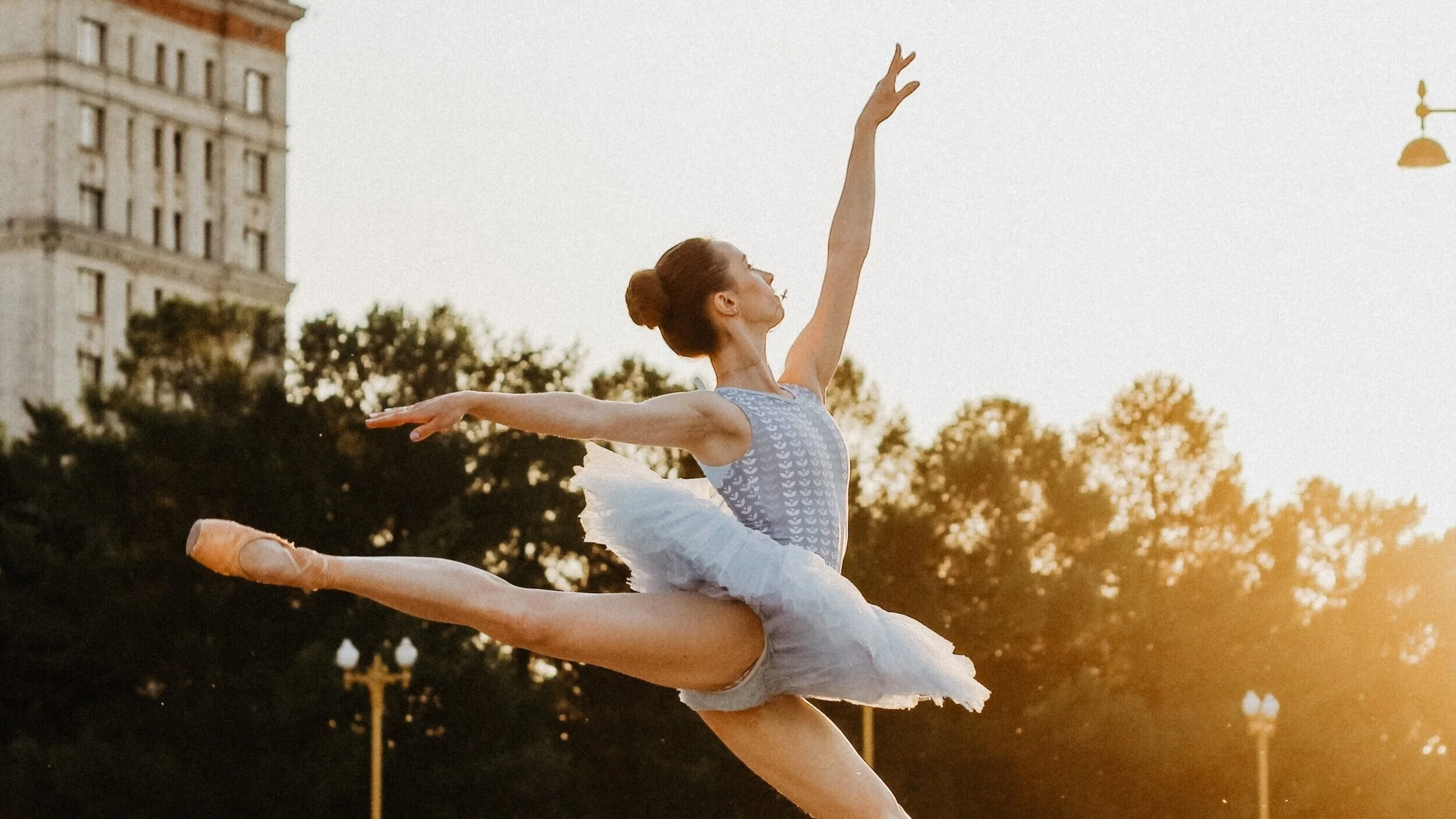
daria-rom-c-o7eQWFYk8-unsplash.jpg

People who have followed along for a while (or, especially, who follow me on Instagram) know that I’m obsessed with ballet (particularly classical ballet – the kind with the tutus and pointe shoes and stories about princesses and swans and all that good stuff). This is a new obsession for me, developed only over the last couple of years, which means I’m still on the learning curve, and I’m still in super-excited-new-learner mode. It’s magical.

I’m almost as obsessed with ballet as my husband is with baseball, and I’m noticing a lot of parallels. I’m coming to know the famous “players” and which “teams” they play for (the dancers and their companies). I know the standard “plays” (the groupings you always see and what they’re called – like the duet “pas de deux”, or the solo, known as a “variation”), and I’m getting to know the technical names of the movements and what exactly makes one dancer’s execution of a tricky move more spectacular than another’s. I’m also learning who the all-time greats are and why. Basically, I’m learning how to watch and talk about ballet, just like someone learns how to watch and talk about baseball.

So maybe you’re here because you’re like me and love all things artsy and want to expand the kinds of arts you love and understand and follow. Or maybe you have a budding ballet star in your family and you want to be knowledgeable about what they’re learning about and loving. Or perhaps you already love going to the ballet, you just want to dive deeper into why you love it (and sound smarter when you talk about it). All amazing reasons to dive into the world of ballet. So let’s get started.

STEP ONE TO BECOMING A BALLET FAN: JUST WATCH

If you’re here, you’ve probably already done this step. But just in case you haven’t, or in case it’s been a while, here it is: watch some ballet. Just watch! No homework other than enjoying either some live ballet in your city or binging some epic ballet videos on YouTube. Pretty fun homework, right? You don’t have to analyze what you’re seeing; you just have to watch and be delighted. 

But, of course, the classic question: where do you start? Well, if you have a ballet company in your city, lucky you! Google their next performance and buy a ticket (actually, buy two – going to the ballet is a great friend date or date-date, and I think that interesting people love being invited places they wouldn’t normally go). Regardless of whether you were able to score tickets for a live performance, dive into YouTube. We live in such an incredible time for the arts. You used to have to see ballet live or, at the very least, procure a recording from the library (if you could even find one). Now, every major company and every ballet star is on YouTube. So here’s where I would start:

If we think about our objective at this step – immersing ourselves in the world of ballet – there’s kind of no wrong place to start. That being said, if you’re going to start getting into anything, why not start with the greatest stuff? So here are 10 short amazing videos of huge ballet stars doing some of the most famous parts of some of the most famous ballets. I hope you love them as much as I do!

1. Coda from the Black Swan pas de deux from Swan Lake

(Perhaps the most famous moment in all ballet, when the dancer playing Odile, the Black Swan, does 32 fouettes – those are the fast “whippy” turns” – in a row without putting her foot down.)


2. Giselle Entree Willis 

(Aka, the part in Giselle with all the lady ghost-spirits)


3. Albrecht variation from Giselle

(One of my favourite male variations in the repertoire)


4. “Waltz of the Flowers” from The Nutcracker

(My favourite part of this iconic ballet)

5. Sleeping Beauty Rose Adagio

(A totally iconic scene where four suitors try to win Aurora’s affection)


6. Don Quixote Kitri variation

(Kitri is notoriously hard to cast because she has to be both incredibly vivacious AND catch giant air on her leaps. Plus, each of her variations has a different flavour, so the ballerina has to have mad acting chops.)


7. Romeo and Juliet balcony pas de deux

(I mean, does it get any more romantic?!)


8. “Kingdom of the Shades” from La Bayadère

(The most famous corps – that means “big group” – scene in all of ballet)

9. Swanhilda’s Waltz variation from Coppelia

(One of my favourite variations because of all the adorable character moments)


10. La Sylphide variation

(I just had to include this, even though it’s an audience bootleg, because it’s 19-year-old Canadian Shale Wagman, who just made a historical premiere in this role)


STEP TWO: LEARN THE BASICS

Learn some basics that will go a long way in helping you (a) know what the heck is going on in the ballets you watch, and (b) understand what makes ballet amazing.

So what do you need to know? Three big things:

1. PLOTS

Classical ballet is about storytelling, so it’s kind of essential that you “get” what’s going on in the ballet you’re watching. Sure, if you’re going to see a full-length ballet, you can pay attention and figure out the plot from watching (some of the time). But, lots of ballets are either (a) based on stories from earlier eras that we just aren’t familiar with anymore but that the choreographer in the 1800s assumed the audience would already know, and/or (b) are really (sometimes unnecessarily) complicated, with mistaken identities and plot twists and supernatural elements that are kind of hard to pick up on if you’re watching for the first time.

Which is why your “homework” for this part of step two is to read (or, frankly, skim) the plot of any ballet you watch BEFORE you watch it. To help, I summarized the most famous ballets in two sentences each HERE, but if you’re going to see a ballet live, you should at least read either the Wikipedia page or (much much better) the program notes before the show starts. It’s not spoilers – it’s a way to actually understand what you’re seeing and appreciate it so much more.

Plus, whether you’re just getting into ballet or you’re many years into a life-long love affair with the art form, you will often see just tiny snippets of ballets, either on YouTube, in recitals, or at special performances. If your kid gets up to do a the Lilac Fairy variation from Sleeping Beauty, it’s really nice to know what the plot of the opera is, where that variation happens in the story, and what the heck a lilac fairy is doing in the middle of an opera about a princess.

So, rule of thumb: read the plot summary for a ballet before you watch it.

2. TERMINOLOGY

Terminology is where a lot of people get turned off on the whole “become a ballet fan” thing. They see French and they’re like, “I’m outta here.” But don’t fear! You only actually need a handful of terms to get started, and once you know them, you’ll feel way smarter about your ballet fandom than you did before. Plus, you never have to say them out loud to anyone. There’s no test at the end of this post. No one at a performance of Swan Lake is going to make you say “fouetté” correctly (it’s basically fwet-tay). Knowing the terms just helps you feel knowledgeable about what you’re seeing, and helps you read about the art form, watch videos from ballet companies and dancers about what they’re doing, and actually get what a reviewer or competition judge or your kid’s ballet teacher means in a critique.

So here are the basics. Every move in ballet has a French name. You don’t need to know the VAST majority of terms, except when you pick them up for fun.

What you do need to know are:

  • Variation – a solo.

  • Pas de deux – a duet (you might see this abbreviated “pdd”).

  • Corps de ballet, or just Corps (pronounced like “core”) – the chorus, or main group of dancers.

  • Ballerina – a female ballet dancer.

  • Danseur – a male ballet dancer (but people also just say “male ballet dancer”).

  • Principal – the highest rank for a dancer in a ballet company, they perform the main roles.

  • First soloist – the second highest rank in a company, they do featured solos and smaller roles.

  • Balletomane – a person who, like, really loves ballet (as in, a “ballet maniac”).

  • Choreographer – the person who decided on the steps for the dancers to do.

  • Company class – ballet class that the dancers of the company attend, focussing on technique, not choreography.

  • Barre – that long wooden, well, bar that ballet dancers hold onto when they practice; part of class is “at the barre”.

  • Centre practice – the part of class not at the barre (i.e., in the centre of the room).

  • En pointe – up on the tippy toe part of pointe shoes.

  • Adagio – a series of slow, graceful movements dancers do to improve their strength, flexibility and fluidity. An “adagio” can also be a section of music (the word “adagio” is a tempo, or speed, marking in classical music, and can demarkate a whole slow section).

The rest, really, are all technical movement names which, frankly, you can pick up over time or, honestly, never. There are the five positions of the feet (https://www.youtube.com/watch?v=1fSa3ESmA1s) and arms (https://www.youtube.com/watch?v=S5HwZJQ8NuA), which are fun to know, and then you’re into the giant list of technical names for each movement (American Ballet Theatre has a phenomenal ballet dictionary with recordings for pronounciation here: https://www.abt.org/explore/learn/ballet-dictionary/).


3. KNOW HOW BALLET “WORKS”

So, some people might disagree with this one, but me – I like to know about the whole ballet industry/system/business. Just like you would want to know that the sport you like has a “salary cap” (which means that each team can only spend a certain amount, which means everyone gets the same budget for superstars), or that players can be traded but only during certain times, or that the worst team gets the first pick of new rookies the next year, I think it’s helpful to know how ballet “works” to better appreciate and understand what you’re watching.

First, it’s great to understand just how much goes into making a world-class ballet dancer. If you have a friend or family member who is hardcore in ballet, you already know at least the first part of this. Many children who are really into ballet (slash, dance in general) take class every day, training across all styles (ballet, jazz, hip hop, etc.). Promising dancers might stick it out in normal high school, training intensely every day after class, or they might go off to a dance academy (like a boarding school), where they complete their high school requirements but spend most of their time dancing. Sometimes, teens even move to a different country to complete this rigorous training. Hello, early adulthood.

Aspiring ballet dancers also do summer training at various programs, usually in other cities than where they’re from, so they can get exposure to other companies, bigger teachers, more specialized training, etc., and that starts way early in adolescence. 

So against that backdrop, you can get how ballet dancers are often compared to elite athletes. Cue the start of professional careers, where dancers audition for companies, try to get into the corps (remember, that’s the big group of dancers in the company, not the soloists), then try to work their way up, either within that company’s ranks, or to bigger and bigger companies. The work is gruelling – very few days off, very long days, and often (but certainly not always) low pay (which many dancers supplement by teaching, making their days and weeks even more jam-packed). 

Dancers’ schedules are crazy (it’s actually a part of ballet I’m most fascinated by). A typical dancer’s day starts early in the morning, and includes a strenuous workout (often a mixture of strength conditioning and injury rehabilitation), company class (where all the dancers from the company take a technical ballet class together), multiple rehearsals for different ballets (a big company will have multiple shows running concurrently or very close together, so they have to rehearse several shows at once), costume fittings, then the dancer does his or her own makeup and heads to the stage for a performance. 

What else can I say? The business of ballet is fascinating – what a company programs (that means, which ballets they decide to put on for the season), which dancers get promoted, which soloists are suddenly super hot and invited to make guest appearances at all the big companies… it’s actually a really fun industry to follow in the news and reviews. Plus, there are only a few huge companies to keep tabs on, so it’s definitely not overwhelming (the Bolshoi, the Mariinsky, Australian Ballet, American Ballet Theatre, Royal Ballet, National Ballet of Canada, Teatro La Scala, and Paris Opera Ballet come to mind, but a fulsome list would include a few others). 

4. FOLLOW THE STARS

Now is also a great time to become a ballet fan because: INSTAGRAM. A ton of ballet stars are on IG, and the ones who aren’t very active still pop up all the time on amalgamated fan accounts. There is SO MUCH ballet on Instagram I can’t even tell you. Follow the biggest ballet stars and you’ll get a daily dose of ballet marvellousness, you’ll start to learn the biggest roles and variations, and you’ll feel super in the know by having very up-to-date knowledge about the ballet world.

Here’s who you should start with:


STEP THREE: KEEP WATCHING

Remember how fun Step One was, where you just watched YouTube videos and bought tickets to the ballet? Now you just do that like, forever. The more you watch and read, the more you’ll learn, and the more you learn, the more you’ll understand and appreciate about what you see when you watch. That’s why they call it “arts appreciation” – because you aren’t just passively taking in what you see anymore, you’re actually appreciating (i.e., getting) what’s going on and why it’s awesome. So keep watching online, follow along on Instagram, Google when you don’t understand a term or know a plot or when you’re curious about something you see, and definitely, DEFINITELY see some ballet live and in person as soon and as often as you can. And if you have a budding ballet star among your family or friends, support them by showing your interest! And let other people know about your new obsession. You never know when a friend might be a secret balletomane as well!
Understanding the Old to Appreciate the New

mikael-kristenson-3aVlWP-7bg8-unsplash.jpg

There’s a really interesting movement happening right now in university musicology classes (that’s the study of music history, music making, and music in general). In fact, I’m told, it’s happening across a lot of disciplines. Remember your “Intro to…” classes in university? Maybe you took “Introduction to French Poetry”, or “Introduction to American Politics.” So long as the topic was in the humanities, I bet dollars to donuts your class was at least largely taught in chronological order. I.e., “let’s start with the Roman Empire and work our way forward.” Well, apparently, this is falling by the wayside.

What’s the deal? Well, basically, a lot of younger/newer profs have fascinating ideas and theories about teaching thematically instead of chronologically. There are tons of reasons for this, some of which are rooted in dismantaling the patriarchal/colonial roots of the “traditional” education system (yes yes yes), and others of which come from the development of more nuanced and creative scholarship across disciplines (plus, better and better understanding and acceptance of the different ways people learn). I applaud any experimentation in higher learning, and I’ll leave it to scholars who know much more about all of that than I do to make our universities better. 

An Ode to Chronology

What this has got me thinking about is the virtue of things presented in chronological order. Someone once told me that everyone sees time in one of two ways: either, time is cyclical, always moving in circles; or, time is a single straight line. When I told my husband this (in the context of a rant about “how can anyone possibly see time as anything but straight!”), Ryan responded: “it’s just one long march toward death.” At least we’re on the same page.

Personally, I love when things are organized chronologically. I adore the calendar – daily, monthly, yearly. I particularly enjoy a perpetual calendar that spans several months with no breaks between the 31st of this month and the 1st of the next. It’s so satisfying to see one long string of days. Similarly, I still recall the thrill of making study notes of overlapping chronologies in many of my studies – from high school to music school to law school. Ah, so this was happening in Russia while this was happening in the United States! And this led to this! And this to that!

Which brings me to my point. When we organize and think about things chronologically, we’re able to build our knowledge in the same way the actual things and events developed: day by day, year by year, impact upon impact. While it can be marvellous to group things by theme, it can be awfully hard to start like that, because we have no grounding for our learning. Everything grows out of something else – such is the nature of creation and innovation. And you simply cannot appreciate the newer thing without understanding the older. 

The issue with this method, and I’ll be blunt, is that the older things are, the more boring they tend to be to us modern learners. Obviously this is an exaggeration and a huge generalization, but the reason it often holds true is that the farther away we go from today, the more we need to extrapolate to connect with what we’re learning because it’s less and less like the world we’re familiar with today. Even though people are people, and our struggles and hopes and loves are universal (and have been since the dawn of human kind), it gets trickier the older you go. 

Chronological Study and the Fine Arts

Obviously, this is incredibly relevant for the study of the arts, which is, at its heart, a highly chronological field (or, at least, historically has been). The reason I love studying all of the fine arts chronologically is two-fold. First, artists were all so incredibly impacted by the artists who lived immediately before them and during their lifetimes (often including their own teachers and friends) that we simply cannot discredit the immense weight of influence, inspiration, and intimidation, and the impact of those forces on what the latter artists created. Second, art is a reflection of human experience, so we must, must understand what was going on in the world directly before and particularly during the creation of any given work. We simply must know what the artist studied, what came right before them, and what was happening around them. 

The tricky part is knowing how to start. Does one begin right at the dawn of human creation, in ancient times? Or does one start with the Greeks? Is it better to learn all of the forms at once and move slowly through the eras, or is it easier to delve into, say, the history of visual art from cavemen forward? Should one move slowly and diligently through the periods, making sure to deeply understand each before advancing, or is it better to quickly move through the whole of history to get the basic hold of things, then go back to gain deeper knowledge throughout?

My friends, I would like to be a bit of a bore and advocate for the classic survey approach. It’s not sexy. It’s not creative. But it’s damned effective, especially for adult learners. Start at the beginning for any given art form and casually and quickly move through the eras until you hit modern day. Get a nice lay of the land. See how one era comes out of the era before, and make cognitive links between people, events, and works of art. You have so much time to go deeper later (let’s call those your 200-level courses). For now, grab one good library book, Google as you go along, and get the basic idea. That one long stream of days and years and eras you’ll hold in your mind at the end will truly be your foundation for loving the fine arts. 

The Three Types of Knowledge You Need to be a Fan of the Arts

handy-wicaksono-urTt1eK23d8-unsplash.jpg

So… I have good news and bad news. The good news is that I’m so pumped to teach you how to love the fine arts more than you ever knew you could. The bad news is that you have to put in the work to get there.

Sorry! (And sorry for the “sorry” – I’m Canadian, I can’t help it.) The fine arts take time to understand. Sure, there are lots of effortless ways to start being a fan of the arts, and I love to share those here and through social media. That stuff is gold, for sure. But to get to the real juiciness that is loving the arts, you’re going to have to put in some effort.

To my mind, at least, that’s a good thing. A lot of things that are quick and easy to understand and derive pleasure from are shallow. They’re not the interests, hobbies, and passions that sustain you and colour your whole life; instead, they’re reality TV and snack food (which have their time and place, but man cannot live on Love Island and Flamin’ Hot Cheetos alone).

So, what exactly do you need to learn before you can truly appreciate the fine arts? Three things. For each of the fine arts – to be a true fan – you need to develop three areas of knowledge:

  1. Historical Context;

  2. Technical Understanding; and,

  3. The Current Landscape.

They’re not nearly as scary or difficult as they sound at first, so keep reading. You can do this! 

1.     To love the fine arts, you need to learn their evolving historical context.

For me, this is the big one. The reason musicians love classical music so much is because they know all the major composers, what order they lived in, who was influenced by whom, and what world events shaped their artistic voices. This allows you, as a listener, to understand the composer’s point of view, and hear what they meant for you to hear.

Let me give you an example. One of my favourite composers is Dmitri Shostakovich. He wrote a crapton of music, including some of the most famous symphonies, concerti, and string quartets of all time. What historical context would you need to understand his music? Well, he lived from 1906-1975 in the Soviet Union, and spent much of his career in and out of favour with Joseph Stalin (which was deeply terrifying to the composer, of course). At times, his works are Soviet propaganda – rah-rah patriotic melodies in “celebration” of the ruling party. At others, Shostakovich uses his compositional style in subversive ways to criticize fascism, anti-semitism, and war.

If you were about to listen to a Shostakovich symphony from during Joseph Stalin’s reign, wouldn’t you understand it so much more now? You can get in the composer’s head and see what he might have been trying to convey. You might hear suppressed self-expression in favour of pleasing those in power (who, at the time, were murdering artists left and right). Or, you might hear the work of a revolutionary cleverly weaving his true feelings around beautiful melodies and rousing rhythms. For example, have a listen to perhaps the most celebrated of Shostakovich’s symphonies, his Fifth (or, as musicians and music lovers say, “Shostakovich Five”). Listen to the whole thing, or jump ahead to the short but epic last movement at 37:10 – it’s a rousing celebration of the strength and glory of the state. Or is it?


So, do you see how context means more than just the dates a composer lived, or where they were born? It means everything.


2.     To love the fine arts, you need to have some technical understanding.

I get it: no one wants to be told that they need to have “technical understanding.” Heck, I’ll bet you just read the word “technical” and rolled up like a hedgehog. It’s okay! This is probably the easiest and funnest part (and yes, I’m gonna stick with “funnest”).

When I say “technical understanding,” what I mean is this: do you know enough terminology and enough about what the artists are physically doing/have done to actually appreciate and talk about the result? This is where you learn the lingo (like what a sonata is, or the difference between woodcut and linocut printmaking). It’s where you learn how artists do stuff (like how a pianist uses the pedals under the instrument, or how exactly a ballet dancer does an epic series of fouettés).

Here’s my personal current example. As many of you know, I’m getting really into ballet (as a fan). I’ve always adored watching it, and now I’m deep-diving into everything the art form has to teach me. But where did my love of ballet begin? With the movie Center Stage, obviously. In that absolute classic, one of the things they talk about a lot is how one character lacks “good feet.” Well, what the hell does that even mean? Well, someone saying a dancer has “good feet” means that the dancer has molded her feet (some of which is indeed genetics, but much of which is training) into making a beautiful curved shape when she dances, including transitioning through different foot positions and steps with elegant and charming rounded movements. Good feet are beautiful extensions of the long lines created by the legs, not clompy, awkward add-ons.

As an example, watch one of my favourite ballerinas, Natalia Osipova, dance Odile from Swan Lake, and look at the gorgeous, strong curve her feet make throughout the solo:

Do you know how great it is to watch “So You Think You Can Dance” and actually agree with Nigel when he says someone has “great feet”? And actually KNOW what you’re talking about? And appreciate the years of effort and care and natural gifts that lead to those gorgeous pieds? It’s so satisfying.


3.     To love the fine arts, you need to know the current landscape.

I’m not going to lie to you, this one is tricky. But it’s really, really important, especially now.

First, the fun side of this. To understand an art form, you should know what’s currently happening in it. Like, who are the most celebrated playwrights right now and why? What trends are happening in visual art, and do you like them? Who is the jazz saxophonist of the moment, and what do people love about their playing? This part is all about reading fun stuff on the internet, watching YouTube, and following people on Instagram, so… pretty easy.

Now the hard part. Art is complicated – and by that, I don’t just mean “difficult to understand.” I also mean, it’s wrapped up in a lot of social issues that are not cut and dry. From cultural appropriation to problematic subjects to outdated language we would never accept today, how do we deal with art created in different times with very different social norms and sensibilities?

Take, for example, perhaps the most famous opera on the planet: Carmen, by Georges Bizet. Like many, many operas, it’s a problematic tragedy where the main female character dies at the end. But rather than dying of madness or consumption, Carmen is brutally murdered by her scorned lover, Don José. Pretty much the entire history of opera is steeped in misogyny, but perhaps nowhere more viscerally than where an opera about objectification and the virgin-whore dichotomy culminates in the ultimate act of domestic violence. This has led some companies to change the ending (to Carmen killing Don José, for example), or to providing a violence against women trigger warning. But some say we should scrub Carmen from the repertoire entirely. Wouldn’t you rather know this and be part of the conversation than go in blind?

Knowing what’s “going on” around the art you take in makes you a better audience member/viewer/listener. It also makes you a better member of your community by being sensitive and open to the experiences other people might have from the same work of art. It’s not just a way to enhance your experience – it’s your responsibility (and, it makes your art-viewing experience way deeper).


Still pumped? You’re in the right place

Look. I know some people read half of this post and peaced out. I get it. They were like, “learn stuff? Like, school? I’m frickin’ outta here.” We don’t need them.

Hopefully if you’re still here you feel a lot like I do about learning new things. Frankly, I love to learn. I love to study. I love to read and watch documentaries and listen to podcasts and hear interesting people talk about stuff I previously knew nothing about. The arts are a goldmine of all that learning goodness, and now you know the three types of knowledge you’ll need to equip yourself with to be a life-long fan of the fine arts.

Ready to dive in? Subscribe to my weekly newsletter, where you’ll get a condensed package of information to build up all three areas of learning (plus, my favourite arts news, videos, and articles of the week so you don’t have to find them yourself).