

Spooky Halloween Art

colton-sturgeon-EFQlS6SL9uw-unsplash.jpg

It’s almost Halloween, so in honour of the spooookiest holiday, I’ve put together this list of my favourite creepy art, music, dance, and theatre. Personally, I’m not big on Halloween (aside from the candy, OBVIOUSLY), but what I do love is art that goes bump in the night. Happy Halloween, everyone!


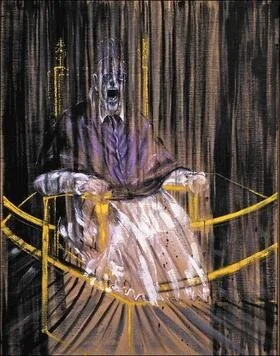
Study after Velázquez’s Portrait of Innocent X

Francis Bacon, 1953

This painting is often used as an example in texts about colour theory (yellow and purple are on opposite sides of the colour wheel, which is why they pop so intensely when paired together), but MY GOODNESS it gives me the heebie jeebies. Partially because I detest yellow and purple together, but primarily because of DAT FACE.
Study_after_Velazquez's_Portrait_of_Pope_Innocent_X.jpg

download.jpg

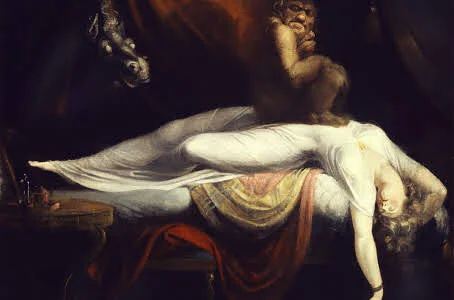
The Nightmare

Henry Fuseli, 1781

GAH. Have you ever had the nightmare where you wake up and someone is in your room? No? Just me? Well thank God I’ve never had a dream about a frickin’ gargoyle sitting on my stomach and a dang DEMON HORSE in my room. My goooodness.


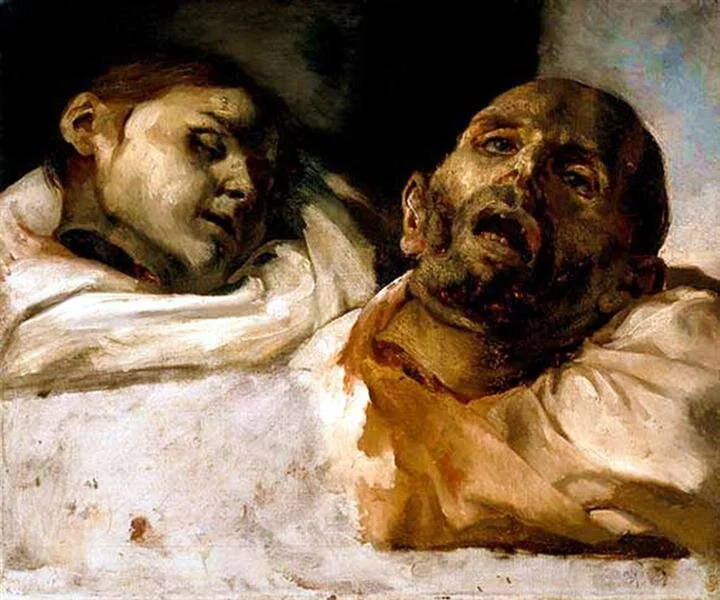
Study of the Heads of Torture Victims

Theodore Gericault, 1818

WHAT’S IN THE BOX!? WHAT’S IN THE BOX?!! Oh, it’s this painting. P.s., Gericault did a series of these, all about severed body parts. Great. That’s just great. I didn’t need to sleep ever again. It’s fine.
heads-of-torture-victims-study-for-the-raft-of-the-medusa.jpg!Large.jpg

375px-Vincent_van_Gogh_-_Head_of_a_skeleton_with_a_burning_cigarette_-_Google_Art_Project.jpg

Skull of a Skeleton with a Burning Cigarette

Vincent Van Gogh, 1886

I actually adore this painting. The colours are so magnificent, and the shoulder-dropped posture of the skeleton is so… devil may care? Scary or no, a smoking skeleton CLEARLY deserves Halloween attention.


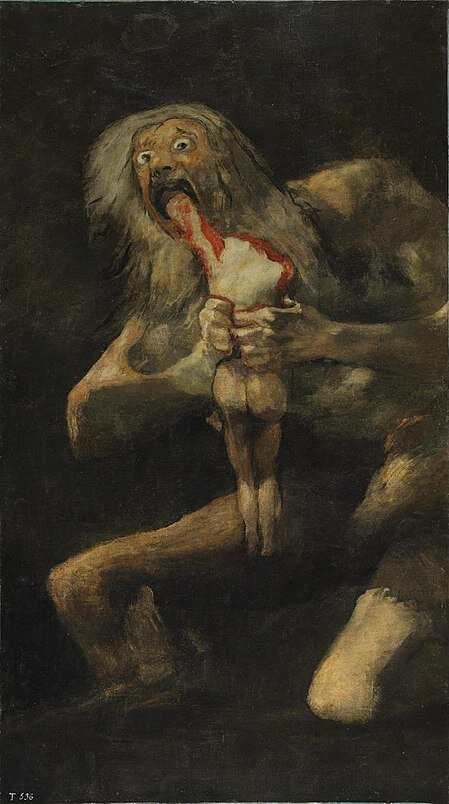
Saturn Devouring His Son

Francisco Goya, c. 1823

This, on the other hand, I hate (not because it’s a bad painting, because it’s absolutely amazing, but because EWWW). This is based on the Roman myth of the god, Saturn, you know… eating his son. Hoo boy. There are actually multiple scary paintings based on this moment in mythology, but Goya’s is TERRIFYING. Gawd. Get it off my computer screen.
450px-Francisco_de_Goya,_Saturno_devorando_a_su_hijo_(1819-1823).jpg

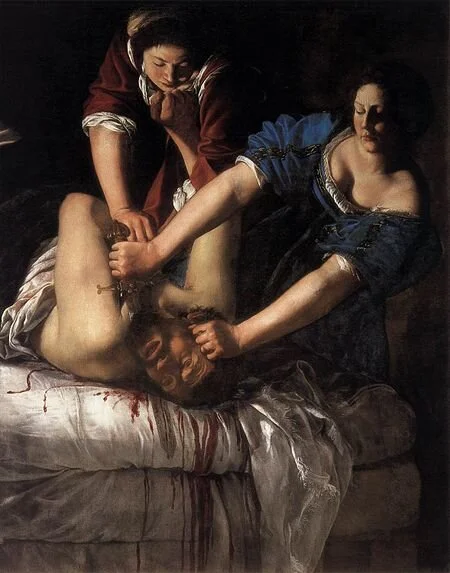
Artemisia_Gentileschi_-_Judith_Beheading_Holofernes_-_WGA8563.jpg

Judith Slaying Holofernes

Artemesia Gentileschi, c. 1610

I don’t personally find this painting scary, per se… but hey, I’m a feminist and Holofernes was a big jerk. There are a ton of paintings of this scene, meant to represent the power of women over unjust/power-drunk men, but none as famous (nor as gory) as this one. 


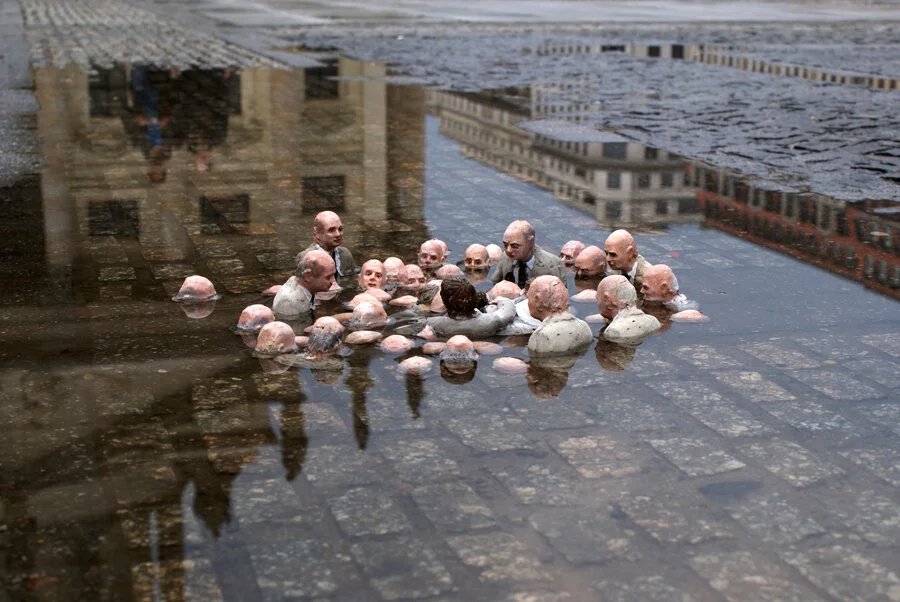
Follow the leaders

Isaac Cordal, 2011

Cordal is known for outdoor installations, particularly this series of tiny sculptures of business men/politicians in watery gutters, on ledges, and buried in debris – a commentary on “our inertia as a social mass.” I find them TERRIFYING. 
Follow-the-leaders-berlin.jpg

Macbeth

Shakespeare (duh), 1606

IMO, you can’t have a Halloween arts list without “The Scottish Play” (shh! It’s bad luck to say its name! …in a theatre, at least.) In case you’ve forgotten your high school English class, there are ghosts! There are witches! There’s blood that won’t go away, and a floating dagger! Plus it’s all in the foggy Scottish moors. There’s the original play of course, there are several movie versions (including one with Michael Fassbaender and Marion Cottiard), and there’s also a kick-ass opera version by Verdi.


Little Shop of Horrors

Miles Goodman and Alan Menken, 1982

There are several great spooky musicals, but Little Shop is my favourite (mostly because I played Audrey in high school… the girl, not the plant! But also because it’s just all-around awesome). I’m not exactly sure why, but I find the movie version scary as hell. Maybe it’s the creepy lighting. Maybe it’s the sadistic dentist. Maybe it’s the giant man-eating plants from outer space. It’s a mystery.


Sweeney Todd

Steven Sondheim and Hugh Wheeler, 1979

A demon barber in Victorian England slits the throats of his customers while they’re in his chair, then a baker turns them into meat pies. Fun for the whole family, really.


“In the Hall of the Mountain King” from Peer Gynt

Edvard Grieg, 1875

This is literally a whole piece about a bunch of trolls, gnomes, and goblins in the, well, hall of a mountain king. Yes, please!


Danse Macabre

Camille Saint-Saëns, 1874

The devil makes the spirits rise from the dead and dance to this sweet sweet creepy tune (basically the equivalent of “Devil Went Down To Georgia”, but for symphony orchestra).


A Night on Bald Mountain

Modest Mussorgsky/Nikolai Rimsky-Korzakov, 1886

To me, this will always be “the terrifying part of Fantasia.” Or, the scary part of Mario. Like, seriously, how can music sound so damned terrifying right from the very first note?!


“March to the Scaffold” and “Dream of a Witches Sabbath” from Symphonie Fantastique

Hector Berlioz, 1830

This piece of symphonic music is meant to tell the story of a guy who is so hopelessly in love with this woman that he overdoses on opium then dreams that he kills her and is condemned to be executed (fun!). So this is the end, where he has to march up the scaffold to his death, then, for some reason, there’s a super wild, evil, witches’ ritual. 


Lucia’s Mad Scene from Lucia di Lammermoor

Gaetano Donizetti, 1835

There are loads of creepy moments in opera, but this is my favourite. Lucia is forced into marriage, then kills her betrothed on her wedding night. Apparently it was a thing for the wedding party to continue on while the couple headed upstairs, which makes for the stunning moment when Lucia emerges from her marital bed, still in her wedding dress, covered in blood – oh, and she’s gone completely crazy. This aria also features the glass harmonica – an instrument some believed to have supernatural powers.


Commendatore scene from Don Giovanni

Mozart, 1787

Sooo… most of Don Giovanni is about the worlds’-most-famous-womanizer scheming and, well, womanizing all over the place. Then it all catches up with him, and the statue of the dead father of a woman he assaulted comes to life and drags him to hell. And it’s some of the best music and drama in all opera. Plus, there were probably real fire effects on stage as early as the premiere during Mozart’s time. Yikes!


Swan Lake

Pyotr Ilyich Tchaikovsky, 1876

Ballet is FULL of creepy plots, femme fatales, and supernatural ballet babes. If you know the plot of Swan Lake, you know it’s no exception. Are you team Odette (White Swan) or Odile (Black Swan)? Maybe embrace your dark side and, if you can’t watch the real thing, re-watch Black Swan this Halloween.


Giselle

Like many ballets, Giselle is about a female lover scorned by a big jerk who she then comes back to haunt/kill as an evil spirit. Giselle is extra awesome because she joins a whole army of evil female spirits called the Willis. Ummm, vengeful lady ghosts? That’s my kinda Halloween. Just for fun, here’s the contemporary reimagining by choreographer Akram Khan. Evil lady spirits unite!
Where to actually start if you want to start listening to classical music

mark-solarski-T3mKJXfdims-unsplash.jpg

One of the most common questions people ask me is this: “I want to get into listening to classical music. Where do I start?”

I’ve covered this topic in a general manner in the past (like here), but sometimes it’s most helpful to get actual, concrete advice for starting a smart hobby. Classical music is incredibly vast – that’s what makes it seem intimidating to people who are new to it. It can seem like there are so many composers, and each composer wrote so many pieces… where would someone even begin listening?

I’m going to let you in on a secret. Yes, there are tons and tons and tons of classical music composers, both living and dead. TONS. And yes, the particularly prolific dead ones wrote hundred and hundreds of pieces of music. But here’s the secret. If you wanted to learn about, say, The Beatles, you wouldn’t start with the deep cuts, right? You’d start with the greatest hits collection. 

To get into listening to classical music, you start with the greatest hits.

This is actually a pretty controversial opinion at the moment. See, lots of music academics and advocates are doing really great work to break down the patriarchal and colonial walls within music history, and make room for more diverse voices – not just now, but from all of history. Amen to that – I am 100% here for it. And a lot of those people think you should start with less appreciated/less well-known composers and works in order to rebuild that system. To that I say, it’s a great idea, but if you would like to start enjoying classical music today, it just makes good sense to start with the most beloved/celebrated/cherished pieces of music. It just does. So let’s do it.

Some notes about my list

I’ve pieced the following list together from several sources, including published lists of the most commonly performed orchestral repertoire (translation: which pieces of music symphony orchestras play the most), arts publications’ lists of “starter” or “essential” classical music, and a list of my own personal favourites. 

I’ve excluded art song (that’s classical music for a singer, usually with piano), opera, and choral music, since the integration of text and music requires a different type of listening (as a singer, trust me, this exclusion pains me!). I’ve also left out Early Music (that’s music written during the Middle Ages and Renaissance) as well as most 20th and 21st century music (much of which is experimental, experiential, or avant garde in nature, which also requires a much different type of listening and definitely a different mindset). Those are the areas one would expand their musical journey into based on their interests, but I don’t think they’re the place to start.

I’ve tried to hit the biggest names, and also not repeat composers. I also tried to stick to a short-ish list, so I’ve gone with 30 works. Unfortunately, this results in a GLARING problem that I would like to acknowledge up front…

There are no women on the list, and no people of colour.

This is clearly, CLEARLY a huge problem – the type of problem musicologists are working to remedy (as I explained above). But I really, sincerely want you to start with the basics – what you’re likely to hear if you go to a concert or turn on classical radio. So I’ve made two lists: 30 essentials, plus 10 “should be essentials” by composers from historically underrepresented groups that are quickly getting much-deserved concert time. 

How to Listen

I’ve written before about tips and methods for listening to classical music (here, here, here), but for present purposes, let me say this: there is no wrong way to listen to classical music. Listen however you listen to popular music. Listen in your car. Listen in your headphones on your commute. Listen at work. Put it on in the background at home. Put it on and close your eyes and listen intensely. Watch on YouTube. Literally, whatever. There is no wrong method.

lee-campbell-GI6L2pkiZgQ-unsplash.jpg

My Playlist for Getting into Classical Music

Get hyped!

So without further ado, here are the 30 pieces of music I would tell a friend to start with if they want to start listening to classical music. Every musician or music lover would make a different list, so once you’re through with this, keep exploring. And as soon as you can, go see some classical music live. Nothing – and I mean NOTHING – compares to live music. Each has a YouTube link to a great recording, but since these works are super popular, you can find all of them on your streaming service of choice if you’d like to listen away from YouTube. Onward!

30 Essential Works of Classical Music for a New Listener

  1. Pictures at an Exhibition, by Modest Mussorgsky

  2. The Firebird, by Igor Stravinsky

  3. Bach Cello Suite no. 1 in G Major

  4. Tchaikovsky’s 6th Symphony (“Pathetique”)

  5. Mozart Symphony no. 40 (the “Great G Minor”)

  6. Beethoven Piano Sonata 106 (“Hammerklavier”)

  7. Schubert’s 8th Symphony (“Unfinished”)

  8. La mer, by Claude Debussy

  9. Pines of Rome, by Ottorino Respighi

  10. Rhapsody in Blue, by George Gershwin

  11. Shostakovich String Quartet no. 8

  12. Appalachian Spring, by Aaron Copland

  13. Grieg’s Piano Concerto

  14. Schubert String Quartet no. 14 (“Death and the Maiden”)

  15. Chopin Nocturne op. 9 no. 2

  16. Symphonie Fantastique, by Hector Berlioz

  17. Haydn String Quartet op. 73 no. 3 (“Emperor”)

  18. Also sprach Zarathustra, by Richard Strauss

  19. Beethoven’s 9th Symphony (which you know as “Ode to Joy”)

  20. Adagio for Strings, by Samuel Barber

  21. Mahler’s 2nd Symphony

  22. Mendelssohn’s Violin Concerto

  23. Brahms’ Violin Concerto

  24. Rachmaninoff’s 2nd Piano Concerto

  25. The Four Seasons by Antoni Vivaldi

  26. Elgar’s Cello Concerto

  27. Liszt’ Piano Sonata in B Minor

  28. Concerto for Orchestra, by Bela Bartok

  29. Dvorak String Quartet op. 96 (“American”)

  30. J.S. Bach Goldberg Variations

10 Works that Should Also be Essentials

As a note, since many women and people of colour were denied access to musical training, or to professional work, many of the finest composers from underrepresented groups are from the modern era. This means that many of their works are in the experimental/avant garde category I promised to avoid for now. As well, many of the finest contemporary composers from these groups are composers of vocal music and opera, which I’m also omitting for this post. Nevertheless, here are 10 GREAT works that either are at the fringes of the classical canon, or neglected completely, but all of which should be squarely thought of as classics.

  1. Fanfare for the Uncommon Woman, by Joan Tower

  2. Clara Schumann’s Three Romances for Violin and Piano

  3. Fanny Mendelssohn’s Piano Trio op. 11

  4. Florence Price’s 1st Symphony

  5. Gaelic Symphony, by Amy Beach

  6. Suite de “La Remambaramba”, by Amadeo Roldán

  7. Jennifer Higdon’s Violin Concerto

  8. Samuel Coleridge-Taylor’s Nonet in F Minor

  9. Sinfonia (for Orbiting Spheres), by Missy Mazzoli

  10. Lilacs, by George Walker (ok, I cheated… it’s for singer and orchestra)

Understanding the Old to Appreciate the New

mikael-kristenson-3aVlWP-7bg8-unsplash.jpg

There’s a really interesting movement happening right now in university musicology classes (that’s the study of music history, music making, and music in general). In fact, I’m told, it’s happening across a lot of disciplines. Remember your “Intro to…” classes in university? Maybe you took “Introduction to French Poetry”, or “Introduction to American Politics.” So long as the topic was in the humanities, I bet dollars to donuts your class was at least largely taught in chronological order. I.e., “let’s start with the Roman Empire and work our way forward.” Well, apparently, this is falling by the wayside.

What’s the deal? Well, basically, a lot of younger/newer profs have fascinating ideas and theories about teaching thematically instead of chronologically. There are tons of reasons for this, some of which are rooted in dismantaling the patriarchal/colonial roots of the “traditional” education system (yes yes yes), and others of which come from the development of more nuanced and creative scholarship across disciplines (plus, better and better understanding and acceptance of the different ways people learn). I applaud any experimentation in higher learning, and I’ll leave it to scholars who know much more about all of that than I do to make our universities better. 

An Ode to Chronology

What this has got me thinking about is the virtue of things presented in chronological order. Someone once told me that everyone sees time in one of two ways: either, time is cyclical, always moving in circles; or, time is a single straight line. When I told my husband this (in the context of a rant about “how can anyone possibly see time as anything but straight!”), Ryan responded: “it’s just one long march toward death.” At least we’re on the same page.

Personally, I love when things are organized chronologically. I adore the calendar – daily, monthly, yearly. I particularly enjoy a perpetual calendar that spans several months with no breaks between the 31st of this month and the 1st of the next. It’s so satisfying to see one long string of days. Similarly, I still recall the thrill of making study notes of overlapping chronologies in many of my studies – from high school to music school to law school. Ah, so this was happening in Russia while this was happening in the United States! And this led to this! And this to that!

Which brings me to my point. When we organize and think about things chronologically, we’re able to build our knowledge in the same way the actual things and events developed: day by day, year by year, impact upon impact. While it can be marvellous to group things by theme, it can be awfully hard to start like that, because we have no grounding for our learning. Everything grows out of something else – such is the nature of creation and innovation. And you simply cannot appreciate the newer thing without understanding the older. 

The issue with this method, and I’ll be blunt, is that the older things are, the more boring they tend to be to us modern learners. Obviously this is an exaggeration and a huge generalization, but the reason it often holds true is that the farther away we go from today, the more we need to extrapolate to connect with what we’re learning because it’s less and less like the world we’re familiar with today. Even though people are people, and our struggles and hopes and loves are universal (and have been since the dawn of human kind), it gets trickier the older you go. 

Chronological Study and the Fine Arts

Obviously, this is incredibly relevant for the study of the arts, which is, at its heart, a highly chronological field (or, at least, historically has been). The reason I love studying all of the fine arts chronologically is two-fold. First, artists were all so incredibly impacted by the artists who lived immediately before them and during their lifetimes (often including their own teachers and friends) that we simply cannot discredit the immense weight of influence, inspiration, and intimidation, and the impact of those forces on what the latter artists created. Second, art is a reflection of human experience, so we must, must understand what was going on in the world directly before and particularly during the creation of any given work. We simply must know what the artist studied, what came right before them, and what was happening around them. 

The tricky part is knowing how to start. Does one begin right at the dawn of human creation, in ancient times? Or does one start with the Greeks? Is it better to learn all of the forms at once and move slowly through the eras, or is it easier to delve into, say, the history of visual art from cavemen forward? Should one move slowly and diligently through the periods, making sure to deeply understand each before advancing, or is it better to quickly move through the whole of history to get the basic hold of things, then go back to gain deeper knowledge throughout?

My friends, I would like to be a bit of a bore and advocate for the classic survey approach. It’s not sexy. It’s not creative. But it’s damned effective, especially for adult learners. Start at the beginning for any given art form and casually and quickly move through the eras until you hit modern day. Get a nice lay of the land. See how one era comes out of the era before, and make cognitive links between people, events, and works of art. You have so much time to go deeper later (let’s call those your 200-level courses). For now, grab one good library book, Google as you go along, and get the basic idea. That one long stream of days and years and eras you’ll hold in your mind at the end will truly be your foundation for loving the fine arts.