



How to Listen to Jazz

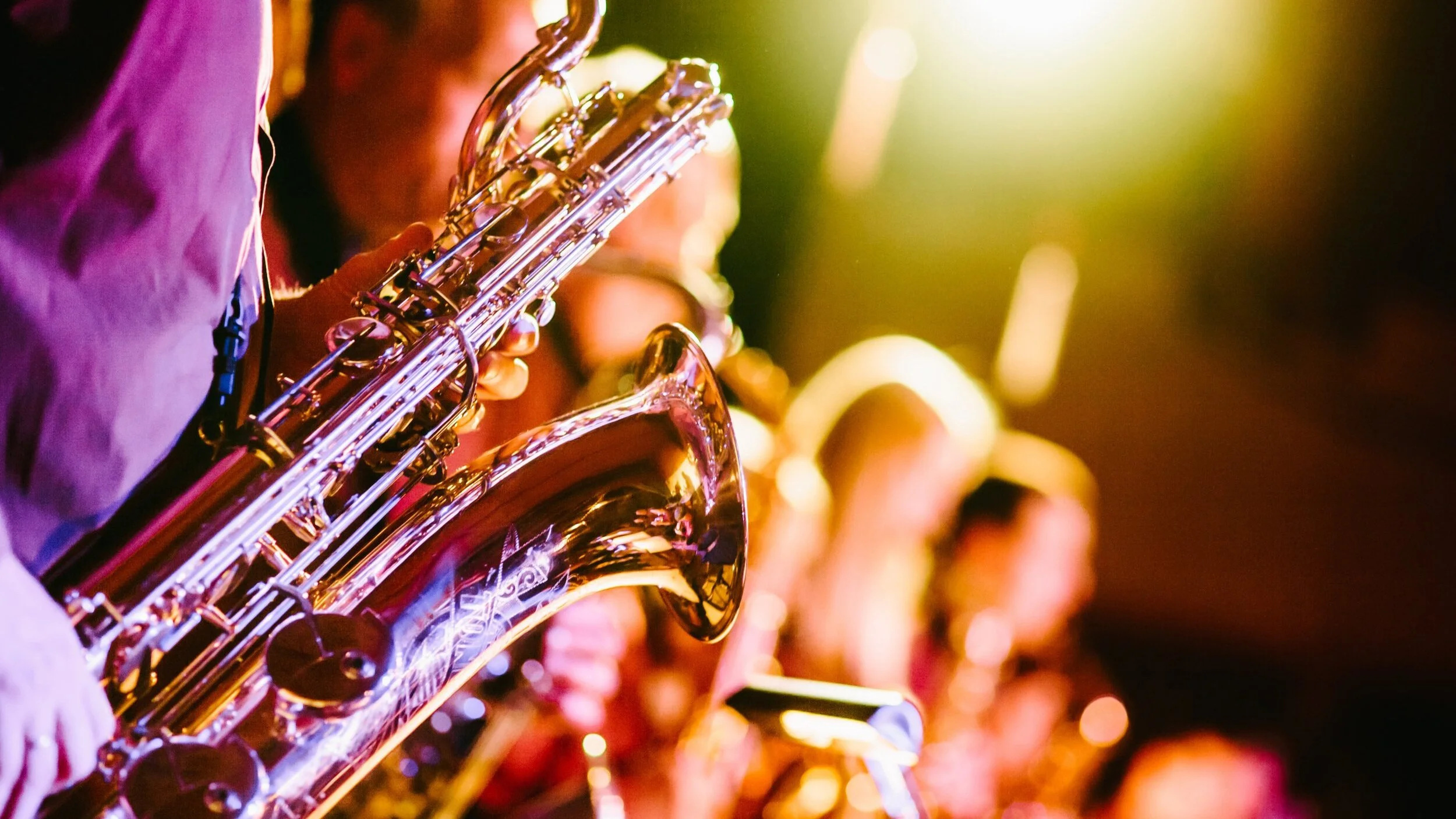
jens-thekkeveettil-dBWvUqBoOU8-unsplash.jpg

Friends. Let’s talk about JAZZ. As you probably know by now, I listen to a ton of classical music (as a former classical musician myself, it’s really my happy place). However, in terms of actual time spent, I have a secret… I probably listen to more jazz than classical. WHAT THE WHAT! You heard (read?) right – this classical music nerd spends a lot of time listening to jazz. Why? Because, in my opinion, it’s THE perfect genre of music to listen to while working (especially if you spend a lot of time reading and writing like I do). But, a lot of people don’t know how to get past the “background music”-level understanding and appreciation of jazz, which is such a shame because (1) there is an ever-loving crapton of incredible jazz to listen to, (2) despite my love of working to jazz, there is SO much more to it than good background music, and (3) because becoming a jazz aficionado is a very approachable, fun, and hella classy hobby (especially if you already love collecting vinyl). So let’s dive in and I’ll teach you all about how to listen to jazz!

So you want to listen to jazz? Here’s where you start

First, just let it wash over you. Immersion is one of the best methods for getting into any genre of music. Jazz is my favourite type of music to put on when we have friends over (I love that it adds to my allure as “cultured and classy”, but what I actually really like is the warm and cozy ambiance it gives to the room without any noisy lyrics). As I mentioned, it’s also something I listen to a lot while working. I cannot tell you how many times I listened to the old Songza (remember Songza?!) classic jazz playlists during law school. Hundreds each? Oh lord, at least. Jazz is like coffee – it’s comforting, it keeps you going, and you can drink it all day. Er, listen to it all day. Close enough.

Once you’re “in the groove” (jazz joke!) of listening to jazz, the second step is to know that jazz has rules, just like classical music. The artistry and innovation from era to era in jazz history (just like in classical history and, frankly, any kind of arts history) is about how the rules are adhered to and how they’re broken. So, as you move through the different eras of jazz, how musicians treat the “rules” is different. Before we get to ways the rules can be broken, let’s look at the bare bones basics. This is how you can ground your ear and quickly “get” what you’re listening to. It’s actually super simple.

WHAT YOU NEED TO KNOW AND LISTEN FOR IN JAZZ

First, just like with classical music, there is a relatively small number of pieces that are performed wayyy more than all others. So even though the total number of works/pieces/recordings is really enormous, you can be extremely knowledgeable about the genre by knowing a very small subset. Think of it as the Pareto Principle (aka, the 80-20 rule) at work: you get 80% of the results by knowing only 20% of the total number of pieces. Extra good news is that you probably already know some of this 20%! These are called jazz standards… can you guess why? Because they’re the standard pieces all jazz musicians know, and that jazz fans also know. People often think of standards as songs that jazz crooners sing, and they aren’t far off. Heck, you might even know some of these already – songs like “My Funny Valentine”, “Fly Me To The Moon”, and “The Girl from Ipanema” are all considered jazz standards.

Here’s the next thing you need to know: jazz is not like classical music. Every jazz band doesn’t take a piece of jazz music – like, say, “My Funny Valentine”, and perform it the same. Even if you listen to the same jazz band or combo play the same tune two times in a row, each version would be slightly different. And if you listened to two different bands play it back to back, it would be even more different. And if you listened to two soloists from two different decades play it – you see where I’m going with this – you would have even more variation. The reason is because classical music is much more “prescriptive” than jazz: the notes on the page tell the musician(s) just about all of the information needed to perform the piece, so different interpretations are fairly close together (at least, to most people’s ears). In jazz, the musical information on the page is pretty sparse – often just two things: the basic tune, and the chords. The rest is up to the performers (even though they usually follow a couple of conventions, aka, standard ways of doing things). So let’s walk through how a jazz ensemble or soloist would take that information and turn it into a whole performance of a piece.

Starting things off: the Head

So you’ve got a jazz standard tune like “Autumn Leaves” (one of the perennial classics and most beloved standards). What does our hypothetical jazz band, soloist, or combo do with it? Well, first off, most pieces/performances/recordings of jazz are based around a single tune, called the “head”. This is the main melody – what you would whistle if you were asked to whistle the song, and it’s called the head because you play it at the beginning. So let’s imagine a version of “Autumn Leaves” performed by a big band (that’s a standard jazz band: four trumpets, four trombones, four saxes/sometimes a clarinet, plus bass, drums, and piano). The band might plan ahead of time how they’re going to play a bit of an intro (this can be written by an arranger and actually be on the printed music, or it can be done by ear during rehearsals, which is more common for smaller groups of musicians called “combos”). Then, the default is for the band to play the head together. Basically, this is the band saying to you, the listener, “here’s the song we’re working with.”

So to start, listen for the head tune if there is one (some eras of jazz divert from this model, so don’t feel like you’re doing it wrong if you don’t hear it – just roll with it!). The music will sound like it has more form and more structure at this point than it will sound like later (i.e., no one is improvising… there’s no “noodling about” yet). You’ll hear the tune a couple times through, and you’ll also hear the chords the melody runs overtop of. You don’t need to know anything about these chords – hell, you don’t even have to think about them. But just like a pop song you learn on guitar, there is a series of chords happening underneath the tune, and some of the members of our imaginary big band will be playing the chords to make the whole thing sound lush and polished. Each time through the chords – melody or no melody on top – is called a chorus. Which brings us to…

Up next: Improvisation

Once the band finishes playing through the head tune, they will inevitably break out and start riffing on that tune and its chords through improvisation. Even if you know nothing about jazz, you probably know that jazz players make up a lot of what they play, but you might not know how they do it. What’s amazing about jazz is that it’s like elite athletics or great cooking – if you explain it, it sounds simple. In execution, it’s unreal difficult, nuanced, and fascinating. Musicians in our big band will take turns “taking solos”. That means, one musician gets to stand up for one chorus (or, if they’re really feelin’ it, maybe a few choruses) while the rest of the band either plays the chords or takes a break. The person standing up has an opportunity to improvise music overtop of the chords. What the hell does that mean? Well, you’ve got the set series of chords that the band just played under the melody, right? Each chord has a handful of notes in it (if you were to play the chord on the piano, think of the three or four keys you would press down). The improvising soloist will use those notes to make up new melodies on the spot. They also use other tools like jazz scales (patterns of notes that they’ve memorized and practiced a bazillion times) that “fit” the given chords (aka, that sound good with those specific chords in that order). The result is the noodly, kind of meandering, but really exciting and fun sound of an improvised jazz solo.

The standard pattern is for a couple members of the band in a row to “take solos” like this, and if you’re watching jazz live, the audience will clap for each soloist after each solo ends (yes, right in the middle of the song). If a soloist does something really exciting, the audience might even hoot and holler mid-solo (may as well show them you love it!). You also might hear or see two soloists (one of which is often the drummer) do something called “trading fours.” That’s when they shorten the length of the solo (to four bars – hence, trading fours) and the two soloists basically duel back and forth/riff off what one another do back and forth, which is always a total treat. 

Time to whoop it up: the Shout Chorus

While the soloists are almost done taking turns, the “chart” (that’s the written music the players are playing off) might change a bit under the solos, building tension and excitement. Or, if the band is going full improv (no printed music, or just the head and the chords), the rhythm section might start amping things up (that’s the drums, bass, and piano). Maybe there are more notes happening. Maybe the instruments who were taking a break start to come back in. Maybe the drum part really starts to ramp up. This is all to build tension to, often, the shout chorus. Just like in a lot of classical music (and a lot of pop music!), the music takes us away from the main melody, then satisfyingly returns us to it in epic fashion. That’s the shout chorus: the whole band plays the head tune again, usually in spectacularly loud and thrilling fashion. The trumpet players might really let it rip into the high range here. There might be “shouting” (playing bits of the melody) back and forth between the saxes and the brass. Basically, it’s the climax of the piece, and it’s what we really think of as classic big band, especially. Usually, this leads into the epic ending of the piece.

Yay! Now you’re ready to start listening to jazz!

Once you know that basic outline, your ears are way more ready to listen to jazz. Basically, all you really need to know is that some of what the musicians are playing is written/composed/pre-planned, and some of it is made up. And the made-up stuff is based on the written stuff, much of which is “standard.” Then, across eras of jazz or unique performers or groups, you’ll hear interesting takes on that general format (for example, you might hear some improvisation right off the top, or you might have a soloist rocking out over the shout chorus, or you might be in a much more avant garde era of jazz that TOTALLY departs from that format for the sake of expression, experimentation, and boundary pushing). It. Is. All. Good.

And, of course, there are both fast and slow jazz pieces. In a ballad (a slow, lyrical song), you will still see/hear the basic form I’ve outlined above, it will just sound less raucous and more cool/tender/chill/whatever vibe the band is going for. 

So where should you start listening to jazz? In case you haven’t guessed, I’m a huge fan of big band, so I usually tell people to start listening to some of the greatest big bands of all time. It’s a great way to hear all the standard jazz instruments, learn the big jazz standards, and get used to the general flow of a jazz performance outlined above. That way, when you’re ready to get deeper into listening to later eras, your ears are ready. So here are a few classic examples for you to test you new knowledge on. Then, grab a “big band” playlist on your streaming service of choice and let ‘er roll!

A FEW FAVOURITES TO GET YOU STARTED:

Spooky Halloween Art

colton-sturgeon-EFQlS6SL9uw-unsplash.jpg

It’s almost Halloween, so in honour of the spooookiest holiday, I’ve put together this list of my favourite creepy art, music, dance, and theatre. Personally, I’m not big on Halloween (aside from the candy, OBVIOUSLY), but what I do love is art that goes bump in the night. Happy Halloween, everyone!


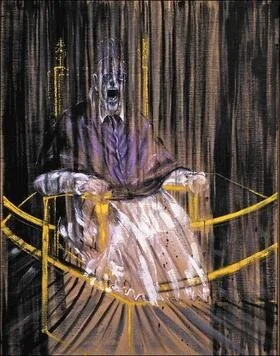
Study after Velázquez’s Portrait of Innocent X

Francis Bacon, 1953

This painting is often used as an example in texts about colour theory (yellow and purple are on opposite sides of the colour wheel, which is why they pop so intensely when paired together), but MY GOODNESS it gives me the heebie jeebies. Partially because I detest yellow and purple together, but primarily because of DAT FACE.

Study_after_Velazquez's_Portrait_of_Pope_Innocent_X.jpg

download.jpg

The Nightmare

Henry Fuseli, 1781

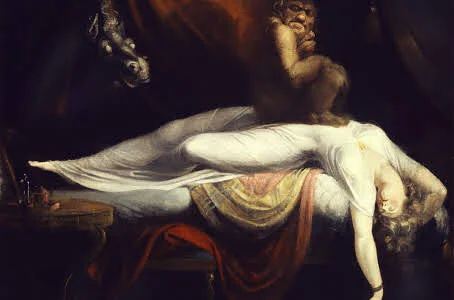
GAH. Have you ever had the nightmare where you wake up and someone is in your room? No? Just me? Well thank God I’ve never had a dream about a frickin’ gargoyle sitting on my stomach and a dang DEMON HORSE in my room. My goooodness.


Study of the Heads of Torture Victims

Theodore Gericault, 1818

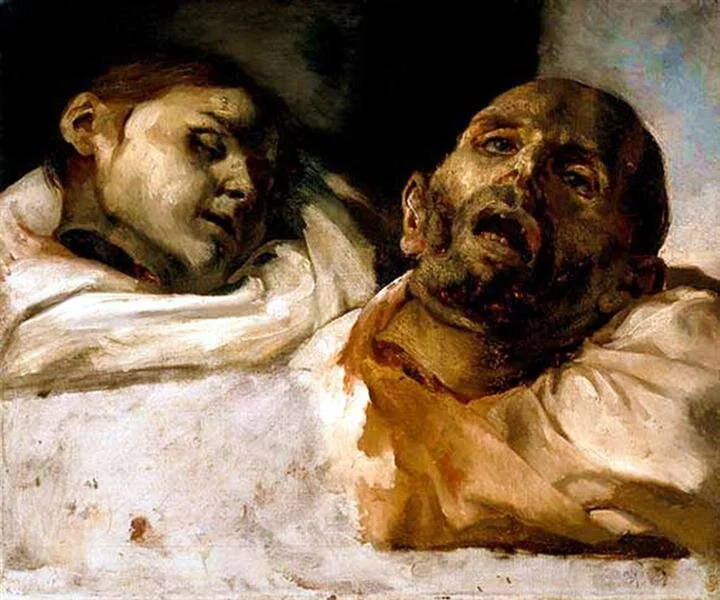
WHAT’S IN THE BOX!? WHAT’S IN THE BOX?!! Oh, it’s this painting. P.s., Gericault did a series of these, all about severed body parts. Great. That’s just great. I didn’t need to sleep ever again. It’s fine.

heads-of-torture-victims-study-for-the-raft-of-the-medusa.jpg!Large.jpg

375px-Vincent_van_Gogh_-_Head_of_a_skeleton_with_a_burning_cigarette_-_Google_Art_Project.jpg

Skull of a Skeleton with a Burning Cigarette

Vincent Van Gogh, 1886

I actually adore this painting. The colours are so magnificent, and the shoulder-dropped posture of the skeleton is so… devil may care? Scary or no, a smoking skeleton CLEARLY deserves Halloween attention.


Saturn Devouring His Son

Francisco Goya, c. 1823

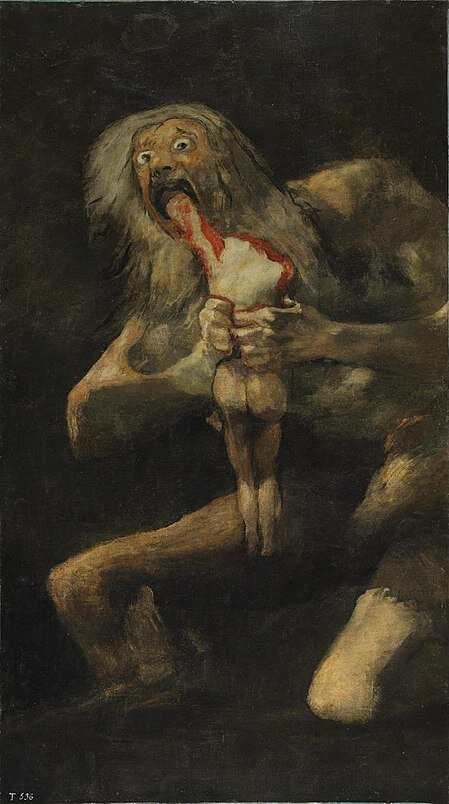
This, on the other hand, I hate (not because it’s a bad painting, because it’s absolutely amazing, but because EWWW). This is based on the Roman myth of the god, Saturn, you know… eating his son. Hoo boy. There are actually multiple scary paintings based on this moment in mythology, but Goya’s is TERRIFYING. Gawd. Get it off my computer screen.

450px-Francisco_de_Goya,_Saturno_devorando_a_su_hijo_(1819-1823).jpg

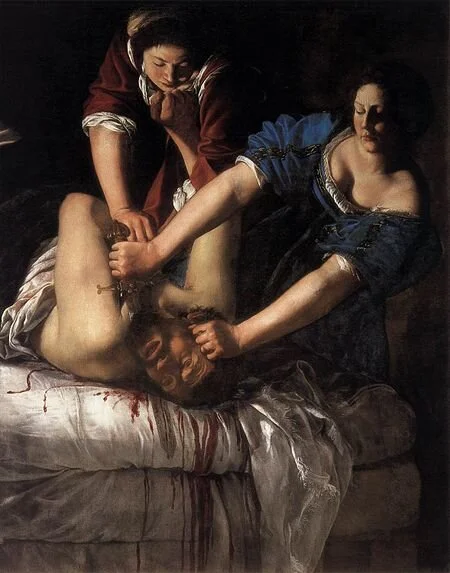
Artemisia_Gentileschi_-_Judith_Beheading_Holofernes_-_WGA8563.jpg

Judith Slaying Holofernes

Artemesia Gentileschi, c. 1610

I don’t personally find this painting scary, per se… but hey, I’m a feminist and Holofernes was a big jerk. There are a ton of paintings of this scene, meant to represent the power of women over unjust/power-drunk men, but none as famous (nor as gory) as this one. 


Follow the leaders

Isaac Cordal, 2011

Cordal is known for outdoor installations, particularly this series of tiny sculptures of business men/politicians in watery gutters, on ledges, and buried in debris – a commentary on “our inertia as a social mass.” I find them TERRIFYING. 

Follow-the-leaders-berlin.jpg

Macbeth

Shakespeare (duh), 1606

IMO, you can’t have a Halloween arts list without “The Scottish Play” (shh! It’s bad luck to say its name! …in a theatre, at least.) In case you’ve forgotten your high school English class, there are ghosts! There are witches! There’s blood that won’t go away, and a floating dagger! Plus it’s all in the foggy Scottish moors. There’s the original play of course, there are several movie versions (including one with Michael Fassbaender and Marion Cottiard), and there’s also a kick-ass opera version by Verdi.


Little Shop of Horrors

Miles Goodman and Alan Menken, 1982

There are several great spooky musicals, but Little Shop is my favourite (mostly because I played Audrey in high school… the girl, not the plant! But also because it’s just all-around awesome). I’m not exactly sure why, but I find the movie version scary as hell. Maybe it’s the creepy lighting. Maybe it’s the sadistic dentist. Maybe it’s the giant man-eating plants from outer space. It’s a mystery.


Sweeney Todd

Steven Sondheim and Hugh Wheeler, 1979

A demon barber in Victorian England slits the throats of his customers while they’re in his chair, then a baker turns them into meat pies. Fun for the whole family, really.


“In the Hall of the Mountain King” from Peer Gynt

Edvard Grieg, 1875

This is literally a whole piece about a bunch of trolls, gnomes, and goblins in the, well, hall of a mountain king. Yes, please!


Danse Macabre

Camille Saint-Saëns, 1874

The devil makes the spirits rise from the dead and dance to this sweet sweet creepy tune (basically the equivalent of “Devil Went Down To Georgia”, but for symphony orchestra).


A Night on Bald Mountain

Modest Mussorgsky/Nikolai Rimsky-Korzakov, 1886

To me, this will always be “the terrifying part of Fantasia.” Or, the scary part of Mario. Like, seriously, how can music sound so damned terrifying right from the very first note?!


“March to the Scaffold” and “Dream of a Witches Sabbath” from Symphonie Fantastique

Hector Berlioz, 1830

This piece of symphonic music is meant to tell the story of a guy who is so hopelessly in love with this woman that he overdoses on opium then dreams that he kills her and is condemned to be executed (fun!). So this is the end, where he has to march up the scaffold to his death, then, for some reason, there’s a super wild, evil, witches’ ritual. 


Lucia’s Mad Scene from Lucia di Lammermoor

Gaetano Donizetti, 1835

There are loads of creepy moments in opera, but this is my favourite. Lucia is forced into marriage, then kills her betrothed on her wedding night. Apparently it was a thing for the wedding party to continue on while the couple headed upstairs, which makes for the stunning moment when Lucia emerges from her marital bed, still in her wedding dress, covered in blood – oh, and she’s gone completely crazy. This aria also features the glass harmonica – an instrument some believed to have supernatural powers.


Commendatore scene from Don Giovanni

Mozart, 1787

Sooo… most of Don Giovanni is about the worlds’-most-famous-womanizer scheming and, well, womanizing all over the place. Then it all catches up with him, and the statue of the dead father of a woman he assaulted comes to life and drags him to hell. And it’s some of the best music and drama in all opera. Plus, there were probably real fire effects on stage as early as the premiere during Mozart’s time. Yikes!


Swan Lake

Pyotr Ilyich Tchaikovsky, 1876

Ballet is FULL of creepy plots, femme fatales, and supernatural ballet babes. If you know the plot of Swan Lake, you know it’s no exception. Are you team Odette (White Swan) or Odile (Black Swan)? Maybe embrace your dark side and, if you can’t watch the real thing, re-watch Black Swan this Halloween.


Giselle

Like many ballets, Giselle is about a female lover scorned by a big jerk who she then comes back to haunt/kill as an evil spirit. Giselle is extra awesome because she joins a whole army of evil female spirits called the Willis. Ummm, vengeful lady ghosts? That’s my kinda Halloween. Just for fun, here’s the contemporary reimagining by choreographer Akram Khan. Evil lady spirits unite!

Why you (yes, you) would actually love going to the opera

gwen-ong-m3th3rIQ9-w-unsplash.jpg

As many of you know, I trained for many years to become a opera singer before deciding, just as I was starting my professional career, that life on the road wasn’t for me. So as you might imagine, I’m a HUGE opera fan. 

When I tell people I was an opera singer, they often think I’m really fancy (I assure you, I am decidedly un-fancy). I mean, who can blame them? Every joke about going to the opera is about snobby rich people. Or about how “boring” opera is. And every time people go to the opera on TV or in a movie they are inexplicably in tuxedos or, my favourite, tails (you know, like they wear to dinner on Downton Abbey…). 

Friends. No one goes to the opera looking like that. And opera is a lot of things, but it sure as hell ain’t boring. 

Because I know and love opera so deeply, I love telling people why they would also love it. And I can usually convince them (hell, I left opera and became a lawyer… gotta put those persuasive skills to use). So here are 5 big reasons you – yes, YOU – would love going to the opera.

ben-white-qDY9ahp0Mto-unsplash.jpg

1. Live opera singing will blow your frickin’ mind

Everyone knows that opera singers are loud – it’s part of all the opera jokes. What you might not understand is just how loud. A professional opera singer is loud enough to stand on stage in a big concert hall, with no microphone, and be heard in the back row of the audience while a whole flippin’ orchestra is playing. The way an expertly trained, beautiful voice sounds in person is mind-blowing. The soft solo lines will somehow reach into your chest and break your heart in half just through the sweetness and vulnerability of the human voice. The loud chorus numbers make the hall rumble. The extreme high and low notes that singers are able to hit will positively shock and delight you. Part of opera singing is using the abilities of the voice to convey emotion, and part of it is just straight-up vocal Olympics. Singers are musical athletes, and opera is meant to be a showcase of their technical abilities. You have to see it live to get it.

mohammad-metri-1oKxSKSOowE-unsplash.jpg

2. The music is gorgeousss

Unless you’re seeing something super avant garde that’s rarely performed, you’re going to get the following: toe-tapping chorus numbers, tender duets, thrilling technical solos, beautiful orchestral music, and everything in between. Operas contain some of the most incredible music ever written, and you’re basically only going to hear it by going to the opera. Hell, you might even recognize some of the tunes (because they pop up all the time in cartoons and commercials). Opera music is amazing. That’s why people have loved it for hundreds of years. That’s why directors use it for the most emotional part of movies. Get in on it!

tekang-15uadDpdo24-unsplash.jpg

3. The plots of operas are SO GOOD

How should I describe opera plots? Well, most of them belong on HBO. The dramas are about forsaken love, messed up families, tragic mistakes, violence, greed, corruption… basically, everything that can win you an Emmy. The comedies (and there are lots of great comedies as well! Maybe you didn’t know that!) are full of mistaken identity, cross-dressing, mix-ups, tricks and pranks, and a whole lot of wooing. Basically, the fodder of all good romantic comedies and sitcoms but, to use an overwrought term, on steroids. Regardless of the genre, opera is full of BIG emotions – big tragedy, big laughs, big love. And sometimes it’s magical to feel really big emotions.

giuseppe-ruco-ZOJB2wrGlkI-unsplash.jpg

4. There’s a crapload of stuff to watch

(So I promise you won’t get bored)

Let’s just hypothetically say that you’re a bit apprehensive to go to the opera because you think it’s going to be boring. Hypothetically. Well, if the astonishing music, vocal fireworks, and soul-altering plot aren’t enough for you, rest assured there’s also a ton of cool stuff to look at. There are (often extravagant) costumes. There are (often larger-than-life, or just really, really creative) sets and lighting. And, if all else fails, you can always watch the orchestra and conductor. Remember them? It’s live music, baby, and there’s a whole freakin’ orchestra playing in the pit in front of/below the stage at the front, and you can always watch them and the conductor just like you would at a symphony concert. Plus, lots of operas include dancers, actors mulling about in group scenes, and sometimes even crazy things like on-stage bands and acrobats. Betcha weren’t expecting that!

rohit-reddy-Mg-FEs0SMLY-unsplash.jpg

5. It does make you feel classy as hell

There is something to be said for leaving the office and saying  “oh, gotta go, I have opera tickets for this eeeevening.” Going to the opera is fun for the same reason going to any performing art is fun: you get to dress up a little (wear whatever you would wear to a nice restaurant nearby – that’s your dress code), maybe have a glass of wine in the lobby before the show, read the program notes while you wait for the lights to go down… it’s exciting! It’s different! It’s smart and cool and something really interesting to talk about around the water cooler the next morning! Sometimes it’s nice to veg and be our laziest selves (I am a queen of takeout Thai food and The Bachelor, myself), but it’s also really nice to wear heels and do your hair and take lobby selfies and do something stimulating and outside your day-to-day. Especially when it comes with a bit of built-in gloating about how classy you are!

So those are my five reasons you – yes, YOU – would love going to the opera. It’s early in the season for most companies right now, so hit up Mr. Google and find out if you have an opera company near you. If you do, tickets are often way less than you’d expect, and lots of companies have specials for young people, seniors, etc. So grab a date, call your mom, gather your girlfriends, or just go by your bad self like I usually do, and treat yo’ self to a night at the opera. You won’t regret it!


Just getting into classical music and opera? Love little tidbits of fine arts goodness? Subscribe to my weekly newsletter! It’s short, snappy, and filled with fun stuff to make your weekends artsier.